
DESI maps 15 million galaxies, dark energy shows signs of change
This digest was compiled by AI from multiple sources — links to the originals are below.
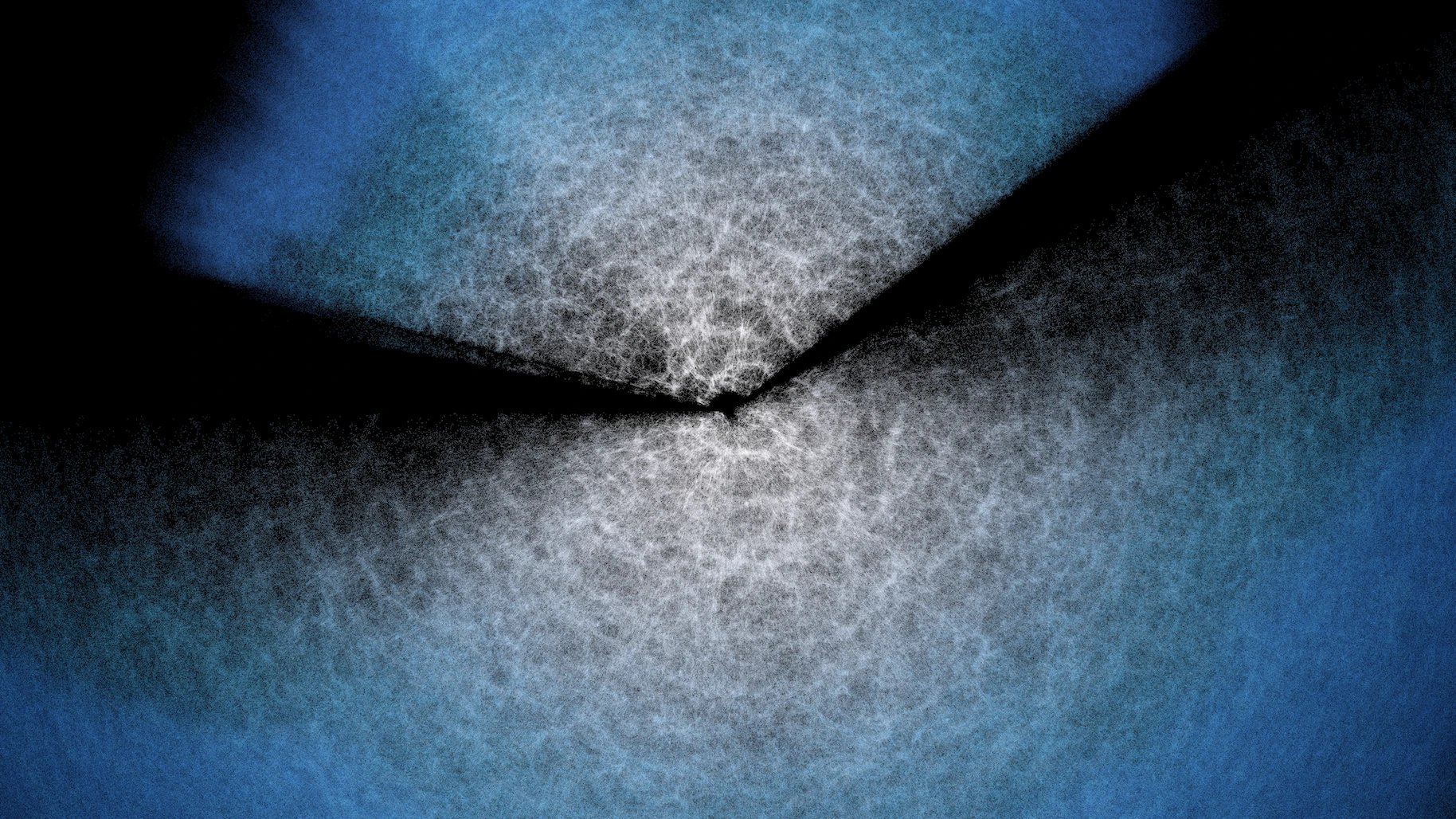
The Dark Energy Spectroscopic Instrument used nearly 15 million galaxies and quasars to build the largest 3D map of the universe in March 2025. The map suggests dark energy may change over time, though DESI alone does not overturn standard cosmology. A more precise DESI result released in July 2026 moved one piece of evidence back toward the standard model.
Key Facts
- DESI used nearly 15 million galaxies and quasars from its first three years of observations to reconstruct cosmic expansion across 11 billion years.
- The resulting map was the largest three-dimensional view of the universe assembled at the time of its release in March 2025.
- When DESI measurements were combined with other cosmic history data, a model with changing dark energy fitted better than the standard cosmological constant model.
- The combined preference did not meet the usual discovery threshold in physics, and a more precise DESI result released in July 2026 moved one piece of evidence back toward the standard model.
- DESI's public data release described 18.7 million objects, including 13.1 million galaxies, 1.6 million quasars, and roughly four million Milky Way stars.
The DESI Instrument
DESI is mounted on the Nicholas U. Mayall 4-metre Telescope at Kitt Peak National Observatory in Arizona. Its focal plane contains 5,000 robotic fibre positioners that gather light from selected galaxies and quasars. Spectrographs separate the light into component wavelengths, revealing redshifts that indicate distance and cosmic era. Night after night, DESI builds a map made from points rather than photographs.
Baryon Acoustic Oscillations
DESI measures geometry through baryon acoustic oscillations, a faint statistical pattern left from the early universe's hot plasma. Gravity pulled matter inward while radiation pressure pushed outward, sending sound waves through the plasma. These fossil sound waves act as a standard ruler for measuring cosmic distances.
Dark Energy Evidence
The March 2025 DESI results showed that a model with changing dark energy fitted better than the standard cosmological constant when combined with other data. However, DESI alone did not overthrow standard cosmology, and the combined preference did not meet the usual discovery threshold. A more precise DESI result released in July 2026 moved one piece of evidence back toward the standard model. The story is not that dark energy has been proved to be dying away, but that measurements have stopped lining up as comfortably as cosmologists would like.
1 source
Time · lag behind first