
Argentine researchers unveil artificial wetland plan to clean Reconquista River
This digest was compiled by AI from multiple sources — links to the originals are below.
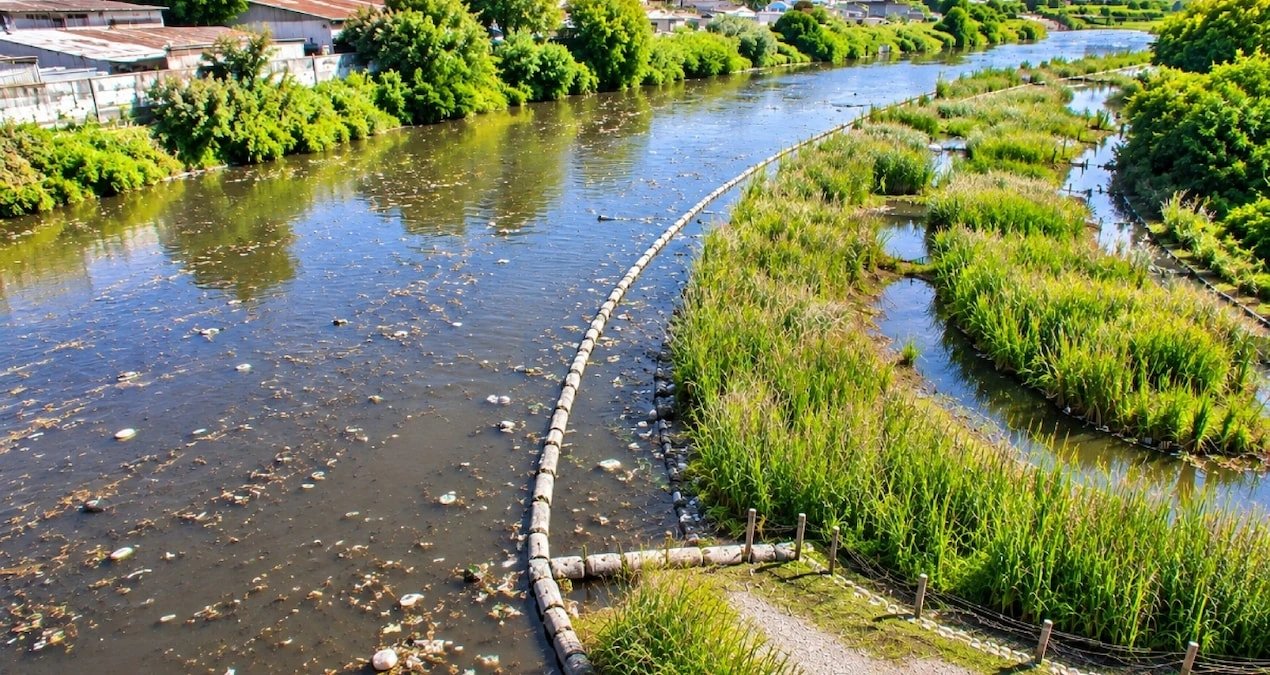
Researchers at San Martín National University have announced an artificial wetland system to filter pollutants from the Reconquista River basin before water reaches the river. Initial laboratory tests using water from Morón Creek showed reductions in nitrates, phosphates, and heavy metals such as chromium. The team now plans to scale up to 200-liter continuous-flow units, even as the river remains one of Argentina's most polluted.
Key Facts
- The artificial wetland system uses native plants and special substrate materials to filter pollutants before water enters the Reconquista River.
- Initial laboratory tests with 10-liter containers of water from Morón Creek showed reduced nitrate and phosphate levels over 7 to 14 days.
- Heavy metals such as chromium, which persists in the environment and poses health risks, also decreased in the test systems.
- The next phase will use 200-liter setups with continuous water flow to simulate a real wetland at larger scale.
- Researchers expect the new wetlands to attract insects, birds, and other wildlife that had left the area due to pollution.
The Artificial Wetland System
The system mimics natural marsh filtration by passing polluted water through constructed wetlands before it reaches the river. A specially prepared substrate captures pollutants, while native plants with water-cleaning properties are planted on top. Plants absorb heavy metals and excess nutrients through their roots, and the substrate helps separate contaminants from the water. Researchers chose this approach because conventional treatment plants are difficult to build along the riverbank, whereas artificial wetlands integrate with the natural landscape.
Laboratory Results and Scale-Up
Initial tests were conducted in the laboratory using polluted water from Morón Creek in the Reconquista basin. Water was passed through different soil and plant combinations in 10-liter containers and observed for 7 to 14 days. Results showed that systems with plants were more effective at reducing nitrate and phosphate levels. The team now plans to build 200-liter units with continuous water flow to better replicate real wetland conditions. Researchers believe that longer contact time between water, plants, and substrate could strengthen the cleaning effect.
Ecological and Replication Potential
Beyond water purification, the new wetlands are expected to restore habitat for insects, birds, and other species displaced by pollution. If successful, the method could be adapted to other polluted rivers by changing substrate materials and plant species according to each river's contamination profile.
1 source
Time · lag behind first