
Smart coating shows promise for nuclear wastewater tritium removal
This digest was compiled by AI from multiple sources — links to the originals are below.
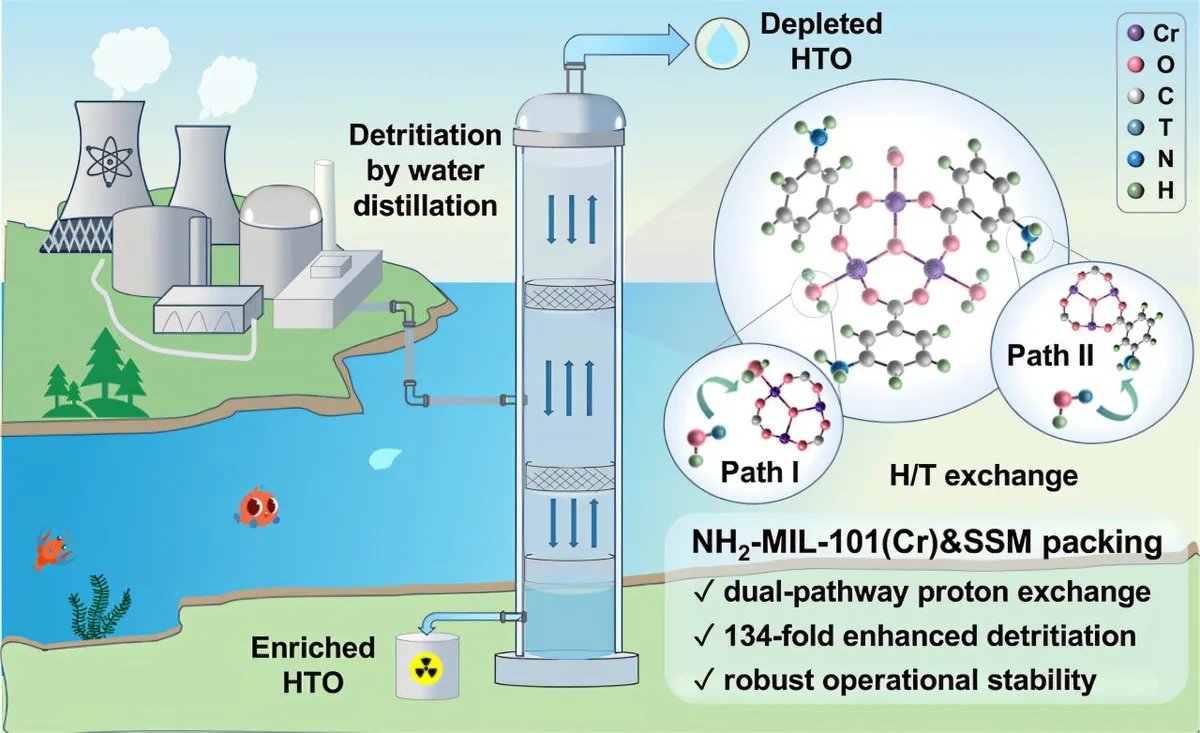
Chinese scientists have developed a smart coating that selectively captures tritium from nuclear wastewater. The coating, described in a study published in Nature Communications, could offer a more efficient method for treating radioactive water from power plants.
The Coating Mechanism
The smart coating, created by researchers at the Chinese Academy of Sciences, uses a polymer layer that selectively binds tritium atoms while allowing ordinary hydrogen to pass through. In laboratory tests, the coating removed up to 90% of tritium from simulated wastewater samples. The material can be regenerated and reused multiple times without significant loss of efficiency.
Tritium Challenge
Tritium, a radioactive isotope of hydrogen, is difficult to separate from water because it behaves chemically almost identically to ordinary hydrogen. Current methods, such as distillation or electrolysis, are energy-intensive and costly. The new coating operates at room temperature and requires no external energy input, according to the study.
Potential Applications
The technology could be applied to wastewater from nuclear power plants, including those affected by accidents like Fukushima. The researchers estimate that scaling up the coating could reduce tritium treatment costs by 50% compared to existing techniques. However, the coating has only been tested in lab conditions, and field trials are needed.
1 source
Time · lag behind first