
Zambia mine waste spill contaminates fish and grazing grasses with heavy metals
This digest was compiled by AI from multiple sources — links to the originals are below.
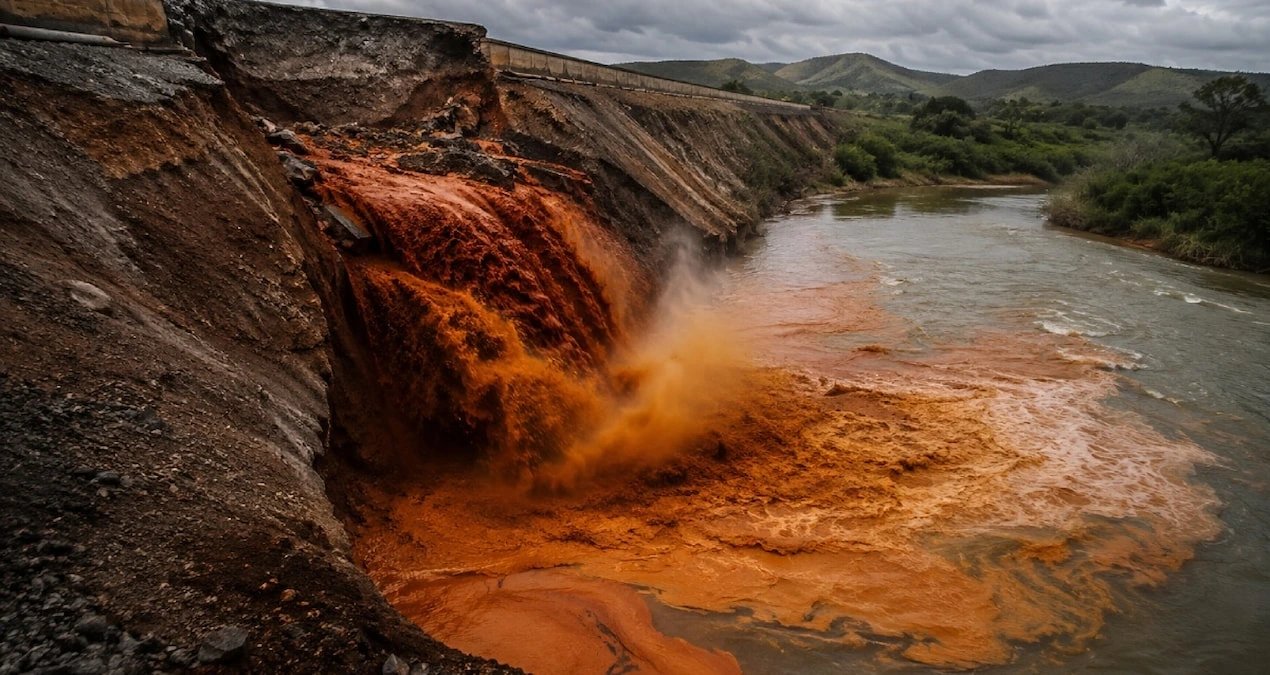
A tailings dam collapse at Sino-Metals Leach Zambia in Chambishi on February 18, 2025 released about 50 million litres of acidic waste into the Kafue River system. Independent researchers from Copperbelt University found heavy metals accumulated in fish and grasses, indicating contamination has entered the food chain. The government launched a restoration program in March, but environmental groups say long-term impacts on soil and livelihoods remain unresolved.
Key Facts
- The tailings dam collapse at Sino-Metals Leach Zambia in Chambishi on February 18, 2025 released approximately 50 million litres of acidic waste into the Kafue River system.
- Copperbelt University researchers found copper, iron, zinc, lead, and arsenic levels exceeded environmental limits at affected sites.
- Heavy metals accumulated in fish and in grasses eaten by animals, indicating contamination has moved through the food chain.
- Water supply to Kitwe, home to about 700,000 people, was temporarily suspended after the spill.
- Zambia launched an official restoration program in March to clean contaminated areas and rehabilitate rivers.
The Spill
On February 18, 2025, a tailings dam at Sino-Metals Leach Zambia in Chambishi, Copperbelt Province, collapsed. The failure released acidic waste containing heavy metals into Chambishi Stream, then into the Mwambashi River and the Kafue River system. The Zambian government later stated that about 50,000 cubic metres, or 50 million litres, of acidic waste entered surrounding water sources. The Kafue River stretches approximately 1,576 kilometres and is a critical water source for millions of people in Zambia for drinking, agriculture, livestock, and fishing.
Contamination Findings
An independent study by Copperbelt University researchers examined water, sediment, fish, and grass samples from affected locations. Results showed copper, iron, zinc, lead, and arsenic levels exceeded environmental limits at some points. Heavy metals accumulated in fish and in grasses used as animal feed, indicating that pollutants are moving through the food chain. Researchers stated that long-term monitoring of heavy metals in soil and living organisms is necessary, and that water quality returning to normal is not sufficient on its own.
Response and Restoration
In March, Zambia launched an official restoration program to clean contaminated areas and rehabilitate rivers. Authorities said water quality has returned to standards, but environmental groups argue that long-term impacts on soil, agricultural land, and livelihoods are not yet resolved. Water supply to Kitwe, a city of about 700,000 people, was temporarily halted after the incident.
1 source
Time · lag behind first