
Astronomers identify first stellar-mass black hole in Omega Centauri
This digest was compiled by AI from multiple sources — links to the originals are below.
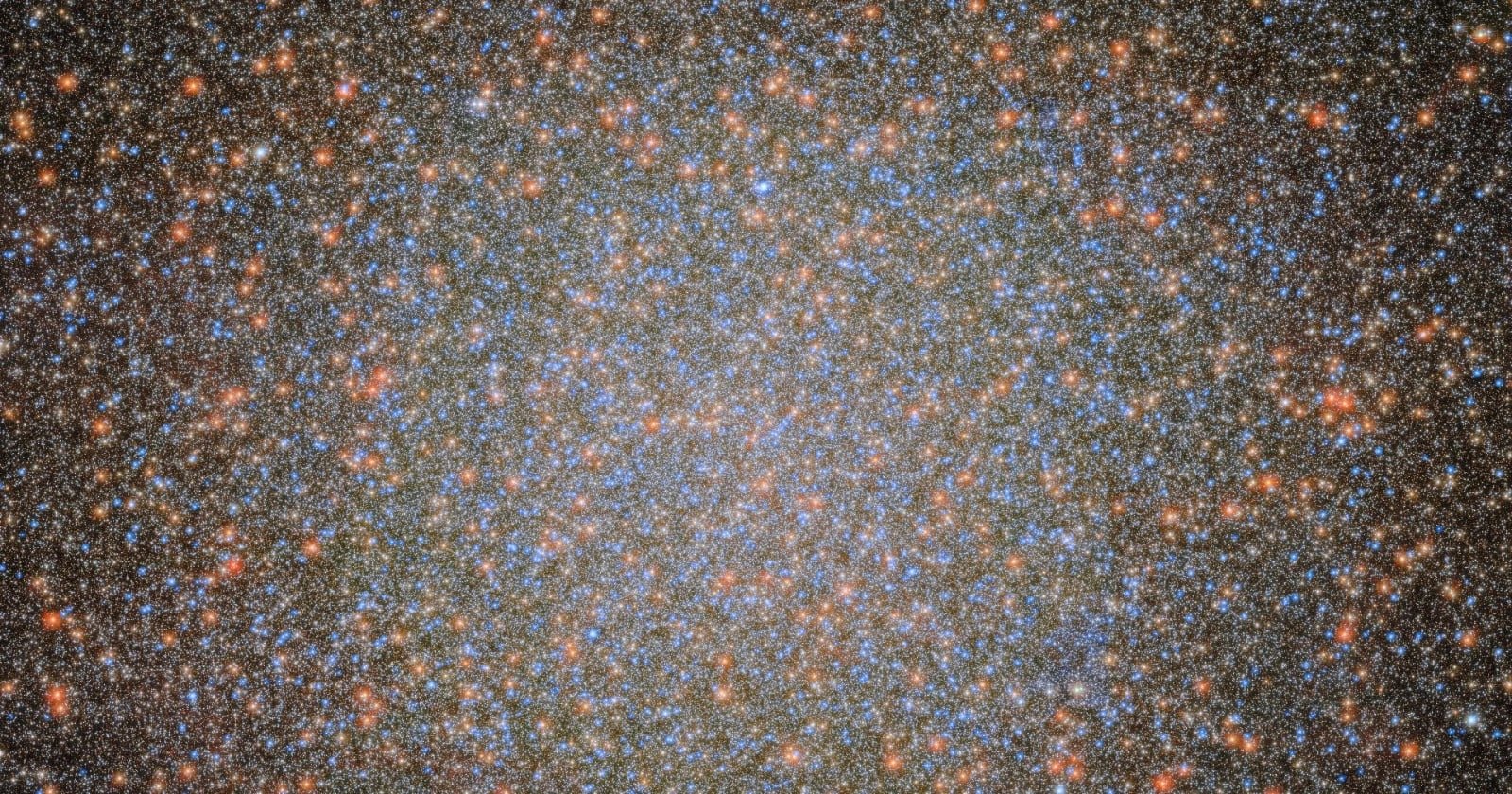
Astronomers identify the first individual stellar-mass black hole in Omega Centauri, the Milky Way’s most massive globular cluster, after tracking a visible star’s motion over 23 years. The object, named oMEGACat BH-2, orbits an unseen mass about 18,000 light-years away, with a companion period of roughly 94 years.
Key Facts
- Omega Centauri lies about 18,000 light-years from Earth and is approximately 12 billion years old.
- The newly identified object, oMEGACat BH-2, has a companion star with a best-fitting orbital period of about 94 years.
- The astrometric detection used 351 Hubble Space Telescope exposures collected from 2002 through 2023.
- NASA’s 2026 announcement notes dynamical models suggest Omega Centauri may retain about 10,000 stellar-mass black holes.
First Stellar-Mass Black Hole
The newly identified black hole is called oMEGACat BH-2. Its companion star follows a best-fitting orbit of about 94 years, although the observational record covers only 23 years. The detection was not made by photographing the black hole or by observing it as it swallowed gas. Instead, astronomers measured the changing position of a visible star, one fraction of a telescope pixel at a time. The most informative part of the orbit was the close, fast turn around periastron.
Unseen Black Hole Population
Omega Centauri lies about 18,000 light-years away and is approximately 12 billion years old. Massive stars born early in the cluster should have exhausted their fuel, exploded or collapsed, and left behind compact remnants. Because black holes are heavier than most surviving stars, gravitational encounters tend to move them toward denser parts of a cluster. NASA’s announcement of the 2026 result says dynamical models have suggested Omega Centauri may retain about 10,000 stellar-mass black holes. The discovery paper treats that estimate cautiously as a model-dependent prediction, not a count.
Astrometry Data
The discovery team combined Hubble Space Telescope astrometry from 2002 through 2023 with James Webb Space Telescope observations from 2024 and 2025. The Hubble record comprised 351 exposures. The discovery paper in The Astrophysical Journal Letters was led by Matthew Whitaker of the University of Utah. Radial-velocity surveys work best when a companion moves toward and away from Earth strongly enough to shift its spectrum. Astrometry instead measures a star’s changing position across the sky, revealing an unseen mass through its gravitational pull.
1 source
Time · lag behind first