
Liverpool researchers detect collagen in 66-million-year-old dinosaur bone
This digest was compiled by AI from multiple sources — links to the originals are below.
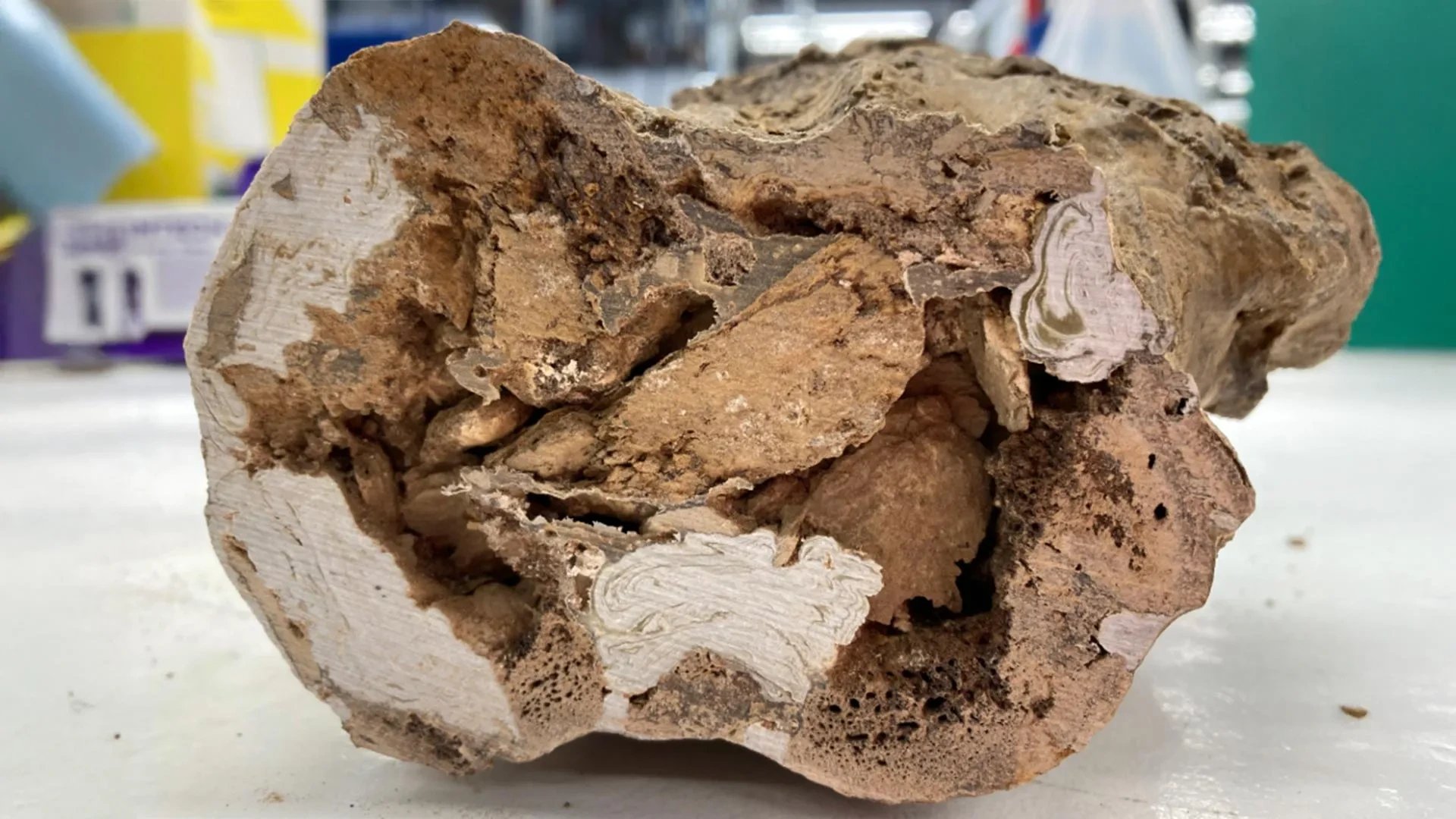
Researchers at the University of Liverpool report that original collagen survives in an Edmontosaurus hip fossil from the Hell Creek Formation in South Dakota, dating to 66 million years ago. Mass spectrometry and protein sequencing detected molecular signatures of collagen in the 22-kilogram sacrum, with results published in Analytical Chemistry. The result challenges a decades-old assumption that fossilization destroys all original organic molecules.
The Fossil Evidence
The Edmontosaurus sacrum weighs 22 kilograms and was excavated from Upper Cretaceous rock layers in the Hell Creek Formation, South Dakota. The specimen is held in University of Liverpool collections. The specimen's condition allowed researchers to apply protein sequencing and mass spectrometry to search for collagen signatures.
Collagen Detection
Mass spectrometry identified molecular signatures associated with collagen, the major structural protein found in bone. The findings, published in Analytical Chemistry, add new evidence to a scientific debate that has continued for about 30 years. Professor Steve Taylor, chair of the Mass Spectrometry Research Group at the University of Liverpool's Department of Electrical Engineering & Electronics, said the research shows beyond doubt that organic biomolecules appear to be present in some fossils.
Implications for Paleontology
The authors say the result refutes the hypothesis that any organics found in fossils must result from contamination. Taylor said cross-polarized light microscopy images of fossil bones collected for a century should be revisited. The discovery opens a molecular window into dinosaur biology and evolution and raises questions about how ancient proteins survive for tens of millions of years.
1 source
Time · lag behind first