
66-million-year-old feather in dinosaur feces may explain why birds survived asteroid
This digest was compiled by AI from multiple sources — links to the originals are below.
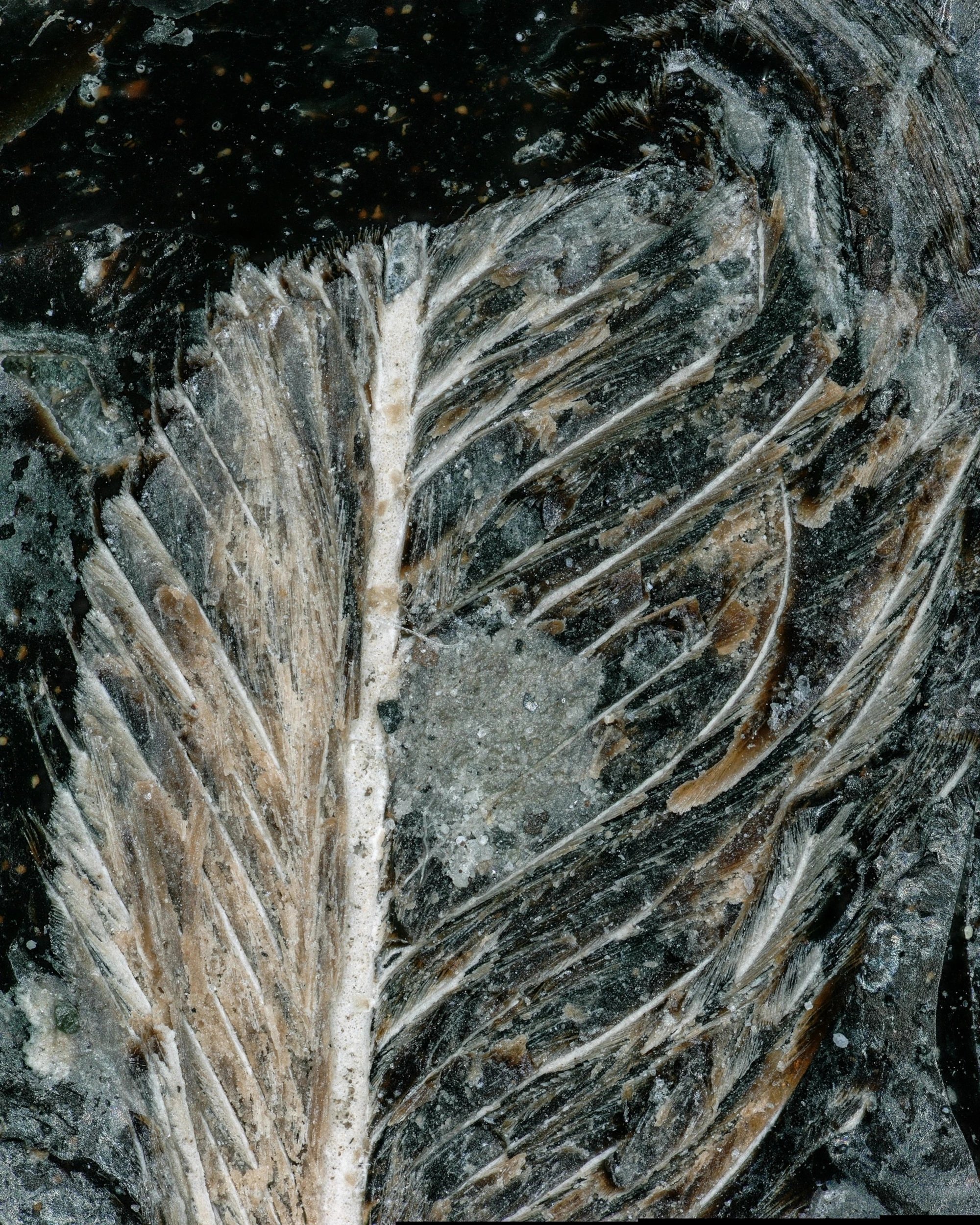
A fossilized feather found inside dinosaur feces in Montana dates to 66 million years ago and may explain why birds survived the asteroid impact that killed other dinosaurs. Researchers report the discovery in Current Biology. The feather is the finest specimen yet found from the age of dinosaurs.
Key Facts
- The feather was discovered in 2016 by David DeMar, Jr. in northeastern Montana's Hell Creek Formation.
- The fossil is about 66 million years old, from the end of the Cretaceous Period.
- The feather was preserved inside a coprolite, or fossilized feces, likely from a T. rex or Nanotyrannus.
- The study was published in Current Biology with Jingmai O'Connor of the Field Museum as lead author.
Feather Discovery
David DeMar, Jr., a research scientist at the University of Washington Burke Museum, found the specimen in 2016 while collecting fish fossils in northeastern Montana. He spotted a dark, reddish-brown nodule about half the size of a golf ball and saw a tiny fossil feather through his hand lens. Feathers had not previously been found in the Hell Creek Formation despite more than 150 years of prospecting. Researchers used CT imaging and mineral analysis to examine the feather inside the coprolite without destroying it.
Survival of Birds
Birds are a specialized branch of dinosaurs, with the oldest known bird, Archaeopteryx, living about 150 million years ago. An asteroid struck Earth 66 million years ago, causing a mass extinction that wiped out nearly all dinosaur lineages, including most birds. Only one bird group, Neornithes, survived and gave rise to all living bird species. Jingmai O'Connor, lead author and associate curator of fossil reptiles at the Field Museum, said the feather could help answer why Neornithes endured.
1 source
Time · lag behind first