
125-million-year-old Haolong dongi fossil preserves skin cells in hollow spikes
This digest was compiled by AI from multiple sources — links to the originals are below.
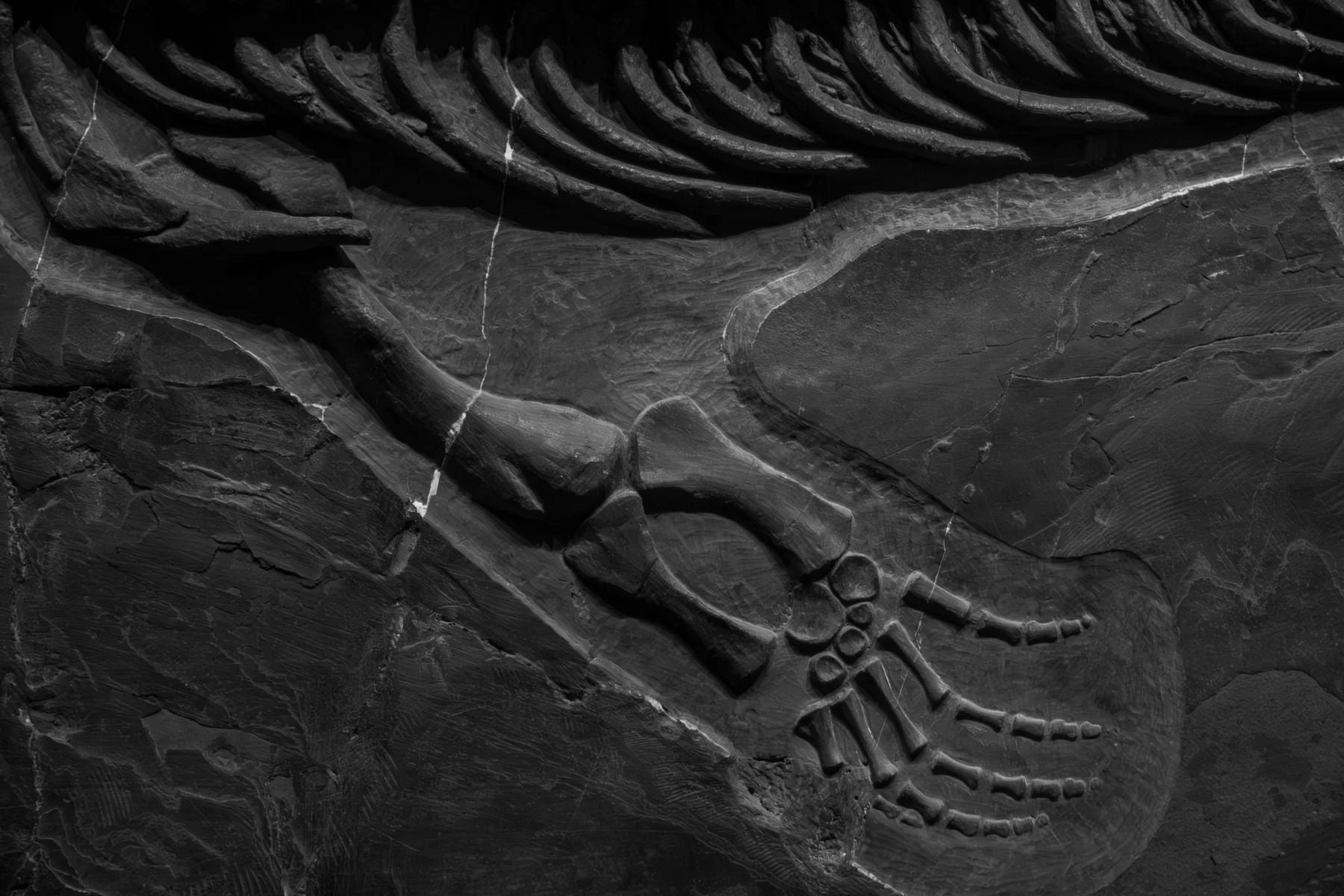
A nearly complete 125-million-year-old juvenile dinosaur fossil from northeastern China preserves individual skin cells inside hollow spikes, a study in Nature Ecology & Evolution reports. The 2.45-metre-long iguanodontian, named Haolong dongi, retains cellular-level detail—including keratinocytes and nuclei—in spikes around its neck, back, and sides. The find reveals a skin structure that had persisted unseen across the age of dinosaurs.
Cellular Preservation
The fossilised spikes of Haolong dongi preserve a stratified epidermis. An outer cornified layer, a multilayered epidermis, and individual keratinocytes with nuclei are visible in tomographic scans and thin sections. The cells are mineralised replicas, not original tissue, formed by rapid chemical copying after death. This preservation captured microscopic architecture that in most fossils decays long before burial.
Spike Anatomy
The spikes are hollow, with a porous dermal core that likely contained blood vessels and nerves in life. They range from 2–3 millimetres up to a few that exceeded 4 centimetres, projecting rearward from the neck, back, and sides. Researchers describe them as skin organs rather than simple scales or bone projections, challenging the porcupine analogy.
Soft-Tissue Insight
The find goes beyond adding a new silhouette to dinosaur books; it exposes a part of dinosaur anatomy rarely preserved in the fossil record. Most dinosaur fossils are bones and teeth, leaving skin surfaces largely unknown. Haolong dongi shows that elaborate skin structures existed in this group for 125 million years without detection, demonstrating that cellular-level skin detail can survive in exceptional conditions.
1 source
Time · lag behind first