
JWST finds clay minerals on Neptune moons Larissa and Galatea from ancient breakup
This digest was compiled by AI from multiple sources — links to the originals are below.
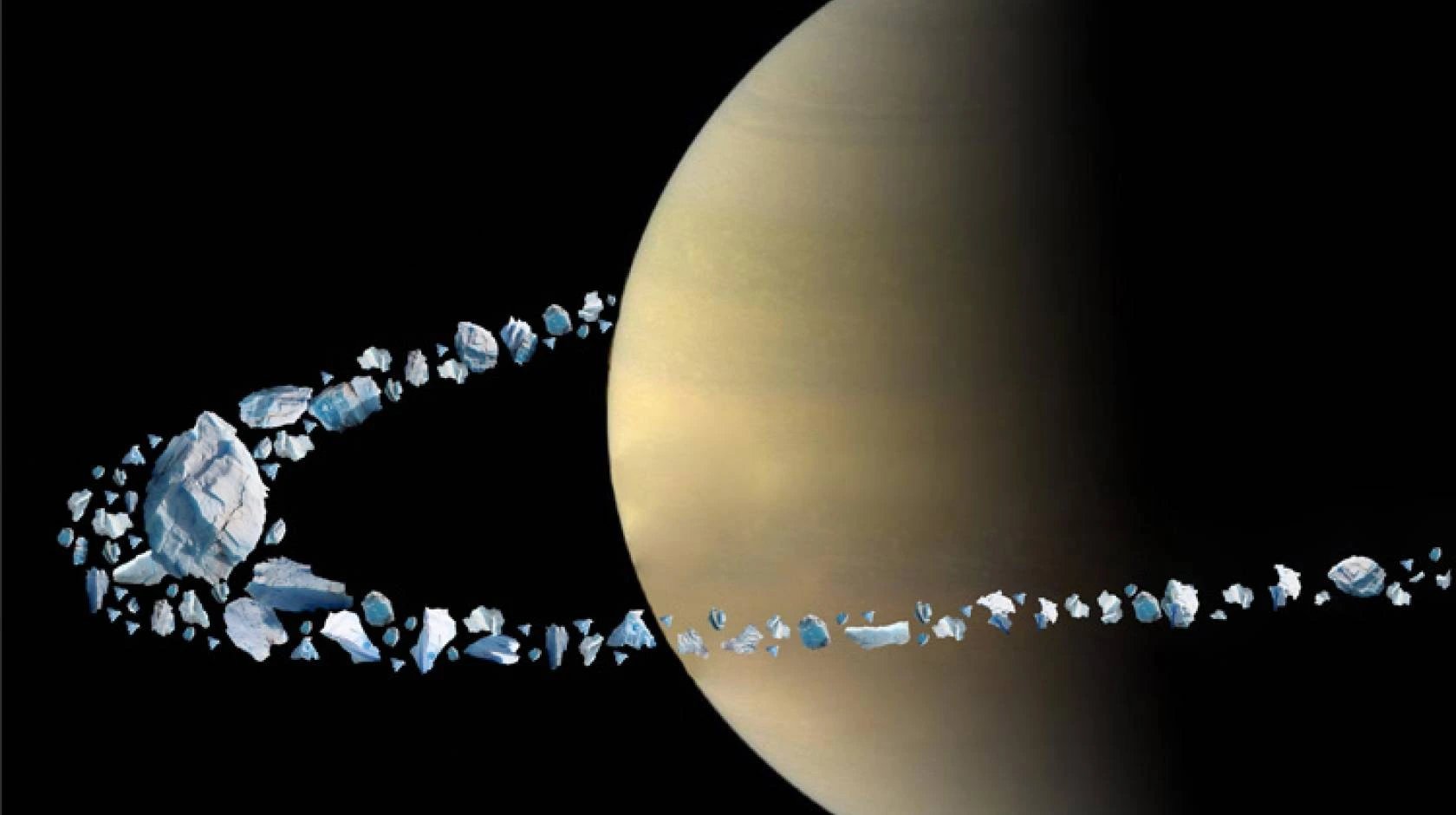
NASA's James Webb Space Telescope has detected clay-like minerals on Neptune's inner moons Larissa and Galatea and in the planet's rings, according to a Caltech-led study published Aug. 14 in Science Advances. The findings support a scenario in which Neptune's original satellite system was shattered after the capture of Triton, and debris later formed the small moons seen today. A separate study from the same JWST program suggests Nereid may be the only survivor of that earlier system.
Clay Mineral Detection
A Caltech-led team used NASA's James Webb Space Telescope to examine Neptune's rings and three inner moons: Larissa, Galatea, and Proteus. The observations revealed a chemical makeup unlike any previously identified among bodies in the outer solar system. Clay-like minerals that form in the presence of liquid water were detected on Larissa and Galatea and in the rings, yet the moons show no obvious water ice.
Original Satellite System
Voyager 2 discovered six previously unknown moons around Neptune in 1989, five of which are tiny satellites that travel just beyond the main rings. Neptune lacks a typical system of large, orderly moons, in contrast to the pattern seen at Uranus and other giant planets. The new results support the idea that Neptune once had a different family of moons that was destroyed after Triton, Neptune's largest moon, was captured by the planet's gravity.
Nereid Survivor Hypothesis
Lead author Ryleigh Davis, a former Caltech graduate student who earned a 2026 PhD, said a Uranus-like system would have been "completely destroyed" by Triton's capture. Some debris from that violent event later gathered together to create the small inner moons that orbit Neptune today. A separate study from the same JWST program, led by Caltech postdoctoral scholar Matthew Belyakov, suggests Nereid may be the only moon from the original system to have survived intact.
1 source
Time · lag behind first