
Triton's retrograde orbit points to capture from a binary Kuiper Belt pair
This digest was compiled by AI from multiple sources — links to the originals are below.
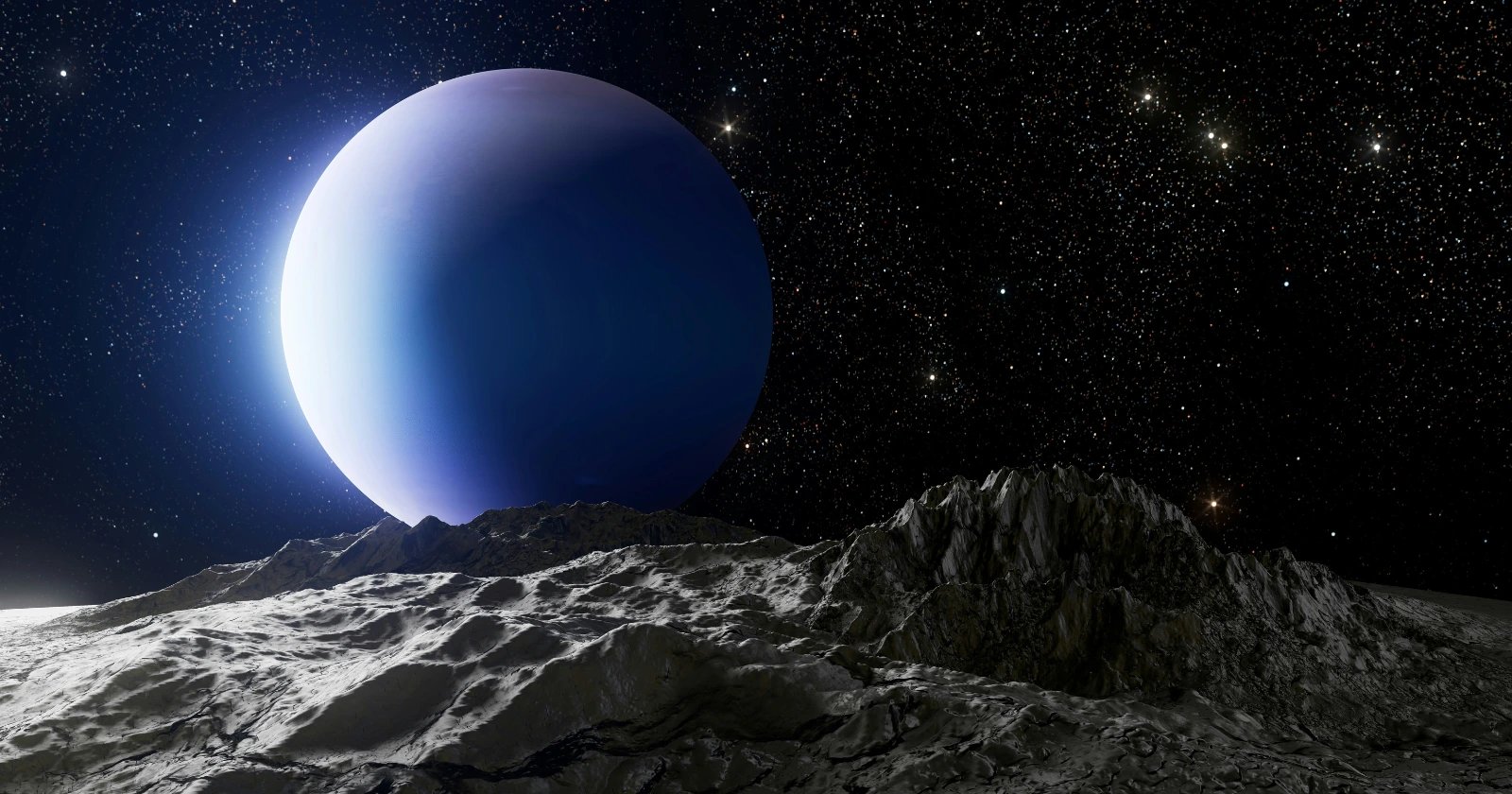
Neptune's largest moon Triton orbits opposite the planet's rotation, a pattern absent among all other large moons in the Solar System. A 2006 study by Craig Agnor and Douglas Hamilton explains the anomaly through capture of a binary pair, not in-place formation.
The Orbital Anomaly
Triton, Neptune's largest moon, travels around the planet in the opposite direction of Neptune's rotation. NASA notes no other large moon in the solar system follows a retrograde orbit. Voyager 2 recorded surface temperatures near minus 391 degrees Fahrenheit in 1989 and detected active geysers venting material into space. The combination of extreme cold, active geology, and backward motion separates Triton from every other large moon.
The Capture Mechanism
Craig Agnor of UC Santa Cruz and Douglas Hamilton of the University of Maryland proposed in a 2006 Nature paper that Triton arrived as part of a binary pair of icy bodies. When the pair passed close to Neptune, the planet's gravity pulled them apart, flinging one companion away while capturing the other into orbit. The model provides a mechanism to dissipate the excess energy that otherwise sends a single passing object back into space. Agnor called it a likely solution to the long-standing problem of how Triton arrived in its peculiar orbit.
Kuiper Belt Link
NASA describes Triton as likely a Kuiper Belt Object captured by Neptune's gravity millions of years ago. The moon shares enough characteristics with Pluto, the best-known Kuiper Belt resident, that scientists suspect both originated in the same population of icy bodies beyond Neptune. The binary capture mechanism also mirrors how Pluto and its moon Charon remain paired today.
1 source
Time · lag behind first