
Webb finds hydrated minerals on Neptune moons, supporting Triton capture theory
This digest was compiled by AI from multiple sources — links to the originals are below.
James Webb Space Telescope observations detected hydrated minerals on three inner moons and rings of Neptune, indicating they originated from larger bodies. The findings support the theory that Triton was captured and disrupted Neptune's original satellite system. The study was published in Science Advances on 29 July 2026.
Key Facts
- Triton contains more than 99% of the mass of Neptune's satellite system and orbits retrograde at about 157 degrees.
- The James Webb Space Telescope detected hydrated minerals on three inner moons and the rings of Neptune.
- A Science Advances study published on 29 July 2026 found that these minerals appear to come from deep inside much larger bodies.
- A separate Webb study published in May suggests Nereid may be the one original moon that escaped largely intact.
- Neptune's largest moon, Triton, follows an orbit tilted about 157 degrees, making it retrograde.
Neptune's Unusual Moon System
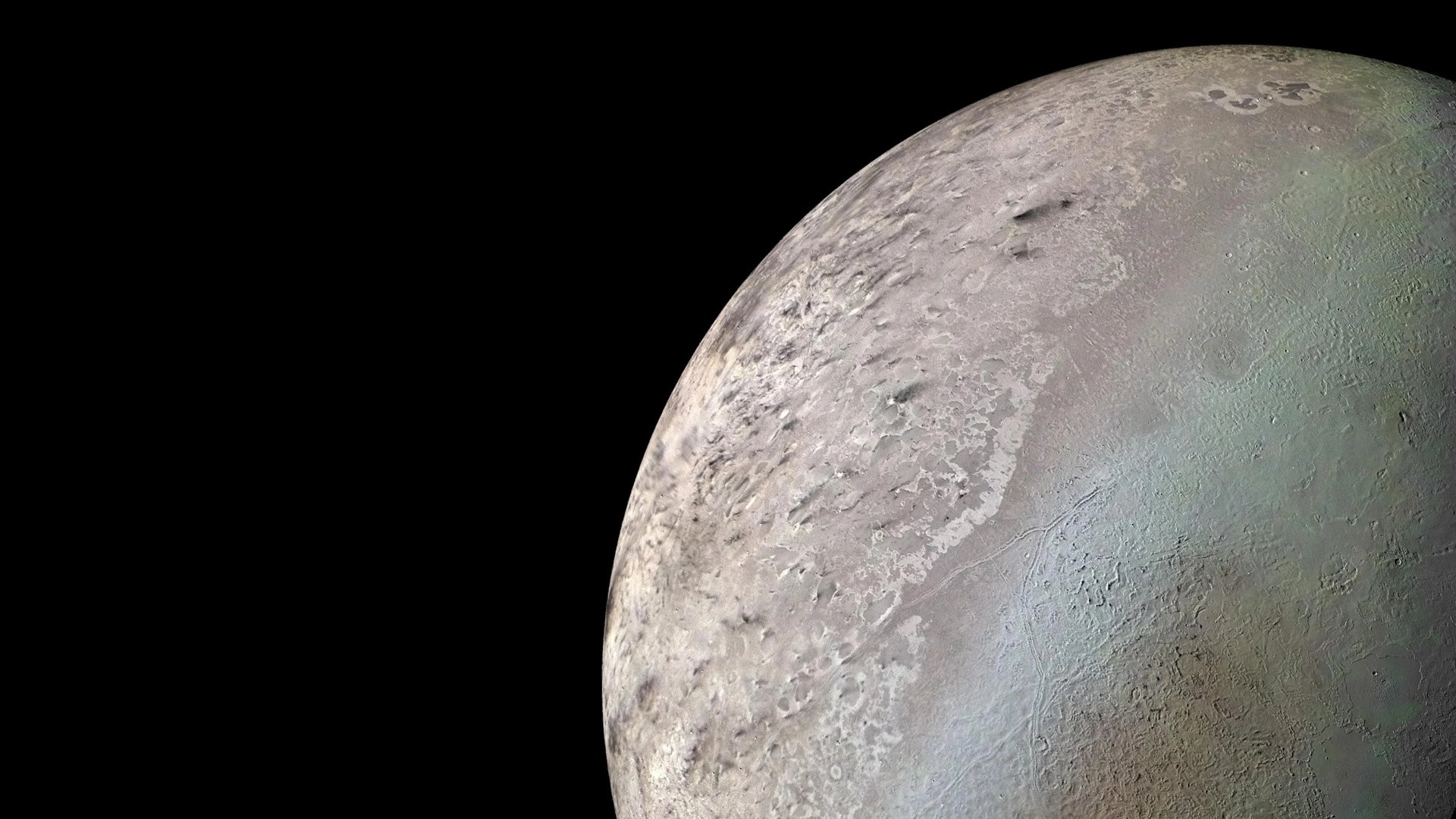
Neptune has 16 known moons, yet it barely has a conventional moon system at all. Triton alone contains more than 99 per cent of the satellite system’s mass, travels backwards around the planet and leaves only a compact collection of small inner moons, faint rings and distant irregular companions. That peculiar architecture has long pointed to an ancient catastrophe. Triton probably formed elsewhere in the outer Solar System and was captured by Neptune, entering on an orbit that destabilised the moons already there.
Webb Observations and Composition
Observations from the James Webb Space Telescope now give that dynamical reconstruction a compositional test. A Science Advances study published on 29 July 2026 found hydrated minerals on three inner moons and the rings that appear to come from deep inside much larger bodies. A separate Webb study published in May argues that Nereid may be the one original moon that escaped largely intact. The result is not a photograph of Triton destroying Neptune’s first satellite family. It is a history assembled from present-day orbits, infrared spectra and computer simulations.
Capture and Destruction Mechanism
The four giant planets are expected to form regular satellites within discs of gas and dust surrounding them when they are young. Jupiter, Saturn and Uranus still possess families of substantial moons moving in broadly orderly, prograde orbits near their planets’ equatorial planes. Neptune is different: its largest moon, Triton, follows an orbit tilted about 157 degrees, making it retrograde. Triton’s reversed motion and similarities to Pluto strongly suggest that it originated as an independent outer Solar System world. Capture is not as simple as Neptune pulling in a passing object; an unbound body normally accelerates towards a planet and then departs with enough energy to escape. Triton had to lose orbital energy, perhaps through an exchange involving a former binary companion. Once captured, Triton would probably have occupied a much wider and more eccentric path than it does now. That orbit would pass repeatedly through the realm where Neptune’s original regular moons were expected to circle. A large body moving on an elongated retrograde orbit is an efficient source of disorder. Repeated gravitational encounters with native moons could stretch their orbits until they crossed, throw some out of the Neptune system and send others into collisions. The destruction would also help transform Triton: collisions and gravitational interactions with a debris disc could remove energy from its orbit, while tides raised within Triton and Neptune gradually reduced its eccentricity. The moon eventually settled into the tight, nearly circular orbit observed today.
1 source
Time · lag behind first