
518-million-year-old fossil reveals origins of spider fangs
This digest was compiled by AI from multiple sources — links to the originals are below.
Scientists have discovered the earliest known evidence of structures that later became spider fangs in a 518-million-year-old fossil from China's Chengjiang site. The study, published in Nature, traces the origins of chelicerae—the defining appendages of spiders and scorpions—to a small marine creature called Urokodia.
The Fossil Discovery
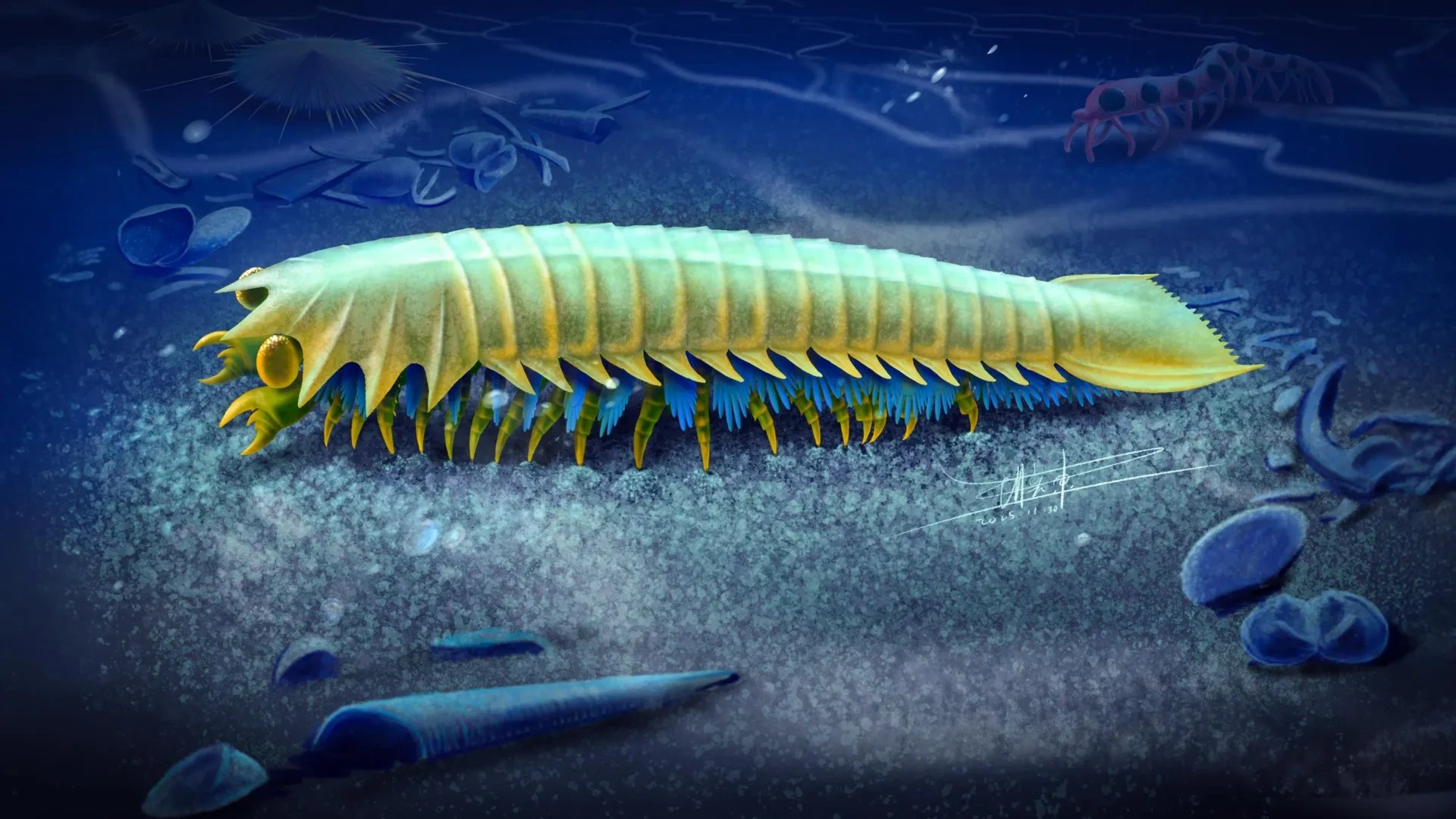
The fossil of Urokodia was unearthed at the Chengjiang fossil site in Yunnan Province, southern China, a location renowned for its exceptional Cambrian fossils. The creature lived 518 million years ago and measured just 2 to 3 centimeters in length. It featured large eyes on stalks, a segmented skeleton, and jointed limbs under a narrow body, looking nothing like modern spiders. The study was published on the 42nd anniversary of the site's discovery.
Evolutionary Link to Spiders
Spiders belong to the chelicerates, a group of over 100,000 described species that includes scorpions and ticks, all characterized by jointed limbs and hard exoskeletons. The defining feature is a pair of specialized appendages called chelicerae, which can function as pincers or fangs. The Urokodia fossil preserves two pincer-like appendages located behind the eyes, representing an early chelicerae form. This links the ancient marine animal to the lineage that eventually produced the venomous fangs of modern spiders.
Preserved Soft Tissues and X-Ray Analysis
Researchers from Yunnan University and the University of Leicester employed X-ray technology to examine the fossil, revealing that much of the animal's soft anatomy remained mummified for hundreds of millions of years. The scans uncovered the chelicerae-like structures as well as features on the legs that may have served as book gills, allowing the creature to breathe underwater. This exceptional preservation provides a rare glimpse into the anatomy of early Cambrian arthropods.
1 source
Time · lag behind first