
Okayama University of Science research reveals dinosaurs' diverse digestion through stomach stones
This digest was compiled by AI from multiple sources — links to the originals are below.
An international team led by Ryuji Takasaki at Okayama University of Science has published a study in Paleobiology proposing a new hypothesis on dinosaur digestion based on gastrolith wear. The findings indicate that dinosaurs employed multiple digestion strategies—grinding in muscular stomachs, chewing with teeth, or fermenting in intestines—similar to patterns seen in modern birds, mammals, and reptiles. The research challenges earlier assumptions of a uniform digestive process across dinosaur lineages.
Gastrolith Wear Patterns
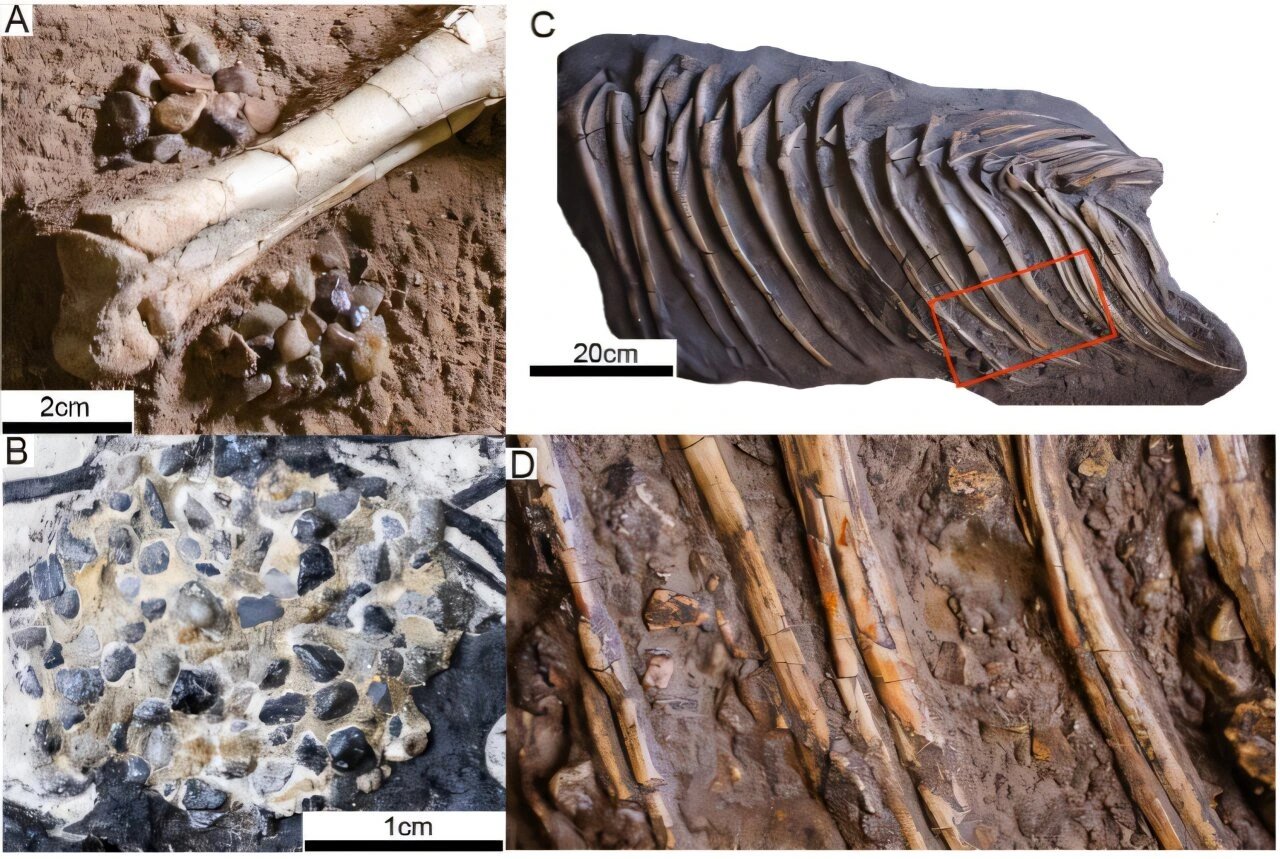
The research team analyzed gastrolith shape, diet, and stomach musculature in modern birds and crocodilians. Herbivorous taxa consistently showed rounded, highly abraded stones, while carnivorous and insect-eating species retained angular stones with minimal wear. This pattern reflects the degree of muscular stomach action—greater in herbivores, lesser in carnivores. Applying this framework to dinosaur fossils, the researchers found that many toothless theropods, such as oviraptorosaurs, possessed rounded gastroliths. This suggests they ground plant material in muscular gizzards, analogous to chickens.
Divergent Digestive Strategies
The study indicates that dinosaur digestion varied significantly across lineages. Some groups relied primarily on dental processing, others on powerful muscular stomachs, and still others on prolonged intestinal fermentation. This diversity implies distinct evolutionary trajectories in digestive system development. The team proposes that integrating gastrolith data with tooth and jaw morphology will yield a more complete picture of how dinosaurs processed food. The paper underscores that soft tissue preservation is rare, making such indirect proxies essential.
1 source
Time · lag behind first