
NAU study: Western US base flow could drop 45-65% by century's end
This digest was compiled by AI from multiple sources — links to the originals are below.
A Northern Arizona University study finds that groundwater-fed streamflow in headwater basins across the western United States has declined since 1950 and could fall 45–65% by 2100 under current climate trends. The declines, driven by warming temperatures and earlier snowmelt, may worsen summer water shortages for downstream communities and ecosystems.
The Headwaters
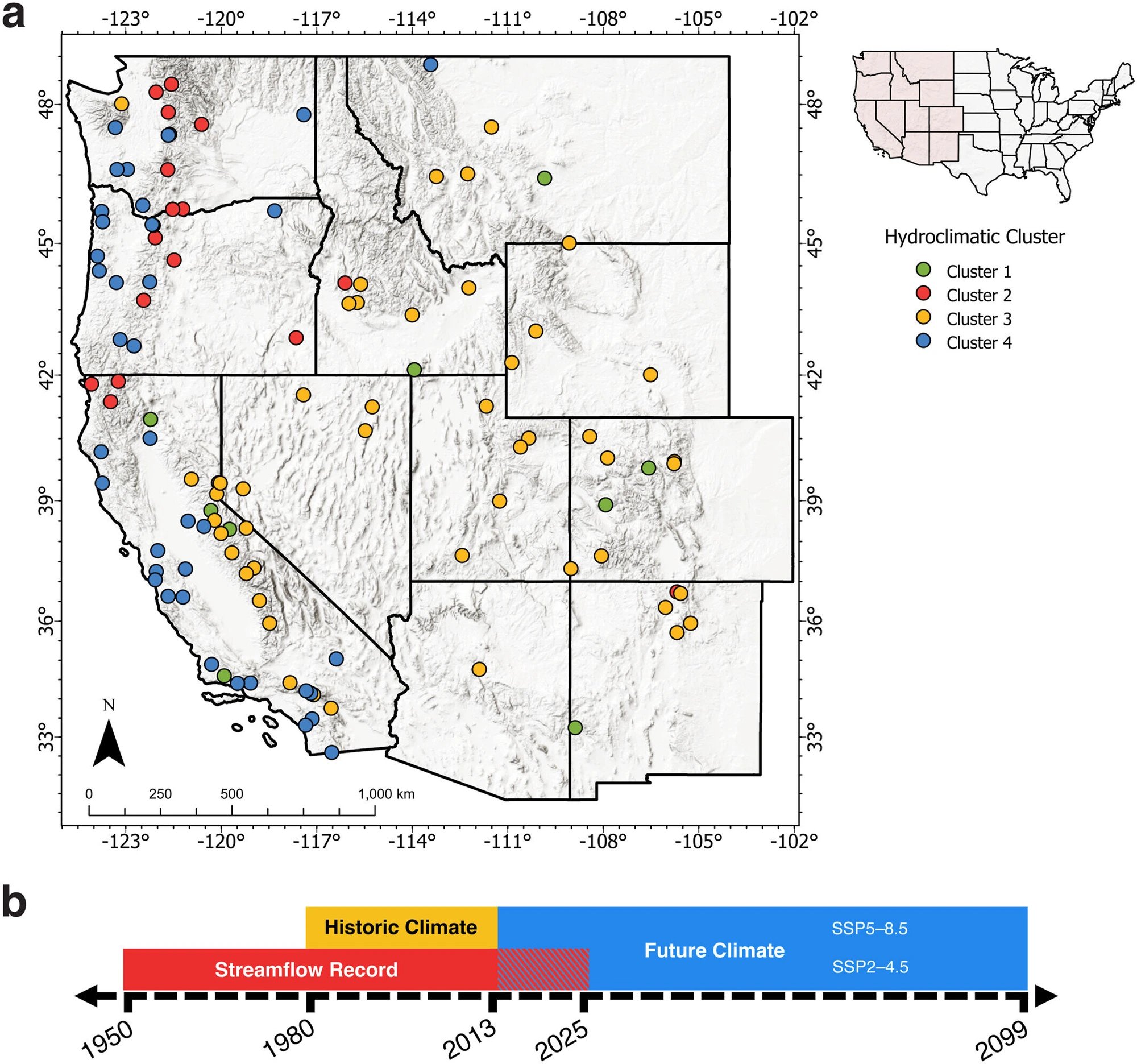
Headwater streams comprise 88% of the western U.S. river network and supply much of the region’s surface water. The NAU-led study analyzed 75 years of data from 115 headwater basins across 11 states. These systems rely heavily on groundwater, making changes in recharge critical for downstream water availability.
Earlier Peak Flows
Across all watershed categories, peak base flow is occurring earlier in the year. Rising temperatures cause snow to melt sooner and more precipitation to fall as rain, reducing late-summer groundwater contributions. Base flow increased in late winter and early spring but dropped substantially in June and July, out of sync with peak demand.
Century-End Projections
Under current climate trends, base flow could decline 45–65% by 2100. Machine learning models identified antecedent moisture as the strongest predictor of future base flow. Warming and drying are expected to intensify these losses across all four watershed types studied.
1 source
Time · lag behind first