
Leipzig study links 55% of Europe summer drought to weather shifts
This digest was compiled by AI from multiple sources — links to the originals are below.
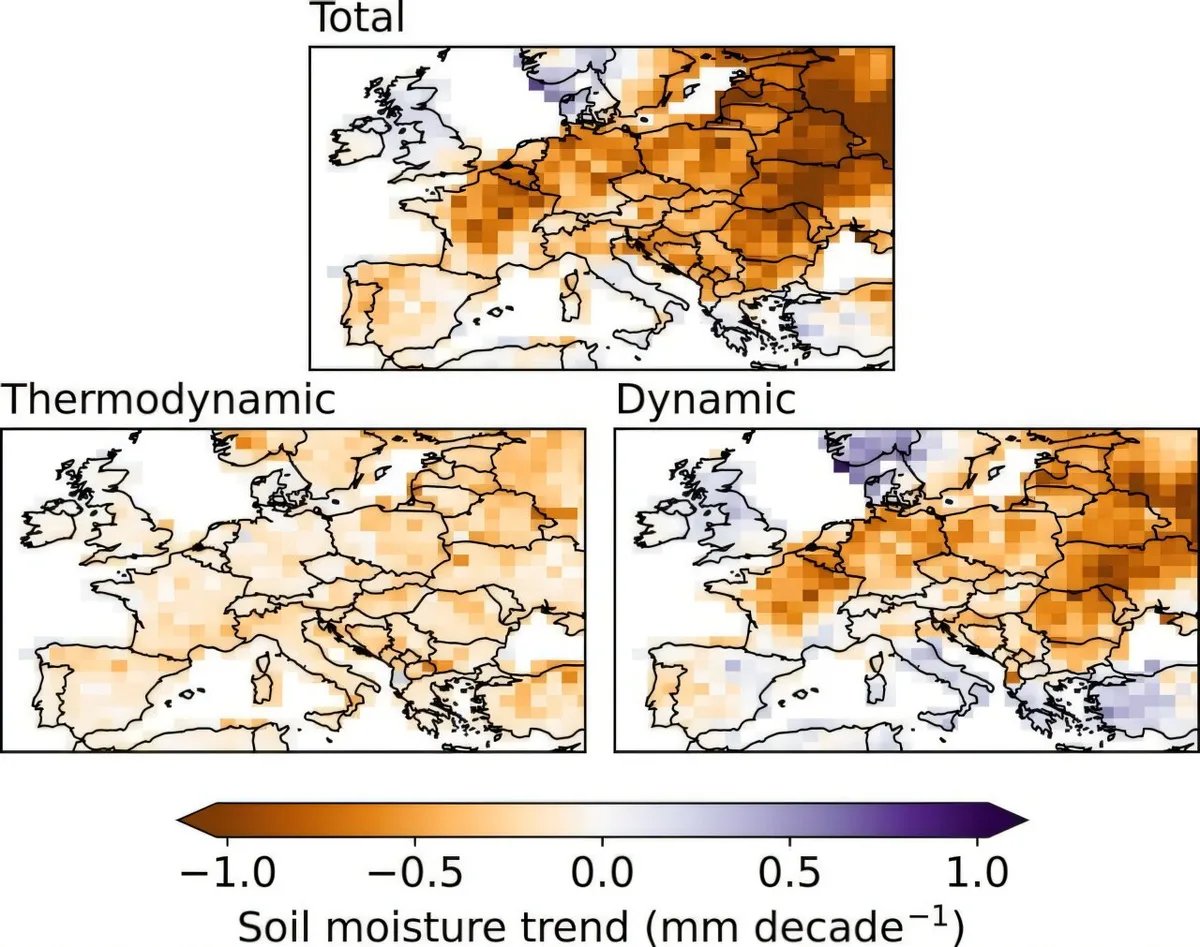
A study by Leipzig University finds that shifts in atmospheric circulation patterns account for about 55% of Europe's summer drought trend. The research, published in Nature Geoscience, highlights that more frequent high-pressure systems drive drier conditions and reduced rainfall. Lead author Dr. István Dunkl notes that future drought projections remain highly uncertain due to the role of circulation changes.
The Circulation Factor
Researchers at Leipzig University's Institute for Meteorology analyzed summer soil moisture trends across Europe. They found that changes in atmospheric circulation—specifically more frequent and persistent high-pressure systems—drive 55% of the observed drying trend. The study, published in Nature Geoscience, used observational data and climate models to isolate the circulation effect.
Climate Change Interaction
The study also reveals that climate change amplifies soil drying in dry summers, while wetter years see partial offset from extreme precipitation events. Junior Professor Sebastian Sippel notes that Europe is one of the regions with the strongest observed warming, leading to increased heat and drought frequency. The resulting soil dryness has significant consequences for crop yields, water availability, and energy production.
Uncertainty in Projections
Lead author Dr. István Dunkl emphasizes that whether drought intensifies or eases depends on whether circulation changes are driven by climate change or natural variability. This question remains largely unresolved, making future summer drought projections highly uncertain. The researchers call for further study to disentangle the causes of rising temperatures and drought.
1 source
Time · lag behind first