
Atlantic overturning circulation weakens across broad region since 2004, study finds
This digest was compiled by AI from multiple sources — links to the originals are below.
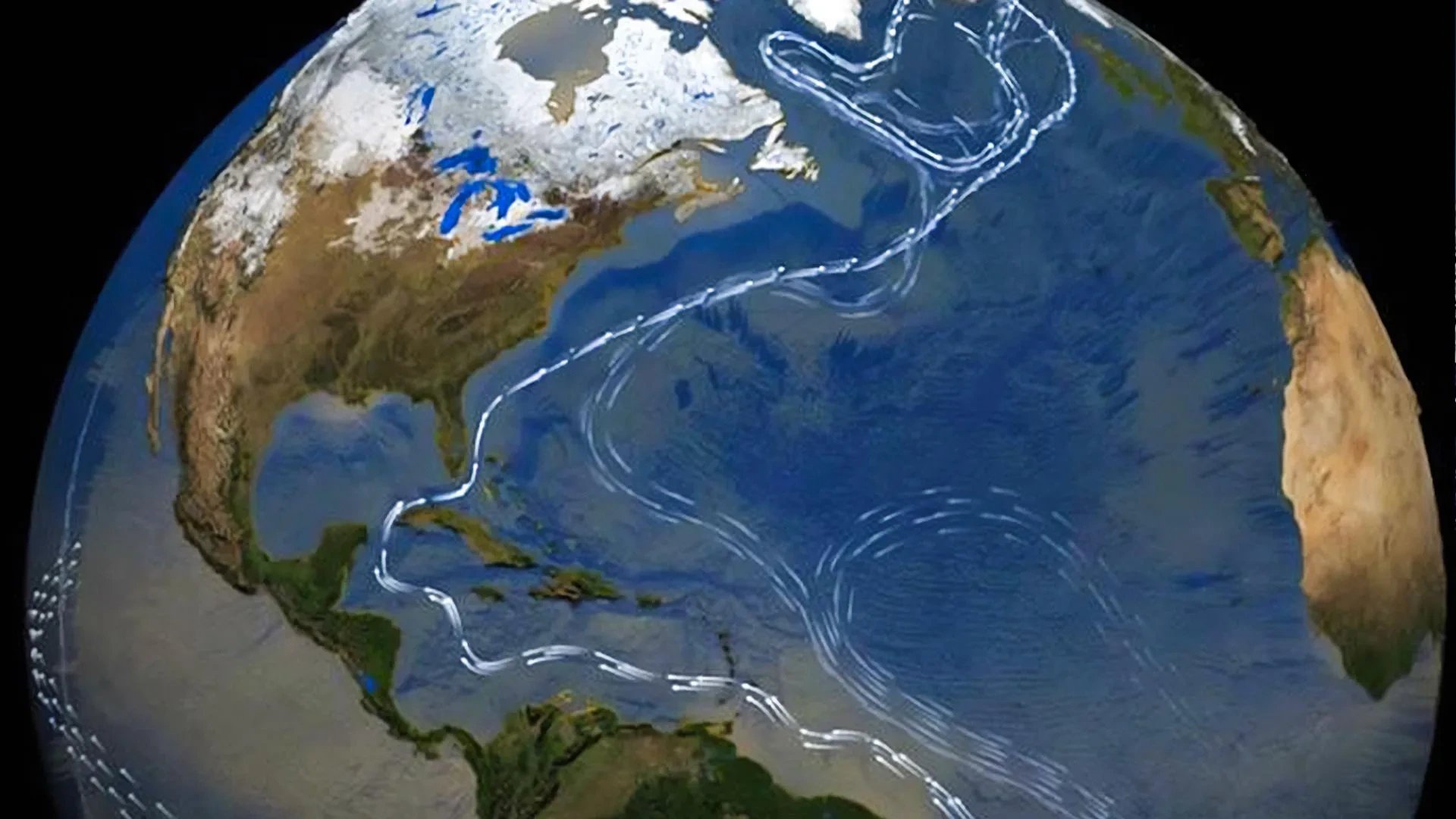
The Atlantic Meridional Overturning Circulation has weakened across a broad region from 16.5°N to 42.5°N for nearly two decades, according to a University of Miami study. The decline, based on direct observations from four ocean monitoring arrays, could shift weather patterns, rainfall, storms, and sea level across the Atlantic and beyond.
Key Facts
- The Atlantic Meridional Overturning Circulation has weakened from the subtropics to mid-latitudes, between 16.5°N and 42.5°N, for nearly two decades.
- The study used data from four ocean monitoring arrays along the western edge of the North Atlantic, with instruments anchored to the seafloor measuring pressure, temperature, density, and currents.
- Researchers examined changes in bottom pressure below about 1,000 meters to estimate the movement of deep water and assess circulation strength.
- A weaker AMOC can shift weather patterns, potentially leading to more extreme storms, changes in rainfall, or colder winters in some regions, and can influence sea-level rise along coastlines.
Observed Weakening
The study, led by researchers at the University of Miami Rosenstiel School of Marine, Atmospheric and Earth Science, provides some of the clearest direct observational evidence that the AMOC is losing strength. A key component of the AMOC along the western boundary of the North Atlantic has been declining from about 16.5°N to 42.5°N. Because the weakening appears across such a large geographic area, the researchers say it is more consistent with a broad shift in Atlantic circulation than with a short-lived regional fluctuation. The monitoring systems use instruments anchored to the seafloor that continuously measure pressure, temperature, density, and ocean currents.
Climate Implications
AMOC is a vast system of ocean currents that moves warm water northward near the surface and transports colder, denser water southward at greater depths. By redistributing enormous amounts of heat through the Atlantic, it helps shape regional temperatures, rainfall patterns, sea level, and weather. Shane Elipot, a senior author of the study and physical oceanographer at the Rosenstiel School, said a weaker AMOC can shift weather patterns, potentially leading to more extreme storms, changes in rainfall, or colder winters in some regions. Elipot added that it can also influence sea-level rise along coastlines, affecting communities and infrastructure.
1 source
Time · lag behind first