Microscale roughness cuts drag 43.6%, upending 80-year fluid dynamics principle
This digest was compiled by AI from multiple sources — links to the originals are below.
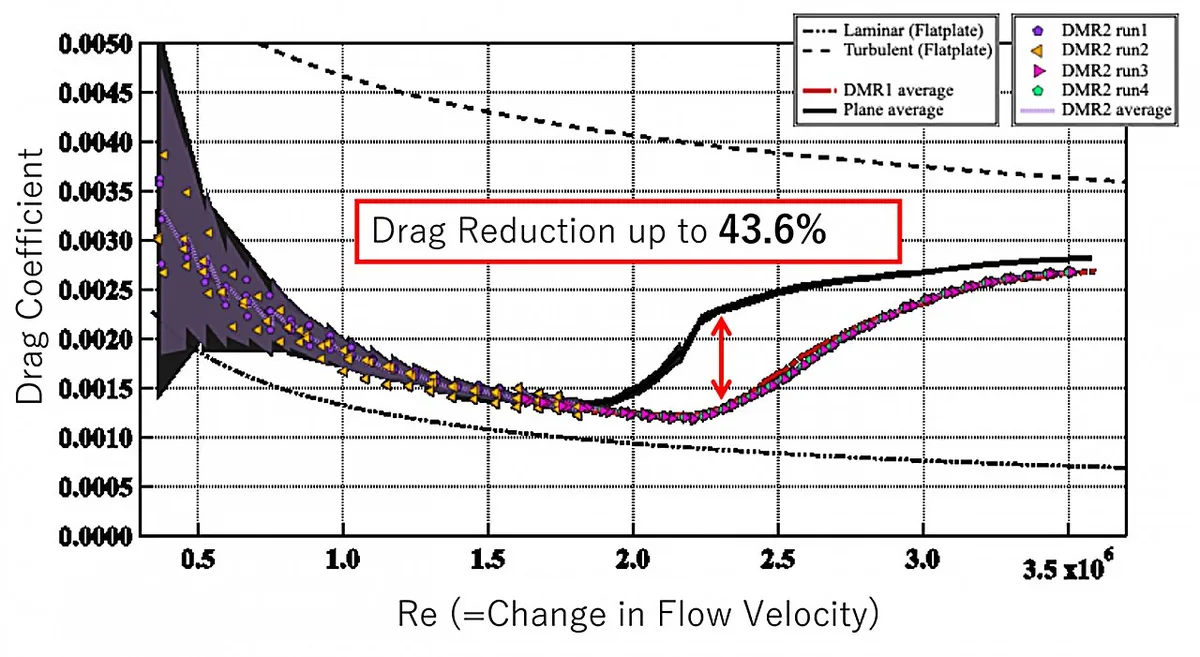
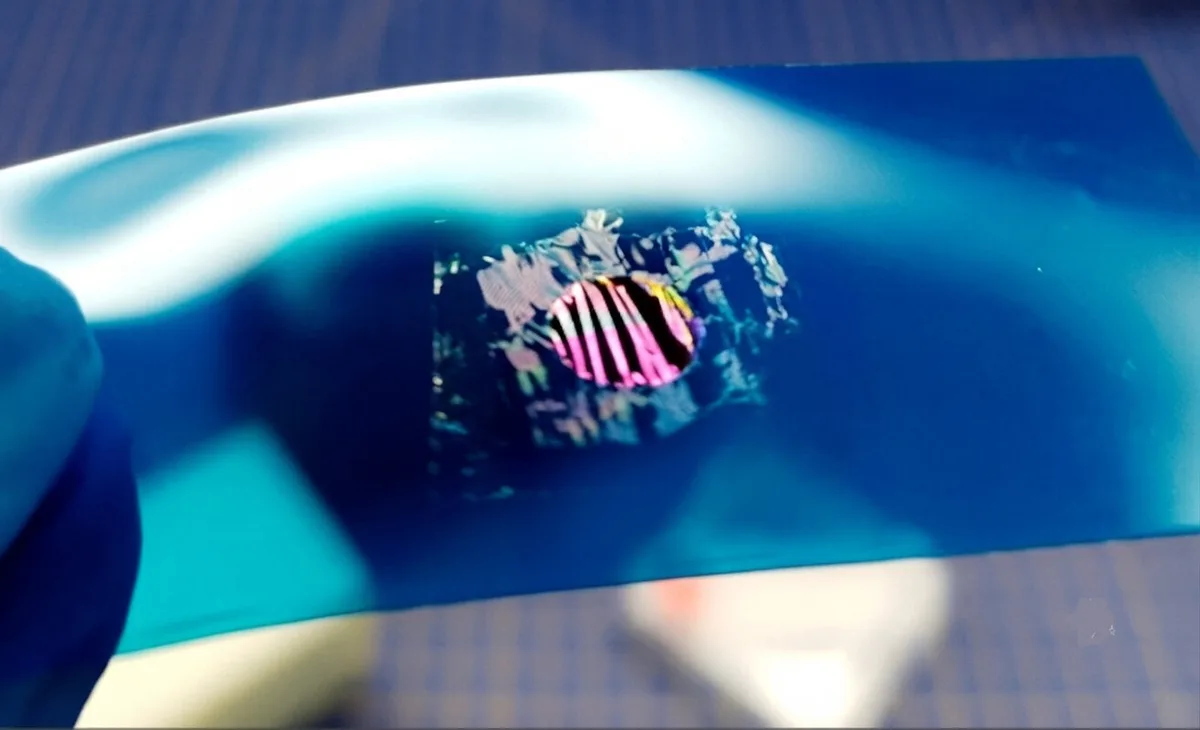
Researchers at Tohoku University achieved up to 43.6% aerodynamic drag reduction by applying irregular microscale surface textures, overturning an 80-year assumption that smoother surfaces always reduce drag. The breakthrough, published in the Journal of Fluid Mechanics, could lead to more fuel-efficient vehicles across aviation, automotive, marine, and rail sectors.
The Measurement Method
The team used the institute's 1-m Magnetic Suspension and Balance System (MSBS), one of the world's largest, to levitate a streamlined test model via electromagnetic force. This eliminated support interference that would mask minute drag changes from the Distributed Micro-Roughness (DMR). Wall-resolved large-eddy simulation (LES) computationally visualized airflow, revealing that drag reduction stems from suppression of skin-friction drag, not flow separation as seen on golf balls.
Smooth by Definition
LES showed the DMR roughness height corresponds to k⁺ ≈ 1.2–1.7 in viscous units, well below the hydraulically smooth threshold of k⁺ < 5. Despite being classified as smooth by fluid dynamicists, the surface produced a 43.6% drag reduction. The effect persisted up to the highest tested Reynolds number (Re = 3.6×10⁶), suggesting applicability beyond transitional flow into turbulent regimes.
What's Next
The team plans to test DMR on larger-scale models and real vehicle components. It remains unclear whether the technique can be cost-effectively manufactured and integrated into existing production lines.
1 source
Microscale roughness cuts drag 43.6%, upending 80-year fluid dynamics principle