
ISTA physicists realize autonomous distributed entanglement
This digest was compiled by AI from multiple sources — links to the originals are below.
Physicists at the Institute of Science and Technology Austria (ISTA) have experimentally demonstrated a fully autonomous method for distributed entanglement using a quantum bath of correlated light particles. The work, published in Physical Review X, confirms a 20-year-old theoretical prediction. It could provide a new platform for applied quantum technologies.
The Experiment
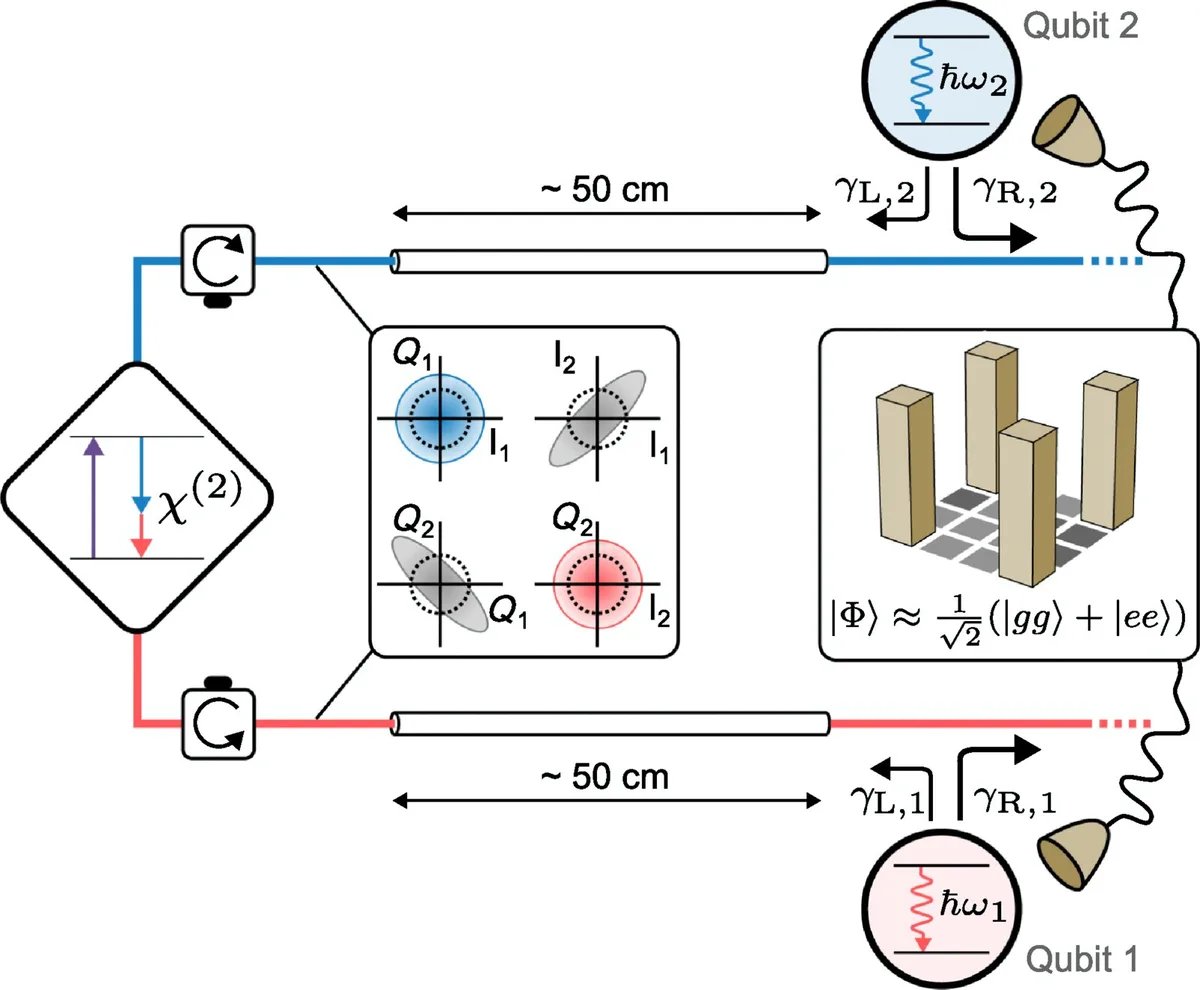
Researchers at ISTA used a quantum bath of correlated light particles to create distributed entanglement between two distant modules without active control or repeated measurements. The setup involved a source of entangled photon pairs and two separate nodes, each containing a rubidium atom. The autonomous method relies on the bath's intrinsic correlations to establish entanglement, eliminating the need for feedback loops.
Theory Confirmed
The experiment confirms a 20-year-old theoretical prediction by physicist Peter Zoller and colleagues, who proposed that a common bath could induce entanglement. The results were published in Physical Review X on July 13, 2026. The team measured entanglement fidelity exceeding 80%, surpassing the classical limit.
Quantum Technology Impact
Distributed entanglement is essential for linking quantum processors in a future quantum internet. The autonomous method reduces complexity and resource requirements compared to traditional approaches. The ISTA team notes that the technique could be integrated with existing quantum hardware, such as superconducting qubits or trapped ions.
1 source
Time · lag behind first