Robotic Floats Detect Ocean Chemistry in Low-Oxygen Zones
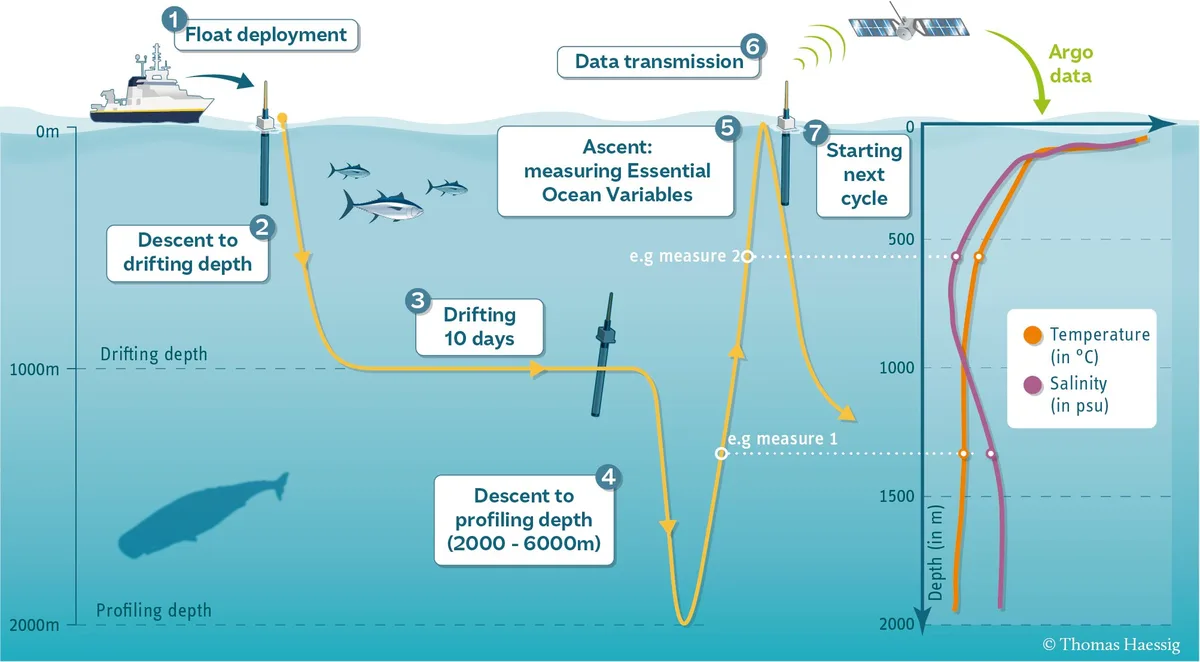
Scientists have utilized robotic floats to uncover subtle chemical signatures in low-oxygen ocean zones. This discovery reveals previously hidden details about ocean chemistry. The findings emerge as climate change impacts marine environments.
Robotic Floats Deployment
Thousands of autonomous robotic floats have been deployed across global oceans to collect continuous data. These floats, part of the Argo program, provide insights into ocean chemistry, particularly in low-oxygen zones. The program involves collaboration between institutions like the National Oceanic and Atmospheric Administration (NOAA) and the European Centre for Medium-Range Weather Forecasts. This initiative has led to the detection of subtle chemical changes that were previously undetectable.
Chemical Signatures Analysis
The data collected by the robotic floats has enabled scientists to identify chemical signatures in seawater. These signatures reveal information about nutrient cycles and biological processes in low-oxygen zones. Researchers from institutions such as the Woods Hole Oceanographic Institution and the Scripps Institution of Oceanography are analyzing this data. The findings could have implications for understanding the impacts of climate change on marine ecosystems.
What's Next
Further analysis of the collected data is expected in the coming months. It remains unclear how these findings will influence future oceanographic research and policy.
1 source
Robotic Floats Detect Ocean Chemistry in Low-Oxygen Zones