
Ukraine robot offensive reverses Russian gains in Donbas
This digest was compiled by AI from multiple sources — links to the originals are below.
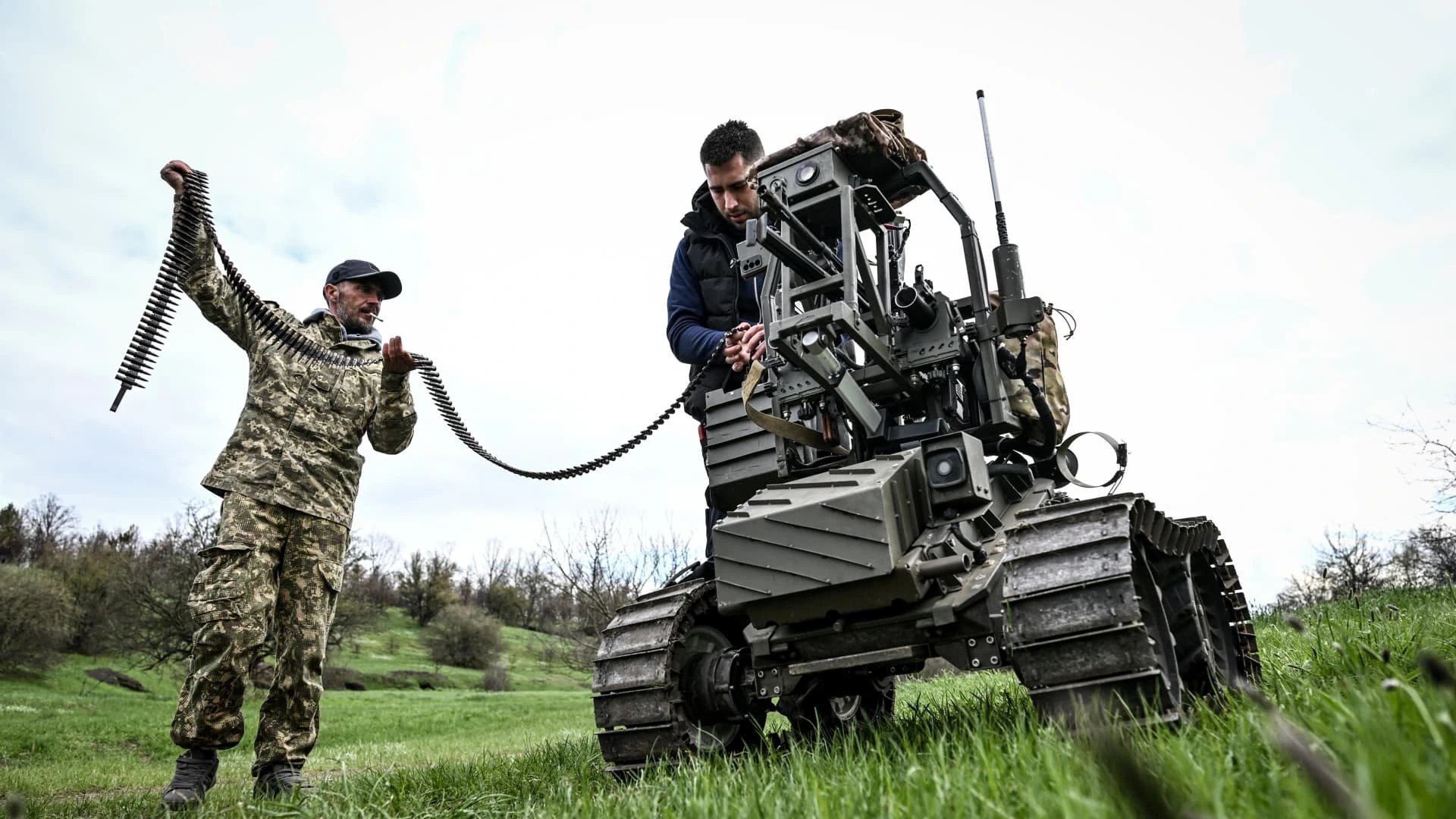
Ukraine's Operation Vivaldi, a robot-led offensive in the eastern Donbas, has retaken 176 square kilometers and inflicted over 2,000 Russian losses since May. The operation reversed over a year of Russian territorial gains and dealt a strategic blow to President Vladimir Putin's war aims. Ukrainian forces used bomber drones and remote-controlled robots to attack Russian positions behind the front line near Lyman.
Key Facts
- Operation Vivaldi has retaken 176 square kilometers of territory in the Donbas region since May 2026.
- The third phase of the operation liberated 51 square kilometers and inflicted over 2,000 Russian losses, including over 250 prisoners.
- Ukrainian Brigadier-General Andrii Biletskyi announced the territorial gains on September 28, 2026.
- The offensive was conducted by Ukraine's Third Army Corps using large bomber drones and remote-controlled robots behind enemy lines near Lyman.
- Defense expert Patrick Bolder of the Hague Center for Strategic Studies described the operation as a 'big bloody nose' to Putin's aim of seizing the Donbas.
Operation Vivaldi
Ukraine's Third Army Corps launched Operation Vivaldi in May 2026, deploying large bomber drones and remote-controlled robots behind Russian lines around Lyman in northern Donetsk Oblast. The operation caught Russian forces off guard, according to security experts, and reversed over a year of Russian territorial gains in the region. Ukrainian Brigadier-General Andrii Biletskyi reported on September 28 that the third phase liberated an additional 51 square kilometers, bringing the total retaken to 176 square kilometers. The latest phase inflicted over 2,000 Russian losses, with more than 250 Russian soldiers taken prisoner.
Tactical Innovation
Ukrainian forces secured control of the air in the Lyman area, denying Russia the use of its drones, according to Patrick Bolder, a defense expert at the Hague Center for Strategic Studies. Ukraine then used its own drones to drop unmanned ground vehicles behind enemy lines, attacking Russian troops from the rear without endangering Ukrainian personnel. Bolder described the offensive as a 'big bloody nose' to Putin's minimal war aim of seizing Ukraine's Donbas region. Serhii Kuzan, chairman of the Ukrainian Security and Cooperation Center, said the operation demonstrated that the systematic replacement of human personnel with robots is changing the paradigm of modern warfare.
1 source
Time · lag behind first