
Ukraine war exposes limits of Russian military power after more than four years
This digest was compiled by AI from multiple sources — links to the originals are below.
More than four years after Vladimir Putin ordered the full-scale invasion, Ukraine has severely degraded Russia's conventional ground forces and exposed failures in planning and doctrine. Moscow continues to adapt, expand weapons production, and retains substantial naval, nuclear, cyber, and space capabilities.
Key Facts
- More than four years into Moscow's full-scale invasion, Ukraine has severely degraded Russia's conventional ground forces and exposed profound failures in planning and doctrine.
- Joshua Huminski, senior vice president at the Center for the Study of the Presidency and Congress, said Russia's Northern and Pacific naval fleets retain important capabilities while its strategic nuclear forces are largely untouched.
- Joshua Huminski said Moscow's reliance on North Korea for ammunition, missiles, and troops is neither proof of Russian collapse nor of postwar strength.
- Ukrainian forces repelled elite Russian airborne troops at Hostomel outside Kyiv early in the invasion.
- Drones, electronic warfare, and long-range strikes have created a heavily surveilled 'kill zone' along the front.
Degraded Ground Forces
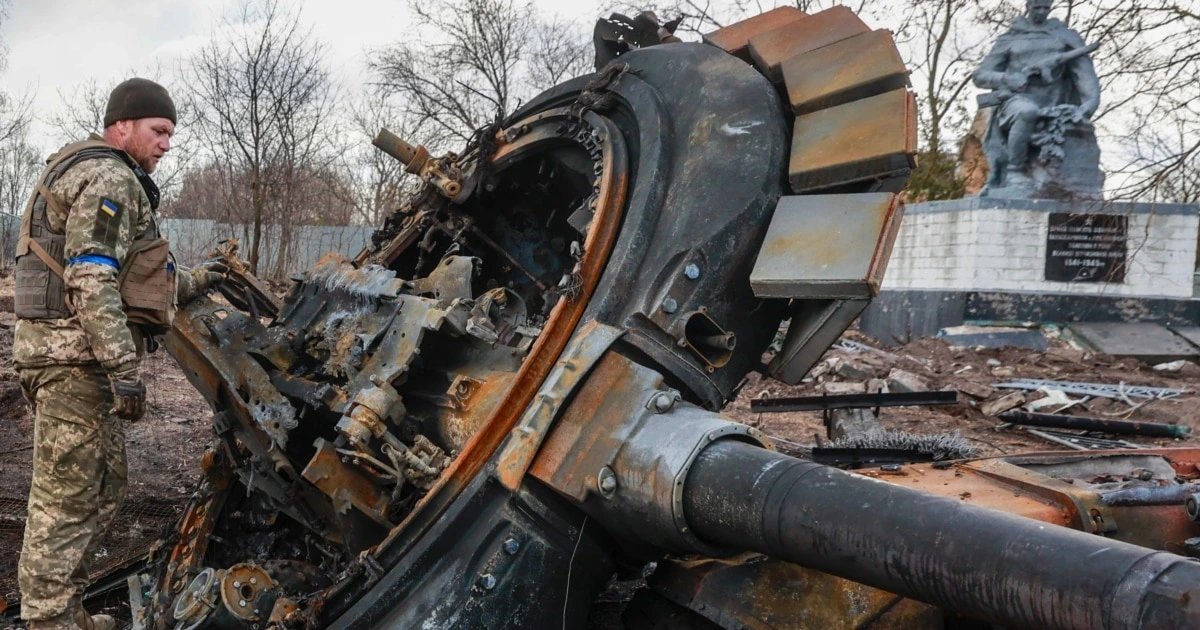
More than four years after President Vladimir Putin sent Russian forces into Ukraine, the Kremlin's assumption that sheer mass backed by Soviet-era stockpiles would overwhelm resistance has been all but obliterated. Ukraine survived the initial assault, derailed Russia's expected quick victory, and turned the conflict into a high-tech war of attrition. Joshua Huminski, senior vice president for national security and intelligence at the Center for the Study of the Presidency and Congress, said Russia's conventional ground forces in Ukraine are being consistently and severely degraded. The defense of Hostomel outside Kyiv, where Ukrainian forces repelled elite Russian airborne troops, became an early example of how Moscow's plans could unravel. Small-unit tactics and Western anti-tank weapons exploited weaknesses in advancing Russian armor.
Enduring Russian Capabilities
Huminski warned that judging Russian military power solely through the lens of degraded ground forces would be a mistake. Russia's Northern and Pacific naval fleets retain important capabilities, while its strategic nuclear forces have been largely untouched. Moscow still possesses capable cyber and space assets that the war has not degraded. Russia's growing reliance on North Korea for ammunition, missiles, and troops should not be mistaken for proof that the military is collapsing or that it will emerge stronger. The question is no longer simply whether Russia remains the world's second-most-powerful military, but whether adaptation can prevent its exposed weaknesses from becoming decisive.
Battlefield Adaptation
Since the failed blitzkrieg, the war has become a relentless contest of adaptation. Drones, electronic warfare, and long-range strikes have transformed the battlefield and made movement increasingly dangerous. Ukraine has developed an innovation cycle that Huminski said is moving faster than anything the US or other NATO countries are doing. The heavily surveilled front has become a kill zone where conventional armored advances are exposed.
1 source
Time · lag behind first