
Europe's record heat stress and drought signal expanding climate extremes
This digest was compiled by AI from multiple sources — links to the originals are below.
More than half of Europe experienced dangerous heat stress during the summer of 2026, with record-low river flows and widespread crop losses. The European Union's Copernicus Climate Change Service reported that 52 percent of the continent faced extreme heat stress, while 46 percent of land was under drought by late August. The heat season is expanding into spring and fall, with over 40 percent of Europe exceeding 30°C in May and September.
Key Facts
- Heat stress covered a record 52 percent of Europe from May to August 2026, according to the EU's Copernicus Climate Change Service.
- Four of Western Europe's ten most severe heatwaves since 1950 occurred between late May and mid-August 2026, all more intense than the 2003 heatwave.
- Total discharge volume across 12 major European river systems was about 69 cubic kilometers below the long-term mean, equivalent to roughly two years of EU public water supplies.
- By the end of August, around 46 percent of European land was experiencing drought, with about 40 percent of the affected area under extreme drought.
- In May and September, more than 40 percent of Europe experienced temperatures of at least 30°C, indicating an expansion of the heat season.
Heat Stress Extent
The Copernicus Climate Change Service reported that heat stress spread across a record 52 percent of the European continent during the May-to-August period. In some locations, the combined effect of temperature, humidity, wind, and sunshine produced a 'feels like' temperature of 100 degrees Fahrenheit or higher. Peter Hoffmann, a senior scientist at the Potsdam Institute for Climate Impact Research, explained that a higher heat stress index makes it harder for the human body to regulate its temperature. Last summer, 37 percent of European land areas experienced all-time daily, monthly, or seasonal temperature records, extending across nearly all of England and Wales and from France and Spain across Italy, Switzerland, and Austria.
River Flows and Drought
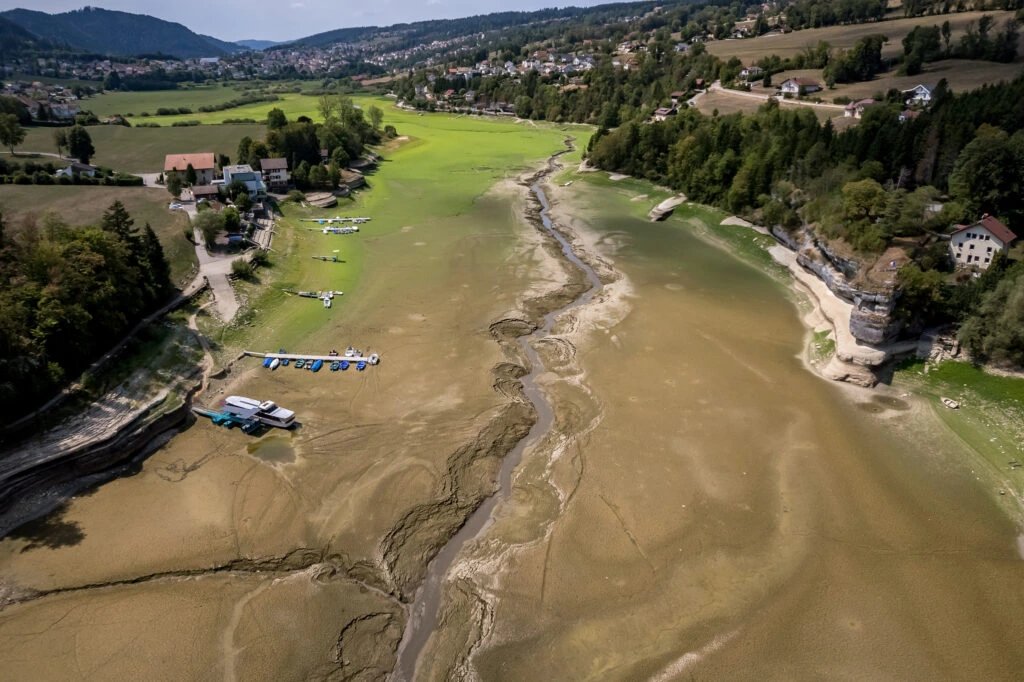
Across 12 major river systems, the total discharge volume was about 69 cubic kilometers below the long-term mean, equivalent to roughly two years of public water supplies across the European Union. The Loire, Seine, Rhine, Glomma, Vistula, and Danube rivers recorded their lowest summer-average flows on record at their outlets. Long stretches of the Rhône, Po, Dniester, Elbe, and Dnieper rivers also experienced record-low flows. By the end of August, around 46 percent of European land was experiencing drought conditions, and around 40 percent of the affected area was classified as being under extreme drought.
Expanding Heat Season
The report concluded that the heat season is expanding into the spring and fall. In May and September, more than 40 percent of Europe experienced temperatures of 86 degrees Fahrenheit (30 degrees Celsius), a benchmark for heat on a continent historically known for a temperate climate. Samantha Burgess, a climate expert with the European Centre for Medium-Range Weather Forecasts, said the summer brought compounding extremes to Europe, affecting water supplies, energy systems, transport, ecosystems, agriculture, and human health. Several rapid climate attribution assessments this summer found that human-caused warming intensified all the extremes, making the heatwaves hotter and more likely than in the past.
1 source
Time · lag behind first