
Europe's major rivers hit record lows, threatening freight and power
This digest was compiled by AI from multiple sources — links to the originals are below.
The Rhine at Kaub fell to -5 cm in late September, the lowest since records began in 1856. Low flows on the Rhine, Danube, Po, Loire, Rhône and Seine cut freight capacity and forced Romania to take emergency measures for its nuclear plant. The decline reflects a shift from snowmelt to rain, with summer minimums now arriving months early.
Key Facts
- The Rhine at Kaub, Germany, measured -5 cm in late September 2026, the lowest since records began in 1856.
- Rhine freight volume was 284.5 million tonnes in 2024.
- In August 2026, ships arriving at Duisburg carried about 300 tonnes instead of the usual 3,000 tonnes.
- Copernicus reported that July and August 2026 mean flows were the lowest on record for large stretches of the Rhine, Danube, Po, Loire, Rhône and Seine.
- Romania took extreme measures to keep its nuclear power plant operating as the Danube fell to very low levels.
Record Low Water Levels
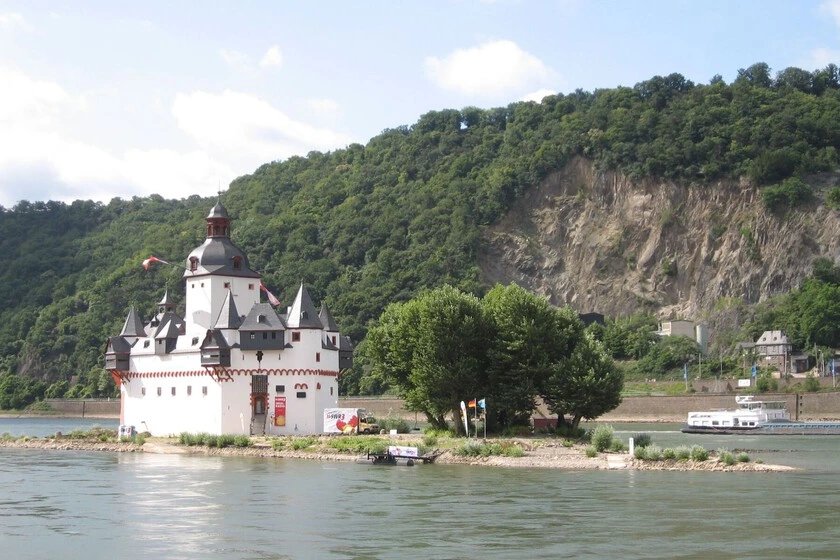
At Kaub, a reference point on the middle Rhine, the water level fell to -5 cm in late September 2026. That is the lowest reading since measurements began in 1856. A zero reading at Kaub means about 1.10 metres of navigable depth, already a serious constraint on cargo shipping. In August 2026, vessels reaching Duisburg carried roughly 300 tonnes instead of 3,000 tonnes, according to Schifffahrt und Technik. The Rhine moved 284.5 million tonnes of freight in 2024.
Continental River Crisis
The Danube fell so low that Romania took extreme measures to keep its nuclear power plant running. Copernicus data show July and August 2026 mean flows were the lowest on record for large stretches of the Rhine, Danube, Po, Loire, Rhône and Seine. The Copernicus series starts in 1992, but many of the broken records are much older. The Joint Research Centre estimated drought affected about 50% of EU territory, compared with 60% in 2022. The Dutch meteorological service reported in August that the June snowmelt peak had disappeared this year.
Snowmelt Shift and Freight Risk
The missing snowmelt is what normally sustains the Rhine through summer. Minimum levels that usually arrive in November occurred in summer 2026, when snowmelt should keep the river full. At Lobith, another reference station, three worrying episodes have occurred in eight years: 2018, 2022 and 2026. Freight can shift to trucks or trains, but the change is radical for Central Europe's self-image and transport system.
1 source
Time · lag behind first