
Lab device captures CO2 using 0.8 MWh per ton, below current costs
This digest was compiled by AI from multiple sources — links to the originals are below.
A nine-cell lab device captured carbon dioxide from air at 0.8 megawatt-hours per ton, below the 1.5–3 MWh/ton of existing direct air capture plants. The team, including members of startup RepAir Carbon, estimates scaled-up costs could reach $92 per ton. Current leader Climeworks targets $250–$350 per ton by 2030.
Key Facts
- The lab device used 0.8 megawatt-hours per ton of captured CO2, compared with 1.5–3 MWh/ton at current direct air capture facilities.
- A pilot plant is estimated at $566 per ton of captured CO2, with projected costs of $92 per ton at 1,000 times pilot capacity.
- Climeworks aims to reach $250–$350 per ton by 2030.
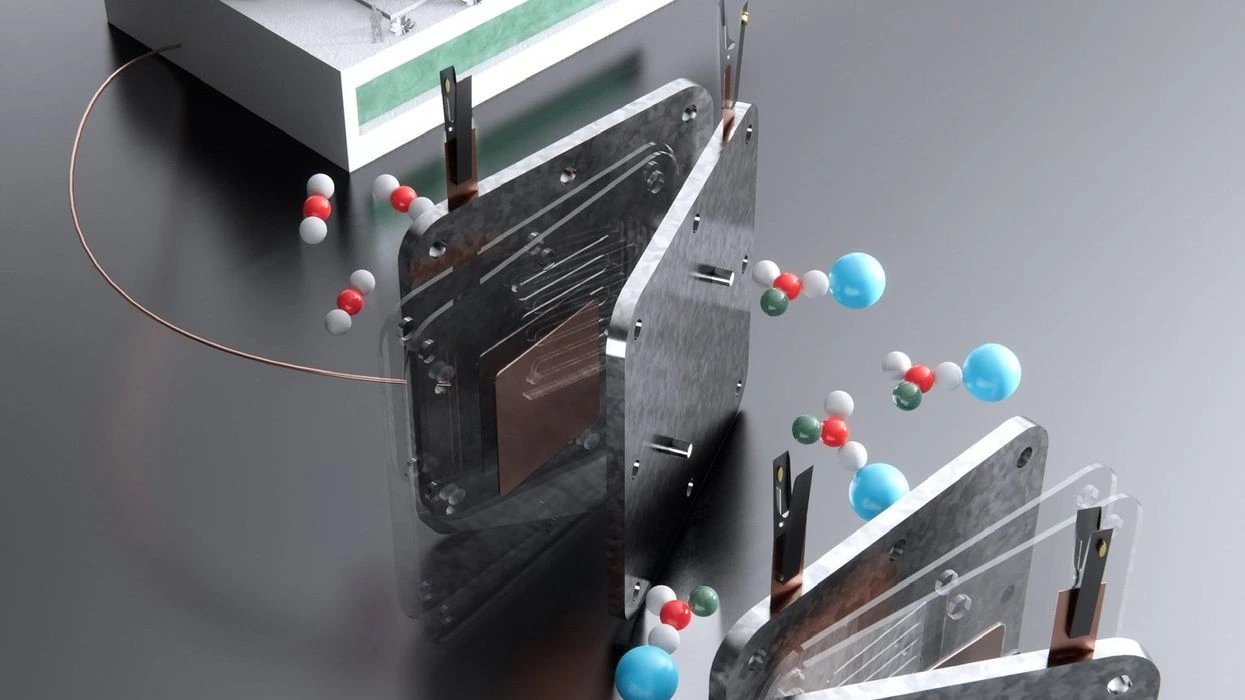
- The device stacked nine cells, each about half a letter-sized sheet of paper, with air pushed through sinuous channels using fuel-cell components.
- Several researchers are part of RepAir Carbon, a startup based on this technology.
Device Performance
The nine-cell lab device captured CO2 at 0.8 megawatt-hours per ton. Existing direct air capture facilities operate at 1.5 to 3 megawatt-hours per ton. Each cell had an area of about half a letter-sized sheet of paper. A blower pushed air through sinuous channels in plates sandwiching each cell, using components borrowed from fuel cells.
Cost Projections
An initial small pilot plant is estimated at $566 per ton of captured CO2. Using the lithium-ion battery industry learning rate and cost scaling, the team projects $92 per ton for a plant with 1,000 times pilot capacity. Climeworks is aiming for $250–$350 per ton by 2030. The $100 per ton target has long been the goal in carbon capture to spur wider adoption.
Commercialization Path
Several researchers on the team are part of RepAir Carbon, a startup based on this technology. Part of the paper sketches financial feasibility at scale. Adding more technologies may improve the odds that one reaches the $100 per ton goal.
1 source
Time · lag behind first