
Trump-Xi summit yields tariff truce extension, crisis channels, but core disputes remain
This digest was compiled by AI from multiple sources — links to the originals are below.
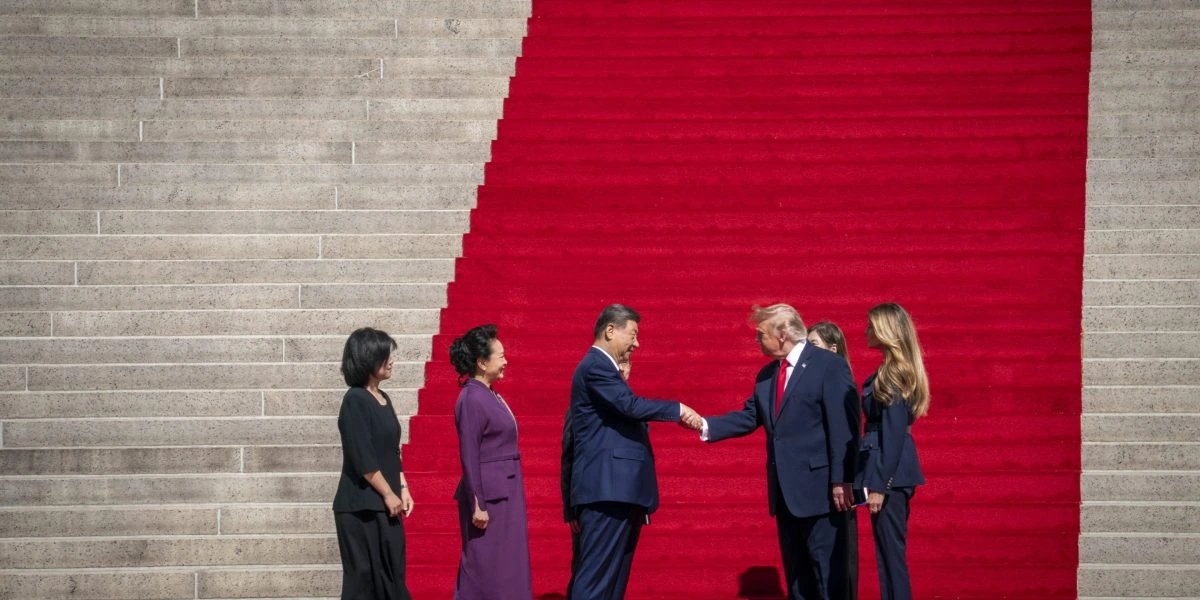
The Trump-Xi summit in Washington concluded with an extension of the tariff truce for two months and new military crisis communication channels. Both sides agreed to pursue lower tariffs on $30 billion of non-sensitive goods. However, core disputes over trade, export controls, Taiwan, Ukraine, and Iran remain unresolved.
Key Facts
- The U.S. and China extended their tariff truce for another two months, first agreed last year in South Korea.
- Both sides agreed to pursue lower tariffs on $30 billion worth of non-sensitive goods from each country.
- The U.S. announced that China agreed to import 10 million tons of coal annually over the next two years, though the Chinese readout did not mention this deal.
- The U.S. plans to cut tariffs on 77 goods, while China plans to reduce tariffs on 1,619 product categories.
- Both sides agreed to set up a dialogue mechanism over artificial intelligence, including a bilateral channel to discuss AI incidents.
Summit Outcomes
The key agreement from the meetings between U.S. and Chinese officials was an extension of the tariff truce for another two months. Both sides agreed to pursue lower tariffs on $30 billion worth of non-sensitive goods from each country. They also agreed to set up new crisis communication channels between their militaries. The U.S. announced that China agreed to import 10 million tons of coal annually over the next two years, though the Chinese readout did not mention this deal. On Monday, both sides unveiled a list of goods that may see tariff reductions: the U.S. plans to cut tariffs on 77 goods, while China plans to reduce tariffs on 1,619 product categories.
Unresolved Disputes
Hopes for more significant changes—a further relaxation of export controls on U.S. semiconductors and Chinese rare earths, Chinese investment into the U.S., or movement on the U.S. position on Taiwan—were not borne out. Lindsay Newman, a visiting research fellow at King's College London, said almost everything else remains unresolved between the sides. Eswar Prasad, a professor of trade policy at Cornell University, said the summit fizzled out on substance, confirming the vast gulf between the two countries' objectives. The DKNews.kz report notes that contradictions persist in trade, technology, security, and around Taiwan.
Managed Competition Framework
Ali Wyne, a senior research adviser for the International Crisis Group, said the bilateral relationship is on tactical autopilot and will likely remain so as long as Trump and Xi maintain a cordial working rapport. The DKNews.kz report states that the sides have begun to form a system of rules and working mechanisms to separate competition from areas where interaction remains necessary. After the May meeting in Beijing, China and the U.S. used the formula of constructive relations of strategic stability; in Washington, they agreed to build relations based on respect, fairness, and reciprocity. The sides also recorded consensus on eight points covering political principles, trade and economic interaction, artificial intelligence, anti-drug and law enforcement cooperation, and the international agenda.
2 sources
Time · lag behind first