
China Signals Iran Leverage Ahead of Trump-Xi Summit, Analysts Say
This digest was compiled by AI from multiple sources — links to the originals are below.
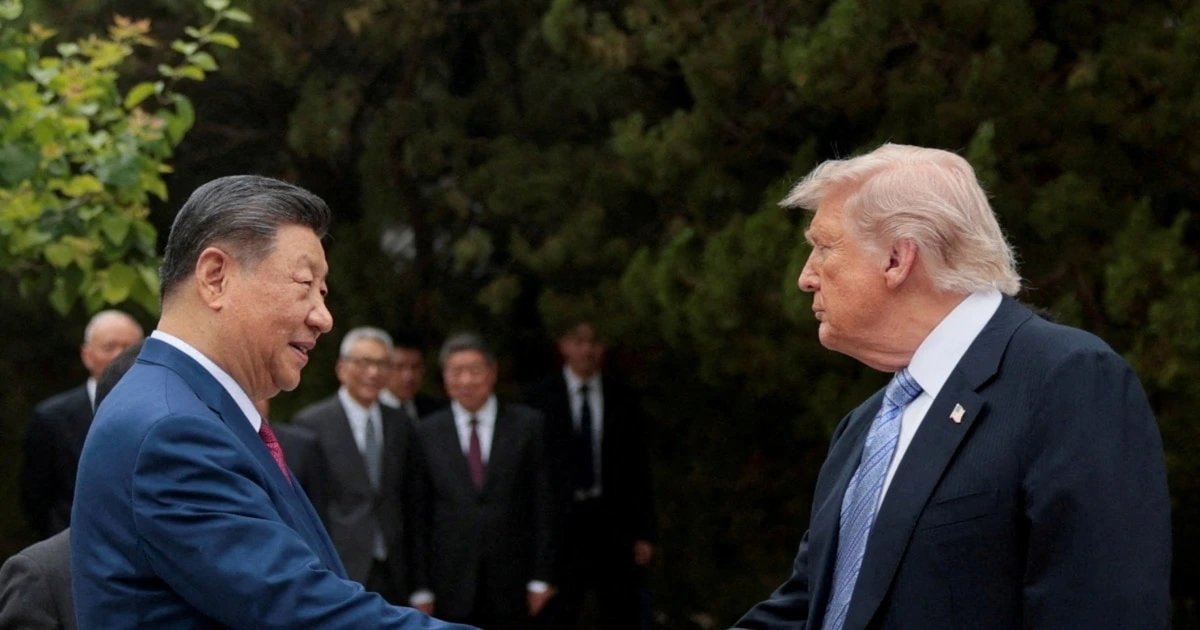
China is spotlighting its influence over Iran to gain leverage ahead of the September 24 Trump-Xi summit at the White House. Chinese Foreign Minister Wang Yi met Iranian counterpart Abbas Araghchi in Beijing on September 16, the fourth such contact in three months. Expectations for a breakthrough on Iran remain low as Trump focuses on economic outcomes.
Key Facts
- Chinese Foreign Minister Wang Yi met Iranian Foreign Minister Abbas Araghchi in Beijing on September 16, their fourth meeting in three months.
- China is Iran's largest trading partner and destination for over 80 percent of Iran's seaborne oil exports, according to Kpler.
- The Iran war has cost the Pentagon more than $38 billion through August 1, according to the Congressional Budget Office.
- Shanghai crude oil futures hit a record 929.4 yuan ($137.80) per barrel this month after drone attacks damaged Saudi Arabia's East-West pipeline.
- The U.S. Energy Information Administration estimates Beijing injected an average of 1.1 million barrels a day into national oil storage last year, totaling 1.4 million barrels as of December 2025.
China-Iran Engagement
Wang Yi described Beijing and Tehran as 'comprehensive strategic partners' during the September 16 meeting in Beijing. China is Iran's largest trading partner and the destination for over 80 percent of its seaborne oil exports, according to commodities analytics firm Kpler. Iran accounts for just 1 percent of China's overall global trade, per Chinese government data. Wang urged 'all parties' to take measures to swiftly reopen the Strait of Hormuz, which before the US-Iran war carried about one-fifth of global oil and gas supply. He stopped short of directly pressuring Iran and offered no concrete mediation plan.
Strategic Calculations
Elizabeth Freund Larus, an adjunct senior fellow at the Pacific Forum think tank, said China 'isn't going to do the heavy lifting' to bring the US and Iran to the table again. She noted that China benefits geopolitically from the conflict's toll on US military resources even though Beijing faces economic pressure from higher energy and raw material costs. The Iran war has cost the Pentagon more than $38 billion through August 1, according to the Congressional Budget Office. Washington has diverted significant military assets from the Indo-Pacific region to the Middle East, leaving the United States without a deployed aircraft carrier in the Western Pacific for the first time since World War II. Beijing faces surging oil prices, with Shanghai crude oil futures hitting a record 929.4 yuan ($137.80) per barrel this month after Iranian-backed proxies launched drone attacks that damaged Saudi Arabia's East-West pipeline.
Summit Agenda
Xi Jinping arrives in Washington this week for his first visit to the US capital in 11 years, with talks scheduled for September 24 at the White House. Xi's most urgent goal is to extend a trade truce sealed in Busan last October after a brief tariff war, according to Chinese scholars and analysts. Xi is also expected to discuss AI safety, ending the Iran war, and agreements to buy US soyabeans or Boeing aircraft. Xi will push hard against Washington's support for Taiwan, over which Beijing claims sovereignty. His most important aim is to preserve the détente described as 'constructive strategic stability' when Xi hosted Trump in Beijing in May.
3 sources
Time · lag behind first