
Seoul summit shifts Korea-Central Asia ties toward processing and technology
This digest was compiled by AI from multiple sources — links to the originals are below.
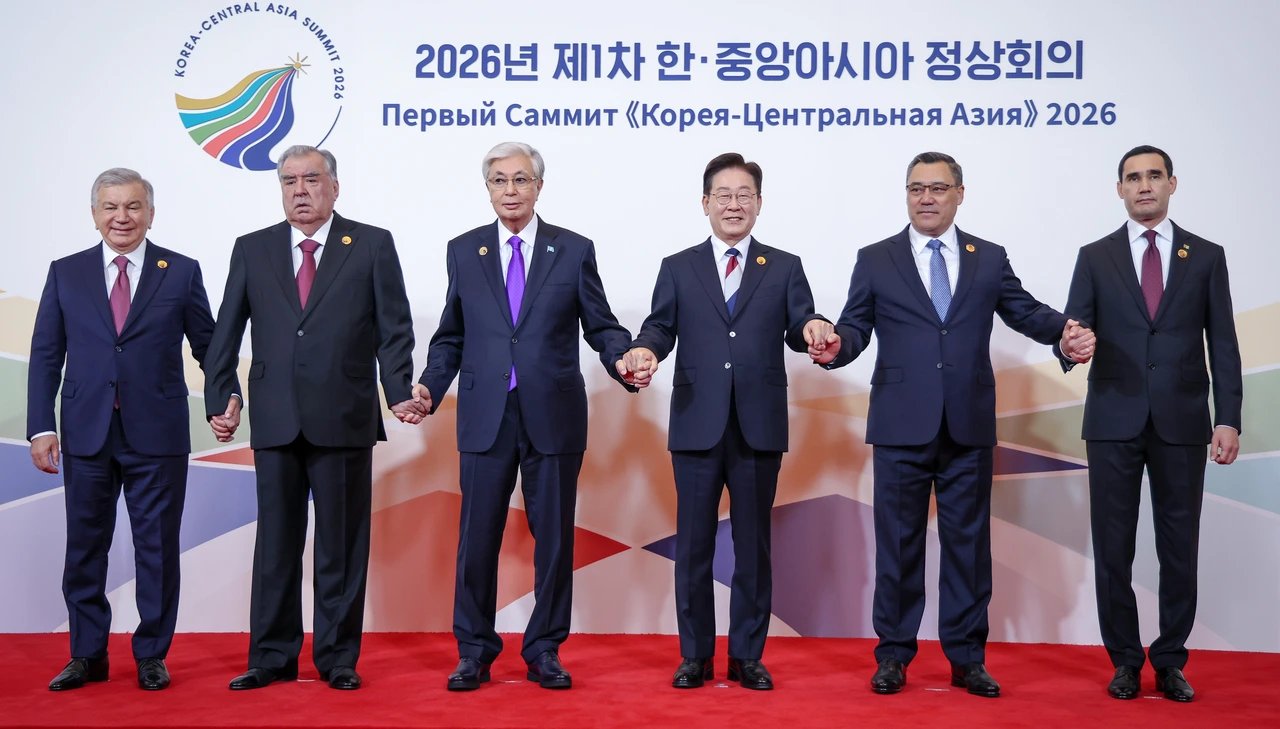
The first Korea-Central Asia summit in Seoul produced a biennial summit framework and the K-Silk Road strategy. The focus now shifts to turning agreements into concrete projects in processing, technology, and investment. The partnership is framed as practical cooperation that does not require Central Asian states to choose between major powers.
Key Facts
- The Seoul Declaration established biennial Korea-Central Asia summits and endorsed South Korea's K-Silk Road strategy.
- Cooperation will prioritize technology transfer, specialist training, and building processing facilities in Central Asia.
- Rare and rare-earth metal processing centers are identified as a promising area for Central Asian participation in higher-value production chains.
- Central Asian states hold significant reserves of lithium, uranium, and rare-earth elements relevant to Eurasian technology chains.
- The partnership is framed as compatible with Central Asia's multi-vector foreign policy and existing ties with other powers.
From Raw Materials to Processing
External partnerships with Central Asia have long centered on oil, gas, and critical minerals. South Korea's approach envisions a broader format that includes technology transfer, specialist training, and the creation of processing industries within the region. Cooperation on rare and rare-earth metals is seen as a way for Central Asian countries to move beyond raw material extraction into later stages of the production chain. The region holds significant reserves of lithium, uranium, and rare-earth elements, and domestic processing could raise the added value of local production.
Multi-Vector Cooperation
The summit highlighted cooperation in trade, investment, technology, industry, digitalization, education, and personnel training. For Central Asian states, this aligns with a multi-vector foreign policy that seeks to expand the circle of economic and technological partners. South Korea gains a stronger presence in Central Asia, expanded economic ties, and diversified supply chains. The format does not require Central Asian countries to abandon existing relations with other states.
1 source
Time · lag behind first