
South Korea to Host First Korea-Central Asia Summit in Seoul Sept. 16-17
This digest was compiled by AI from multiple sources — links to the originals are below.
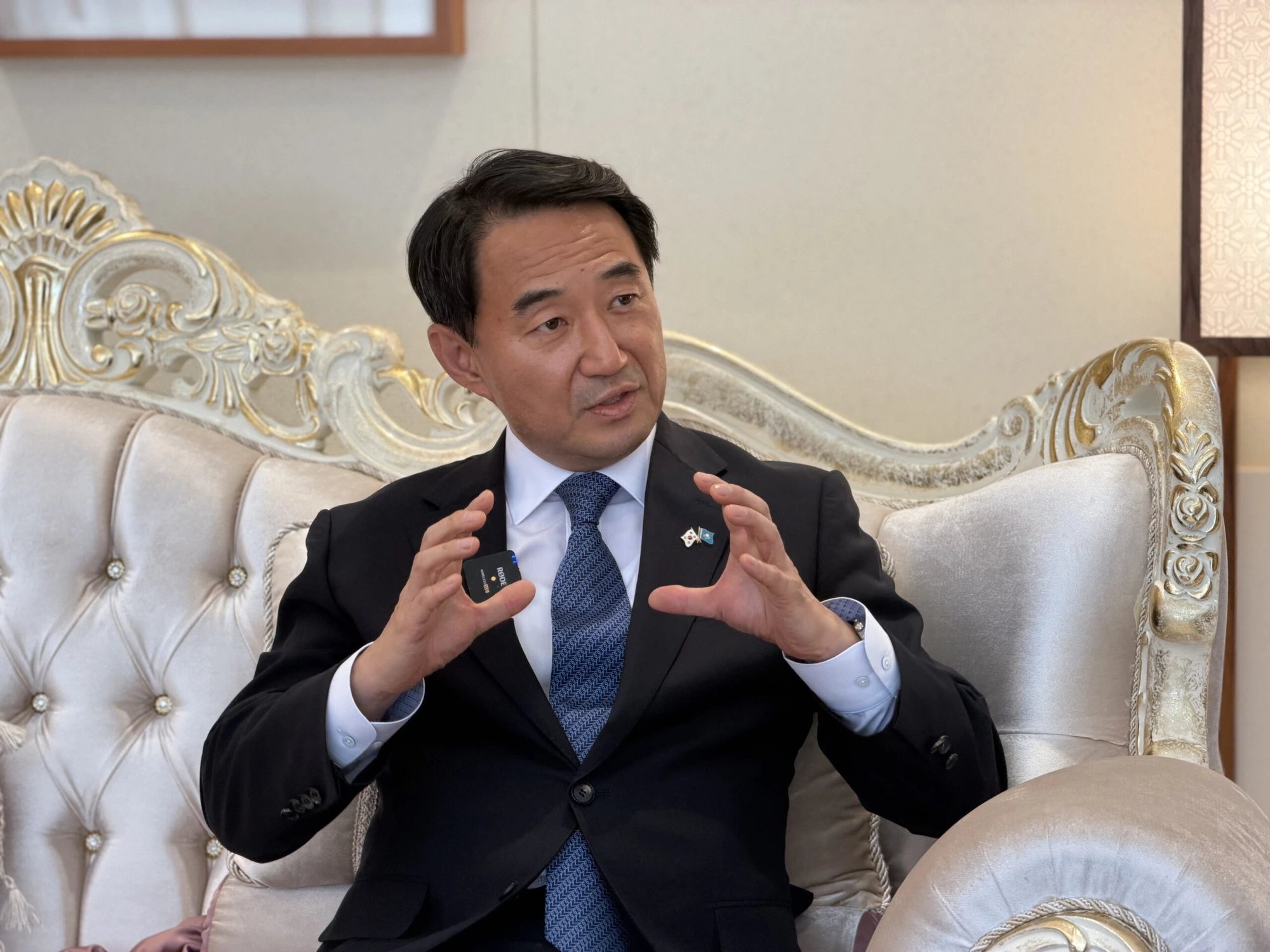
South Korea will host the first Korea-Central Asia summit in Seoul on Sept. 16-17, elevating a 2007 deputy-minister-level dialogue to a leaders' platform. Ambassador Jung Ki-Hong said the summit will focus on critical minerals, energy infrastructure, and AI. The gathering marks a new phase in Seoul's Eurasian strategy.
Key Facts
- The Korea-Central Asia summit is scheduled for Sept. 16-17 in Seoul.
- The summit elevates a dialogue mechanism launched at deputy minister level in 2007 to a leaders' platform.
- Bilateral trade between Kazakhstan and South Korea reached $3.17 billion in 2025, up 1.4% from the previous year.
- South Korea's gross investment in Kazakhstan surpassed $10 billion over 20 years.
- Ambassador Jung Ki-Hong presented credentials to President Kassym-Jomart Tokayev on Aug. 19.
Summit Agenda
The leaders are expected to discuss cooperation on critical minerals and energy infrastructure, supply chain resilience, artificial intelligence and digital transformation, as well as cultural and people-to-people ties. Ambassador Jung described the formation of the presidential-level forum itself as the most important outcome, more consequential than any single agreement expected from the summit. Jung said the summit will not be a one-time event.
Economic Relations
Kazakhstan is South Korea's largest trading partner and investment destination in Central Asia. In the first six months of 2026, bilateral trade reached $1.3 billion, while Kazakhstan's exports to South Korea increased 17.2% to $510 million. Ambassador Jung identified critical minerals, artificial intelligence, and power generation and the transition to cleaner energy as three particularly promising areas.
Critical Minerals Cooperation
Jung said critical minerals are not just mineral resources but geopolitical resources, echoing a recent assessment by President Tokayev. He noted that semiconductors, batteries, renewable-energy systems and AI infrastructure all depend on these materials, making Kazakhstan's resource base increasingly important to South Korean industry. Kazakhstan possesses substantial critical-mineral resources in deposits, concentrates and mine tailings, while South Korea has advanced processing technologies, industrial capacity and demand as an end user.
1 source
Time · lag behind first