
Central Asia's Middle Corridor freight rises 22% by August, container traffic up 36%
This digest was compiled by AI from multiple sources — links to the originals are below.
Freight volumes along the Trans-Caspian International Transport Route (TITR), known as the Middle Corridor, rose 22% by the end of August 2026, driven by a 55% jump in eastbound-westbound transit. Container traffic surged 36% to 77,000 TEUs in 2025, even as total tonnage plateaued due to uneven regional data infrastructure. The route, which bypasses Russia and the Middle East, has cut transit times from 38–53 days to 18–23 days.
Key Facts
- Annual freight volumes on the Middle Corridor expanded more than fivefold to roughly 4.5 million tons.
- Container traffic surged 36% to 77,000 TEUs in 2025.
- By the end of August 2026, overall freight volumes climbed another 22%, with eastbound-westbound transit up 55%.
- Transit times dropped from 38–53 days to 18–23 days, with optimized routes reaching 15 days.
- The World Bank and EBRD are investing hundreds of millions of dollars to triple corridor capacity to 11 million tons by 2030.
Route and Growth
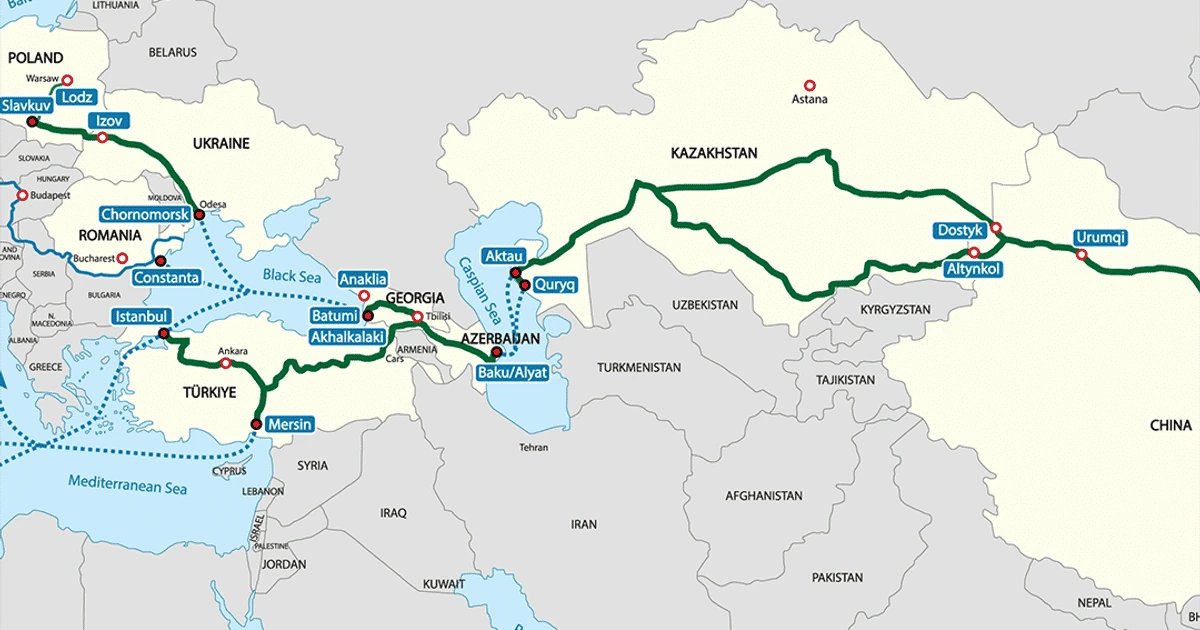
The Trans-Caspian International Transport Route (TITR), or Middle Corridor, runs from China through Kazakhstan and Turkmenistan, across the Caspian Sea to Azerbaijan, and onward through Georgia and Türkiye into Europe. It bypasses sanctioned Russian territory and volatile Middle Eastern flashpoints. Annual freight volumes expanded more than fivefold to roughly 4.5 million tons. Container traffic surged 36% to 77,000 TEUs in 2025, while total tonnage plateaued due to uneven regional data infrastructure. By the end of August 2026, overall freight volumes climbed another 22%, driven by a 55% jump in eastbound-westbound transit.
Transit Efficiency
Transit times have shrunk from 38–53 days to a predictable 18–23 day window. The Secretary-General of TRACECA noted that optimized routes can now clock in at just 15 days. A landmark agreement on a unified, electronic Single Transit Permit has accelerated bureaucratic modernization. Kazakhstan is expanding dual-track rails and building a massive container hub at Aktau.
Bottlenecks and Imbalances
The Caspian Sea crossing remains a severe bottleneck, worsened by dropping water levels that force ships to travel light. Roughly 80% of containers move west, leaving return legs mostly empty. Operators slash eastbound rates just to bring containers back. International lenders like the World Bank and the EBRD are pouring hundreds of millions of dollars into infrastructure to triple the corridor's capacity to 11 million tons by 2030.
1 source
Time · lag behind first