
MIT's insect-scale robot gains 450% speed boost with AI controller
This digest was compiled by AI from multiple sources — links to the originals are below.
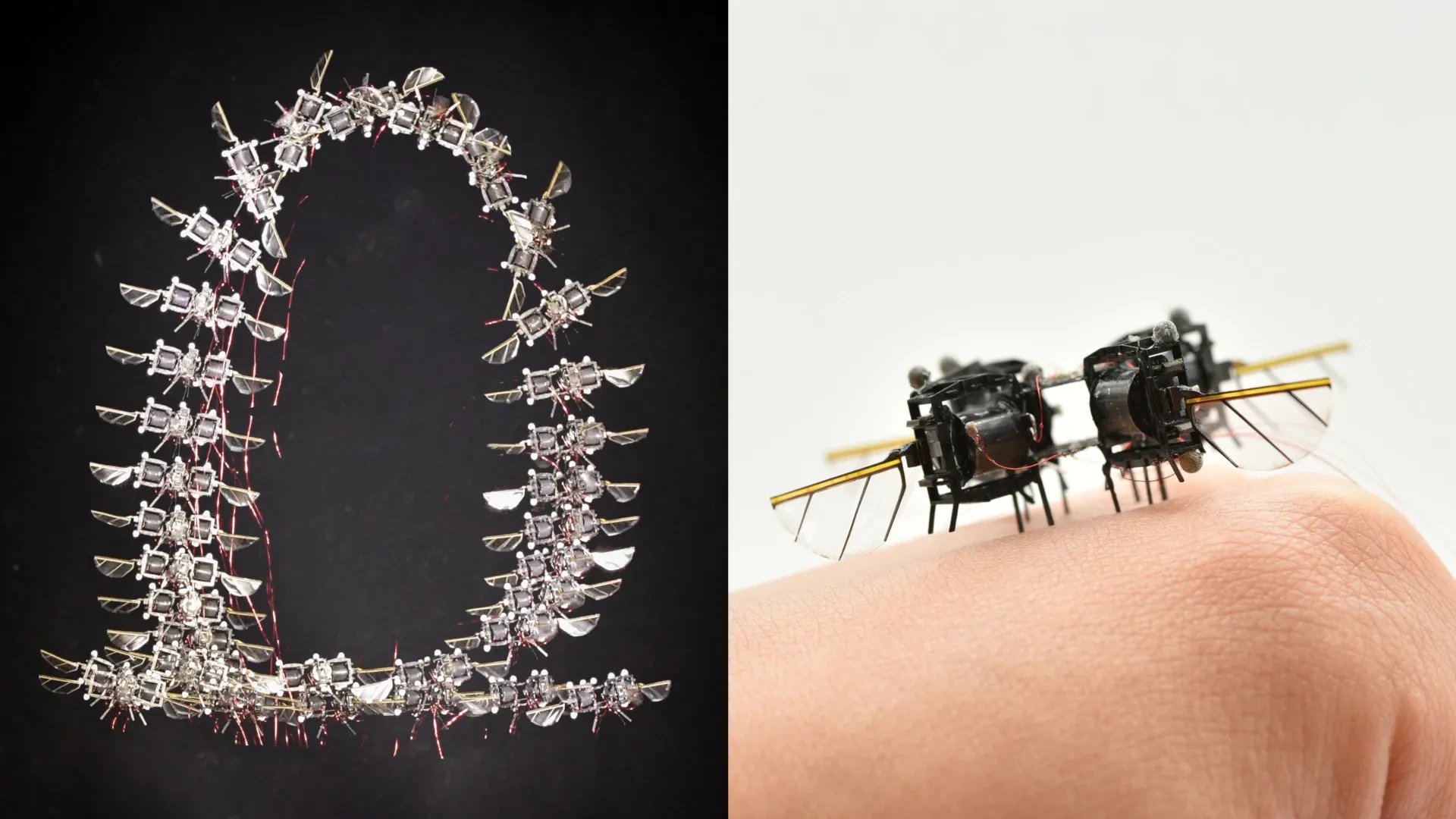
MIT researchers demonstrated an AI-based controller that increased an insect-scale flying robot's speed by about 450 percent and acceleration by about 250 percent. The robot completed 10 consecutive somersaults in 11 seconds despite wind disturbances. The advance brings aerial microrobots closer to the agility of real insects for search-and-rescue applications.
Key Facts
- The AI-based controller increased the robot's speed by about 450 percent and acceleration by about 250 percent compared with the team's previous best results.
- The robot completed 10 consecutive somersaults in 11 seconds while wind disturbances attempted to knock it off course.
- The research was published in Science Advances, with Kevin Chen and Jonathan P. How as co-senior authors.
- The robot is about the size of a microcassette and weighs less than a paperclip, with larger flapping wings driven by soft artificial muscles.
AI Flight Controller
The controller acts as the robot's brain, determining its position and deciding how it should move. The team developed a two-part control system designed to balance performance with computational efficiency. Kevin Chen, associate professor in EECS and head of the Soft and Micro Robotics Laboratory, said the bioinspired control framework makes the robot's flight performance comparable to insects in speed, acceleration, and pitching angle.
Robot Design Evolution
Chen's group has spent more than five years developing robotic insects. The newer design has larger flapping wings that support more agile flight, driven by soft artificial muscles that contract rapidly enough to produce extremely fast wingbeats. The physical design had improved, but the robot's controller remained a major limitation until the new AI-based approach.
1 source
Time · lag behind first