
10-year Treasury yield hits 5% for first time since 2007
This digest was compiled by AI from multiple sources — links to the originals are below.
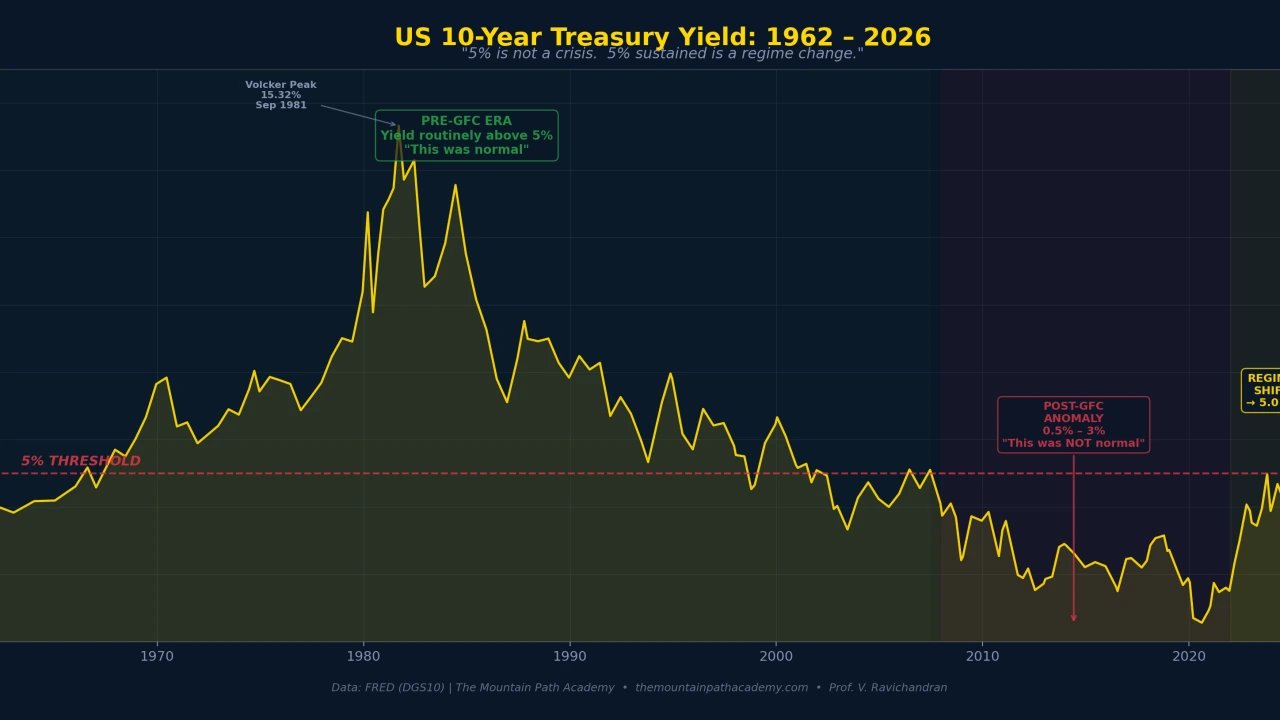
The yield on the 10-year U.S. Treasury note crossed 5% this month for the first time since 2007. The rise caps a six-year surge from pandemic-era lows near 0.5% and comes as the Federal Reserve faces high inflation and weak economic growth. The combination has drawn comparisons to 1970s stagflation, though current inflation and unemployment remain far below that period's peaks.
Key Facts
- The 10-year Treasury yield crossed 5% this month for the first time since 2007.
- The yield fell to a record low of 0.52% in 2020 during the COVID-19 pandemic.
- Inflation peaked near 14.8% in March 1980, more than four times the current 3.4% rate.
- Unemployment topped 9% during the mid-1970s oil shock, versus roughly 4.1% now.
- Fed Chair Paul Volcker pushed the federal-funds rate to 20% by 1981 to break inflation, triggering a recession with unemployment above 10%.
Yield Milestone
The benchmark 10-year Treasury yield crossed 5% this month for the first time since 2007. The move caps a six-year surge from pandemic-era lows near 0.5%. In 2020, the yield fell to 0.52%, the lowest level on record, as investors rushed into government debt and the Fed cut its benchmark rate to near zero. The Fed also purchased large amounts of Treasury and mortgage securities during that period.
Stagflation Comparisons
The current mix of high inflation and weak economic growth has drawn comparisons to the 1970s stagflation period. Investor Ray Dalio told CNBC in April, "We're certainly in a stagflationary period." However, today's conditions remain far less severe: inflation peaked near 14.8% in March 1980, more than four times the current 3.4% rate. Unemployment topped 9% during the mid-decade oil shock, versus roughly 4.1% now. Fed Chair Paul Volcker pushed the federal-funds rate to 20% by 1981 to break inflation's back, triggering a recession that pushed unemployment above 10%.
Drivers of the Rise
The extraordinary monetary and fiscal response to COVID, the worst inflation in decades, the Federal Reserve's rate increases, federal deficits and Treasury issuance, and shocks from tariffs, energy prices and Iran have all played a role in the yield reversal. The U.S. government deployed trillions of dollars in fiscal support, with households accumulating savings and customers shifting spending from services to goods. At the same time, factories, ports and transportation networks struggled to keep up with rebounding demand. The Consumer Price Index began to climb quickly in 2021, and Federal Reserve officials initially called the increase temporary, noting supply constraints and the reopening economy.
1 source
Time · lag behind first