
Taliban's Minaret of Jam restoration signals pragmatic cultural heritage shift
This digest was compiled by AI from multiple sources — links to the originals are below.
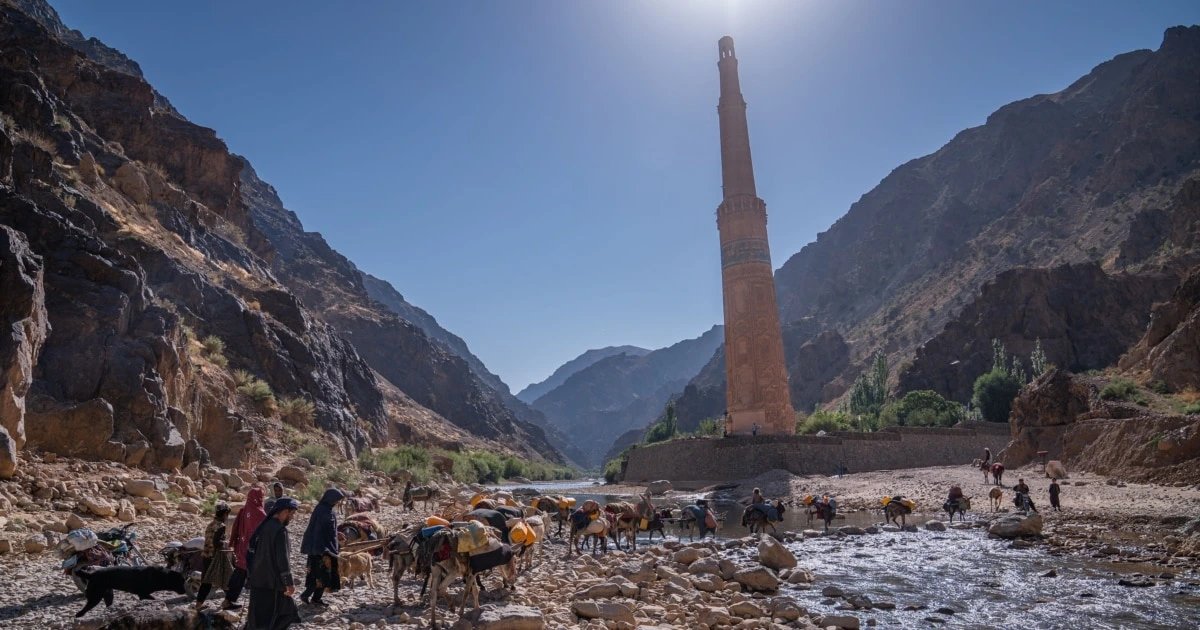
Restoration work on Afghanistan's UNESCO-listed Minaret of Jam began in July and was inspected by a Taliban official in mid-September. The Aga Khan Trust for Culture is leading emergency consolidation of the minaret's base, which was repeatedly damaged by flooding. Experts say the Taliban's current approach to cultural heritage contrasts with the 2001 destruction of the Bamiyan Buddhas.
Key Facts
- The Minaret of Jam, a 12th-century UNESCO World Heritage site in Ghor Province, Afghanistan, has been undergoing restoration since July 2026.
- The Aga Khan Trust for Culture is leading emergency intervention to consolidate a critical section of the minaret's inner masonry column at its base.
- In February 2001, the first Taliban regime ordered the destruction of statues and non-Islamic shrines, including the Bamiyan Buddhas and thousands of artifacts in the Kabul National Museum.
- Jolyon Leslie, a British conservation architect who has worked in Afghanistan since the early 1990s, says the current Taliban authorities have been largely supportive of conservation work since 2021, including on Buddhist and Jewish heritage.
- Gil Stein, a University of Chicago archaeology professor who led efforts to restore the smashed museum statues, cautions that the Taliban government is not unitary and its approach to heritage is complex and contradictory.
Restoration Project
The Minaret of Jam, a 12th-century brick tower in Afghanistan's Ghor Province, has been undergoing restoration since July 2026. A Taliban official visited the site in mid-September to inspect the rehabilitation efforts. The Aga Khan Trust for Culture, working with several other organizations, is carrying out emergency consolidation of a critical section of the minaret's inner masonry column at its base. The isolated structure has been repeatedly damaged by flooding and had long been in danger of collapse.
Taliban Heritage Policy Shift
Jolyon Leslie, a British conservation architect who has lived in Afghanistan since the early 1990s, says the current Taliban rulers appear more worldly about cultural issues and conscious of their image in being seen to protect their heritage. Leslie's organization, the Afghan Cultural Heritage Consulting Organization, has found the Taliban authorities largely supportive of conservation work since 2021, including on Buddhist and Jewish heritage sites. In February 2001, the first Taliban regime ordered the destruction of statues and non-Islamic shrines, leading to the demolition of the Bamiyan Buddhas and the smashing of thousands of ancient statues in Kabul's National Museum. Soon after the Taliban retook control in 2021, Leslie attended a meeting at the Kabul museum where a Taliban official hinted at regret over the 2001 destruction due to the global outrage it caused.
Expert Perspectives
Gil Stein, a professor of archaeology at the University of Chicago who led efforts to restore the smashed museum statues, notes that the current Taliban's approach to cultural heritage stands in marked contrast to other facets of the hardline group's rule. Stein cautions that the Taliban government cannot be considered unitary and monolithic, and that the situation in Afghanistan is complex and contradictory.
1 source
Time · lag behind first