
California passes AB 1661 to fund $5 million in oil well reparations for Inglewood
This digest was compiled by AI from multiple sources — links to the originals are below.
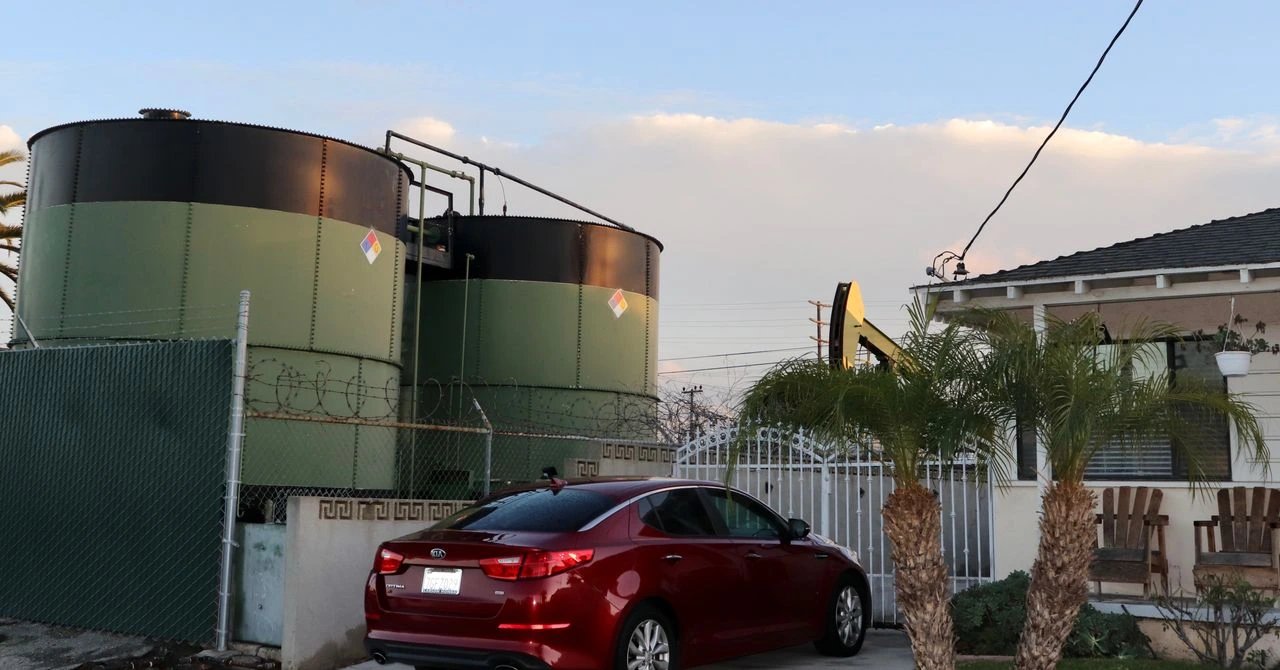
California lawmakers passed AB 1661, steering $5 million from penalized oil wells in Inglewood into direct cash aid for 1,000 nearby households with qualifying respiratory or reproductive health impacts. The legislation, introduced by Assemblymember Isaac G. Bryan, is expected to be signed by Gov. Gavin Newsom by October. The fund targets Black communities in Inglewood, Ladera Heights, and Baldwin Hills that have lived near the nation's largest urban oil drilling field for generations.
Key Facts
- AB 1661 allocates $5 million from penalized oil wells in Inglewood for direct cash aid to 1,000 nearby households.
- Payments of up to $5,000 per household are available under the initial structure for qualifying respiratory or reproductive health impacts.
- The legislation was introduced by Assemblymember Isaac G. Bryan and is expected to be signed by Gov. Gavin Newsom by October.
- The fund targets Black communities in Inglewood, Ladera Heights, and Baldwin Hills surrounding the oil field.
- Supporters call the measure environmental reparations and a potential model for other communities near polluting sites.
Legislative Action
California lawmakers passed AB 1661 to steer $5 million from penalized oil wells in Inglewood into direct cash aid. The legislation was introduced by Assemblymember Isaac G. Bryan and is expected to be signed by Gov. Gavin Newsom by October. The money comes from the state's community repair and reinvestment fund for people living nearest the oil field. The initial structure sets aside enough money for payments of up to $5,000 for 1,000 impacted households.
Community Impact
Some of LA's Blackest suburbs and city neighborhoods, including Inglewood, Ladera Heights, and Baldwin Hills, surround the oil field. For over a century in Los Angeles and across the nation, Black people have been disproportionately likely to live near oil wells. Pollution from these drilling sites is connected to birth complications, child development issues, respiratory illnesses, and cancer. Regina Martin, who grew up beside the pumpjacks in the 1950s and '60s, linked her own sickness and her sister's asthma to the oil field.
Reparations Model
Bryan and other supporters call the measure environmental reparations and say it could be replicated to make industrial companies help repair damage borne by people living closest to polluting sites. Tianna Shaw-Wakeman, environmental justice program director with Black Women for Wellness in LA, said the law could provide a national organizing model. Shaw-Wakeman stated that grassroots organizing has created long-term change in local communities and is being replicated all over the country.
1 source
Time · lag behind first