
Kavli team reconstructs black hole merger that ejected RBH-1 70 million years ago
This digest was compiled by AI from multiple sources — links to the originals are below.
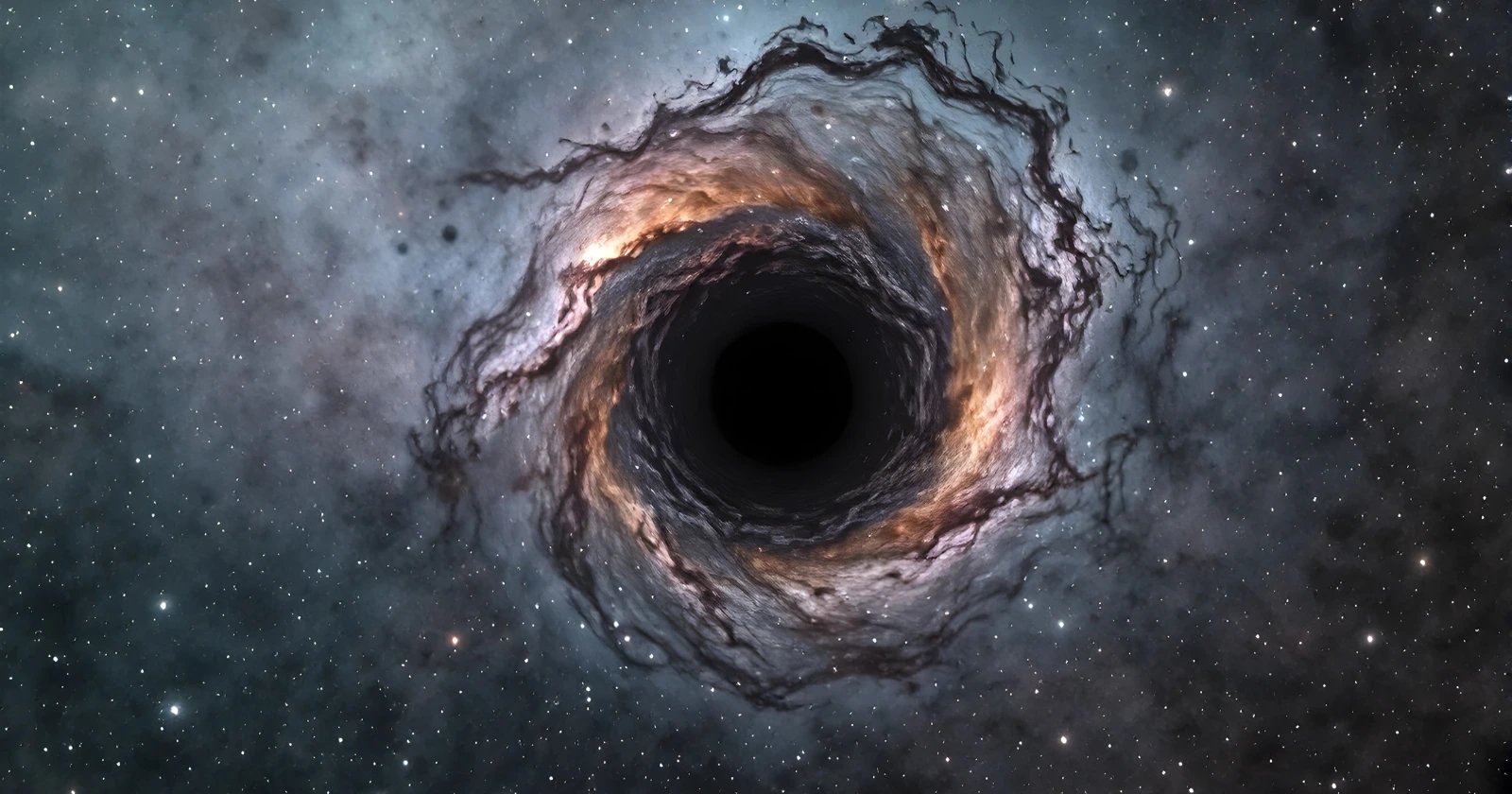
Researchers led by the Kavli Institute for Theoretical Physics have reconstructed the supermassive black hole merger that likely ejected the runaway black hole RBH-1 about 70 million years ago. The findings, published in Physical Review Letters, indicate RBH-1 was kicked out of its host galaxy at nearly 1,000 km/s by a powerful gravitational-wave recoil following the merger.
RBH-1 Discovery
The runaway supermassive black hole RBH-1 was first detected about three years ago by the James Webb Space Telescope and Hubble Space Telescope. It is traveling through intergalactic space at approximately 1,000 kilometers per second. Astronomers identified it as the first convincing candidate for a recoiling supermassive black hole, ejected from its galactic center.
Merger Reconstruction
A team led by Tousif Islam of KITP used theory-based simulations to reconstruct the binary black hole merger that likely imparted the kick. Their analysis, published in Physical Review Letters, suggests two supermassive black holes with specific masses and spins merged about 70 million years ago. The resulting gravitational-wave recoil could accelerate the merged remnant up to 5,000 km/s, making the observed velocity of RBH-1 plausible.
Scientific Significance
The study demonstrates that runaway black holes can serve as probes of otherwise invisible galaxy mergers. By analyzing RBH-1’s trajectory and properties, researchers inferred details of the parent galaxies’ collision. Most black hole mergers produce only modest recoils, making RBH-1 an uncommon case of an ejected supermassive black hole.
1 source
Time · lag behind first