
Lead-based ink may unlock charred Herculaneum scrolls, study finds
This digest was compiled by AI from multiple sources — links to the originals are below.
Researchers at the University of California, Berkeley have demonstrated that lead-based inks in charred Herculaneum scrolls can be detected with X-ray fluorescence, allowing text to be read without unrolling the fragile papyri. The method was tested on laboratory-made scrolls that replicated the carbonized state of the ancient artifacts. The findings, published in PLOS One, suggest that scanning for lead could expand the corpus of readable texts from the Villa of the Papyri.
Key Facts
- The Herculaneum papyri, nearly 2,000 scrolls, were buried by the eruption of Mount Vesuvius in 79 AD under more than 20 meters of volcanic rock and ash.
- Some Herculaneum scrolls were written with ink containing high concentrations of lead, which can be distinguished from carbon-based papyrus using X-ray fluorescence.
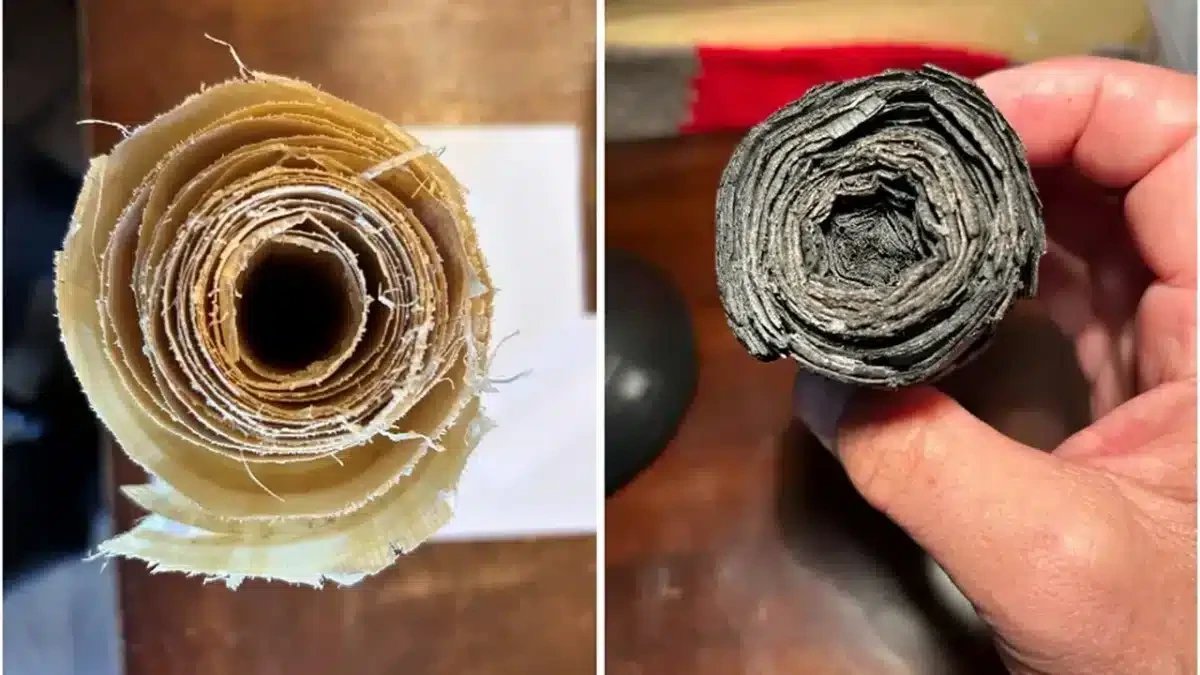
- Researchers led by Douglas Seiler at the University of California, Berkeley created artificial scrolls with lead-based ink and carbonized them to replicate the Herculaneum condition.
- The team successfully read individual words written with lead-based ink even at extremely low lead concentrations using X-ray tomography and custom software.
- The study was published in the journal PLOS One in 2026.
The Herculaneum Scrolls
The Herculaneum papyri are a collection of nearly 2,000 papyrus scrolls discovered in the 1750s in the ruins of a wealthy villa in Herculaneum. The ancient Roman town was buried under more than 20 meters of volcanic rock and ash during the eruption of Mount Vesuvius in 79 AD. The scrolls were carbonized by the extreme heat of pyroclastic flows and became extremely fragile, making physical unrolling nearly impossible without destruction. In recent years, artificial intelligence and X-ray tomography have allowed researchers to virtually unroll and decipher some scrolls, revealing previously unknown works by Epicurus and other ancient thinkers.
Lead-Based Ink Detection
The challenge with X-ray reading is that both papyrus and carbon-based ink consist mainly of carbon, making the text difficult to distinguish from the writing surface. Recent findings indicate that at least some Herculaneum texts were written with ink containing high lead content. The authors of the PLOS One paper hypothesized that preliminary scanning for lead could allow more lost texts to be read without damaging the scrolls. To test the hypothesis, the team applied inks with varying lead concentrations to modern Egyptian papyrus, rolled them, and carbonized them in a furnace. X-ray fluorescence analysis successfully detected lead in the scrolls at all tested concentrations.
Experimental Reading
The researchers then performed X-ray tomography and used custom software to virtually unroll the experimental scrolls. This method allowed them to read individual words written with lead-based ink even at extremely low metal content. The team was led by Douglas Seiler of the University of California, Berkeley.
2 sources
Time · lag behind first