
Lead in ink could unlock Herculaneum scrolls, researchers find
This digest was compiled by AI from multiple sources — links to the originals are below.
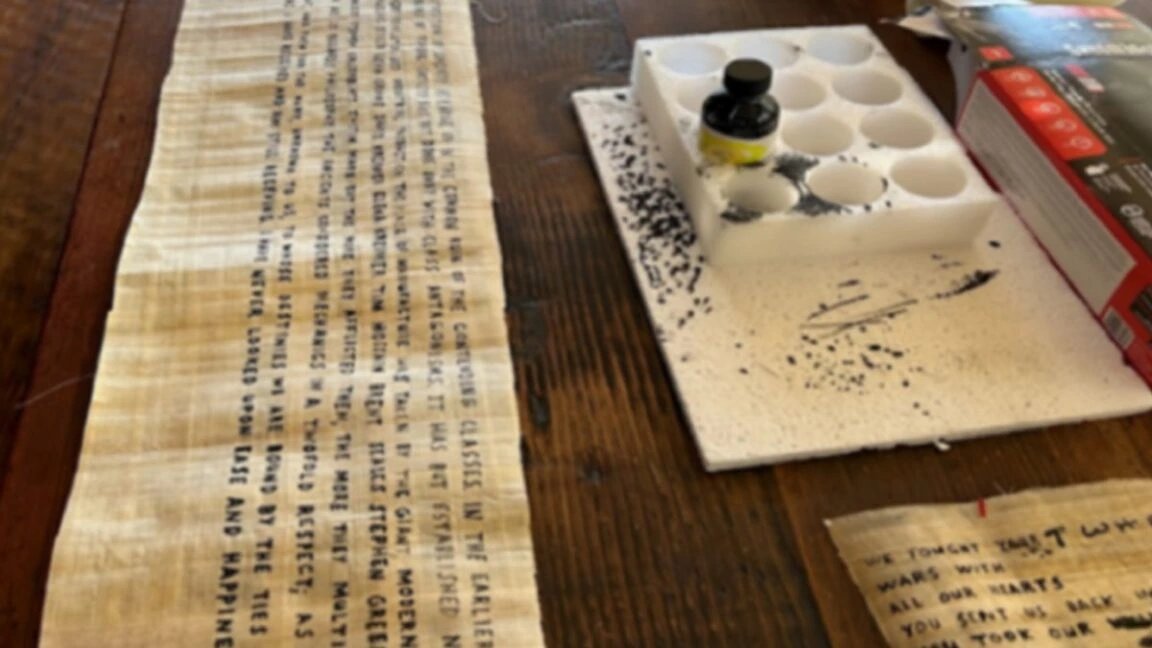
Researchers at NIST carbonized model scrolls and used X-ray tomography to show that lead in ink dramatically improves contrast for reading charred papyrus. The finding could accelerate decipherment of the Herculaneum scrolls, which have yielded only a few texts so far. The team published its results in PLoS ONE in 2026.
Key Facts
- The Vesuvius Challenge awarded a $700,000 grand prize in 2024 for the first readable text from a Herculaneum scroll.
- PHerc. 1667 was read in full earlier in 2026, revealing a philosophical treatise on ethics and human moral progress.
- A handheld X-ray fluorescence scanner can identify which scrolls contain lead and are therefore most promising for further analysis.
- The study by Seiler et al. was published in PLoS ONE in 2026 with DOI 10.1371/journal.pone.0353485.
Model Scroll Experiments
The team carbonized model scrolls in a high-temperature furnace to mimic the original Herculaneum scrolls. Co-author and physicist Jake LaManna created 3D X-ray scans of the charred models at NIST’s Center for Neutron Research in Maryland. Co-author Michael Cyrus Daugherty adapted a software program originally written to unroll CT scans of lithium-ion battery 'jelly rolls' to digitally unwrap the model scrolls and reveal the text. Seiler described the resulting images: 'The letters lit up like a Christmas tree.'
Implications for Decipherment
Seiler stated that lead in the ink produces a strong X-ray signature, so researchers should prioritize scrolls containing lead. Many scrolls are difficult to read because of the low contrast of carbon ink on carbon paper. The team is confident that searching for lead will help the decipherment process, with Seiler offering '10 to 1 odds' that the approach will work. The first X-ray image of the inside of a scroll (PHerc. 172) housed in Oxford University’s Bodleian Libraries was generated in 2025.
1 source
Time · lag behind first