
Ukrainian drone strikes shut three of Russia's six largest diesel refineries
This digest was compiled by AI from multiple sources — links to the originals are below.
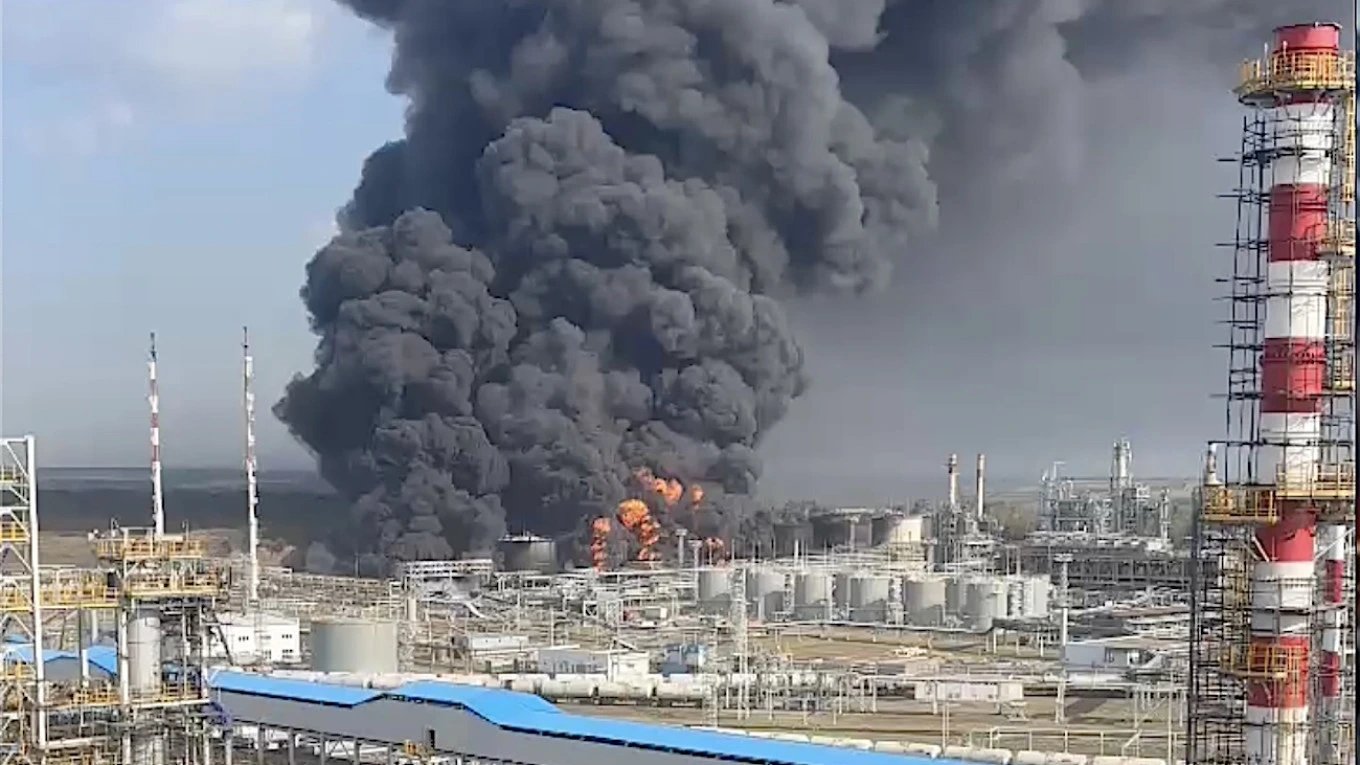
Ukrainian drone attacks have shut or severely curtailed three of Russia's six largest diesel refineries, including Kirishi, Volgograd and NORSI. The strikes have cut Russian diesel exports below 1 million metric tons in June, down from about 2.5 million tons a year earlier. The disruption comes as U.S. diesel prices crossed $6 per gallon for the first time last week.
Key Facts
- Kirishi refinery is completely offline, while Volgograd and NORSI are running at about 25% of nameplate capacity.
- The six refineries—Omsk, Kirishi, Taneco, Volgograd, NORSI and Perm—account for roughly half of Russia's diesel production.
- Russia's diesel exports fell below 1 million metric tons in June, compared with about 2.5 million tons a year earlier.
- The International Energy Agency estimates a Russian refinery was successfully struck by a drone once every three days during the first eight months of 2026.
- The IEA cut its Russian crude production forecast to 8.7 million bpd for 2026 after August output fell to 8.36 million bpd, down 940,000 bpd from January.
Refinery Damage
Three of Russia's six largest diesel-producing refineries are now either shut or operating at roughly one-quarter capacity after Ukrainian drone attacks. Kirishi is completely offline, while Volgograd and NORSI are running at about 25% of nameplate capacity. Taneco was struck Sunday, and the extent of the damage there was still being assessed Monday. The six refineries—Omsk, Kirishi, Taneco, Volgograd, NORSI and Perm—account for roughly half of Russia's diesel production, according to Reuters calculations based on market data.
Export Restrictions
Russia has already restricted exports of gasoline, diesel and jet fuel to preserve domestic supply. Diesel exports fell below 1 million metric tons in June, according to trader estimates cited by Reuters. Combined diesel and gasoil exports totaled about 1.8 million tons, compared with roughly 2.5 million tons of diesel each month a year earlier, or 3.3 million to 3.4 million tons including lower-quality gasoil. Turkey and Brazil had been taking at least half of available Russian diesel cargoes before Moscow imposed the restrictions.
Market Impact
Those missing barrels are landing in a global diesel market already short on fuel from the Middle East. U.S. diesel prices crossed $6 per gallon last week for the first time, while refining margins have climbed as product inventories shrink. The IEA last week cut its Russian crude production forecast to 8.7 million bpd for 2026 after August output fell to 8.36 million bpd, down 940,000 bpd from January.
1 source
Time · lag behind first