
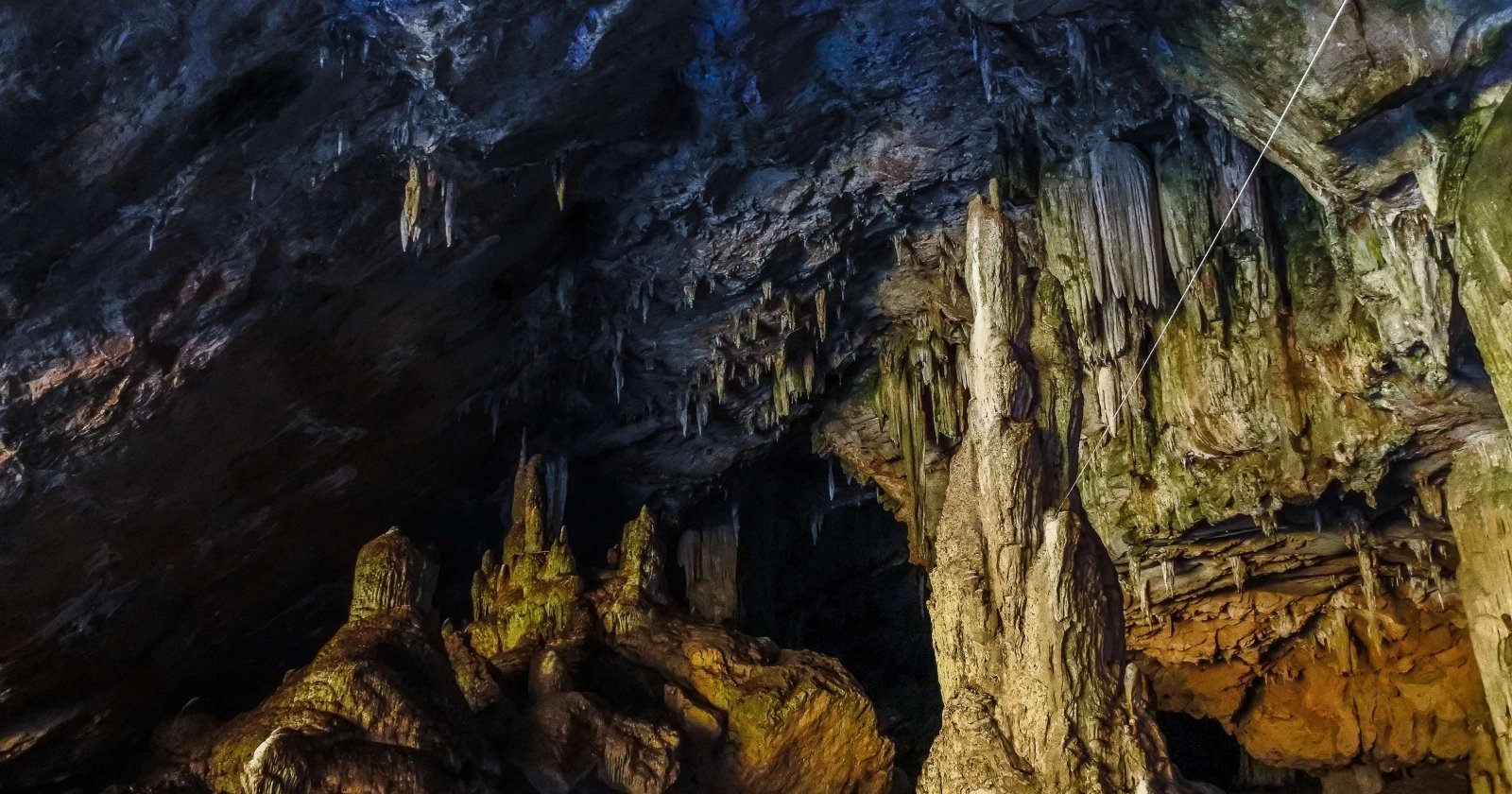
Neanderthals built 176,000-year-old stone rings deep inside Bruniquel Cave
This digest was compiled by AI from multiple sources — links to the originals are below.
Researchers dated six stone structures built from broken stalagmites inside Bruniquel Cave in southwestern France to 176,500 years ago. The rings and heaps, located 336 meters from the cave entrance, are attributed to early Neanderthals. The discovery pushes back the earliest known deep cave occupation by over 138,000 years.
Key Facts
- The structures are located 336 meters from the cave entrance, beyond the reach of daylight.
- The excavation team counted roughly 400 stalagmite pieces totaling about 112 meters in length and 2.2 tonnes in mass.
- The construction was dated to 176,500 years ago, with a margin of error of 2,100 years.
- Before Bruniquel, the oldest formally demonstrated deep cave occupation was Chauvet Cave at roughly 38,000 years ago.
- Traces of fire were found on all six structures, including 57 reddened and 66 blackened speleofacts, plus charred animal bone.
The Structures
Six structures were built from stalagmites snapped into lengths and laid on the cave floor. Two are rings, one measuring 6.7 by 4.5 meters and the other about 2.2 by 2.1 meters. Four smaller heaps sit nearby, two inside the larger ring and two outside it. Pieces were laid in up to four layers, with short lengths wedged inside the stacks and others stood upright against the outer edge. The researchers coined the term 'speleofacts' for these unique constructions.
Dating the Site
Jacques Jaubert of the University of Bordeaux and a large team returned to the site in 2013. They dated the tips of the stalagmites used in the rings, the regrowth over them, and calcite associated with burnt bone. All three dating methods agreed, placing the construction at 176,500 years ago, give or take 2,100 years. The findings were published in Nature in 2016. Modern humans were nowhere near Europe at that time, leaving early Neanderthals as the only candidate builders.
Evidence of Fire
Traces of fire appear on all six structures in the form of 57 reddened speleofacts and 66 blackened ones, plus charred animal bone. Dripping water was ruled out early, since no matching stains appear on the ceiling. Raman spectrometry confirmed that bone fragments had been heated to temperatures consistent with a controlled burn. Palaeoanthropologist John Hawks noted that these were small, localised fires set on the stonework itself, not long-tended domestic hearths.
1 source
Time · lag behind first