
Azerbaijan Says TRIPP Corridor Construction Delayed to 2027
This digest was compiled by AI from multiple sources — links to the originals are below.
Azerbaijani Foreign Minister Jeyhun Bayramov said physical work on the TRIPP trade corridor will not begin until 2027, missing the previous end-2026 target. The delay affects a route seen as central to the Armenian-Azerbaijani peace deal. Iran has objected to a potential American security presence near its border, adding a geopolitical complication to negotiations.
Key Facts
- Azerbaijani Foreign Minister Jeyhun Bayramov said construction of the TRIPP corridor will not start until 2027, missing the previous end-2026 target.
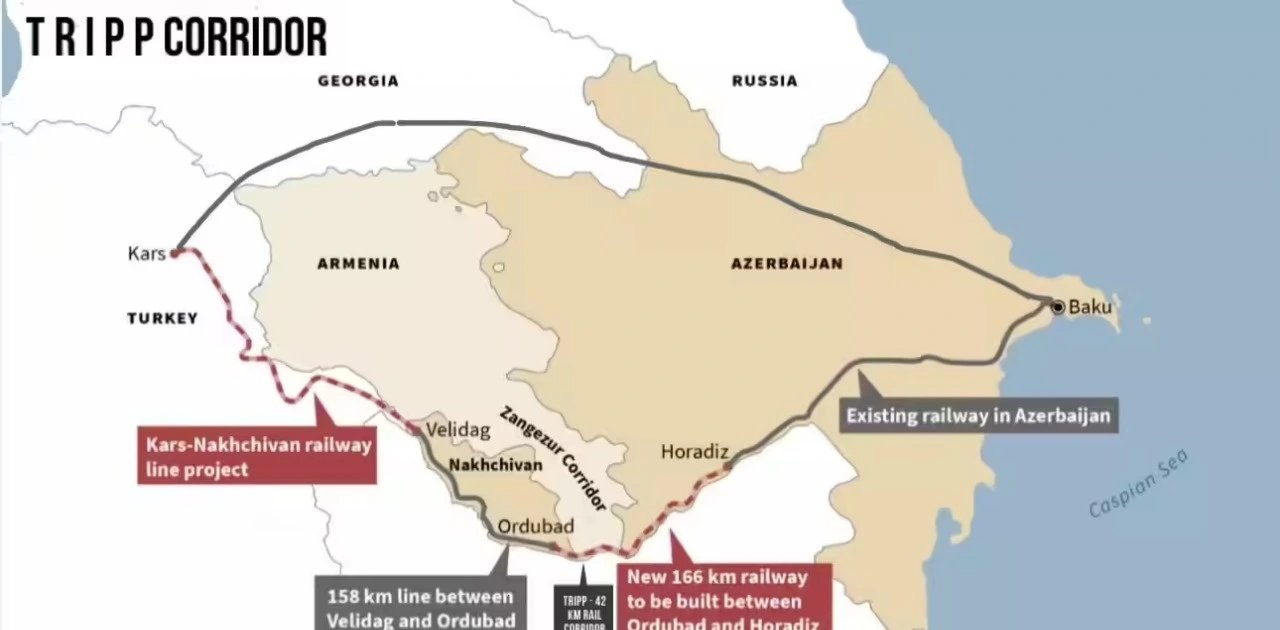
- TRIPP would cross approximately 42 kilometers of Armenian territory to connect mainland Azerbaijan with its Nakhchivan exclave.
- The United States and Armenia signed a framework agreement on TRIPP in early 2026, giving the US a controlling interest in the corridor.
- Iran has told Armenian Prime Minister Nikol Pashinyan it will not tolerate an American presence in the TRIPP corridor near its border.
Construction Delay
Azerbaijani Foreign Minister Jeyhun Bayramov acknowledged that work on the Trump Route for International Peace and Prosperity will not start until 2027. The provisional Armenian-Azerbaijani peace agreement signed in Washington in August 2025 had envisioned construction beginning by the end of 2026. Bayramov said the US-Armenian negotiating process is proceeding successfully, and Azerbaijan is continuing work to upgrade the Nakhchivan section of TRIPP. His comments followed a September 8 meeting in Baku involving senior US and Azerbaijani diplomats, including US Chargé d'Affaires to Armenia David Allen and US Chargé to Azerbaijan Amy Carlon.
Iranian Objections
Iran has objected to a potential American security presence near its border, adding a geopolitical complication to negotiations over how the corridor will operate. Preliminary plans envisaged American contractors providing security and operational oversight for the trade route. Armenia insists on retaining sovereignty over the route, while Azerbaijan demands that its citizens and vehicles enjoy an extraterritorial right of passage. Iran, locked in a conflict with the United States, reportedly told Prime Minister Nikol Pashinyan it will not tolerate an American presence in the TRIPP corridor, which is envisioned as traversing territory near the Iranian border.
1 source
Time · lag behind first