
Azerbaijan says TRIPP corridor construction start delayed to 2027
This digest was compiled by AI from multiple sources — links to the originals are below.
Azerbaijani Foreign Minister Jeyhun Bayramov said construction on the TRIPP trade corridor will not start until 2027, a year later than initially planned. The delay was announced after a September 8 meeting in Baku between US and Azerbaijani diplomats. The corridor is a key element of the Armenian-Azerbaijani peace agreement signed in Washington in August 2025.
Key Facts
- Azerbaijani Foreign Minister Jeyhun Bayramov said work on the TRIPP corridor will not start until 2027, a year later than the original end-of-2026 target.
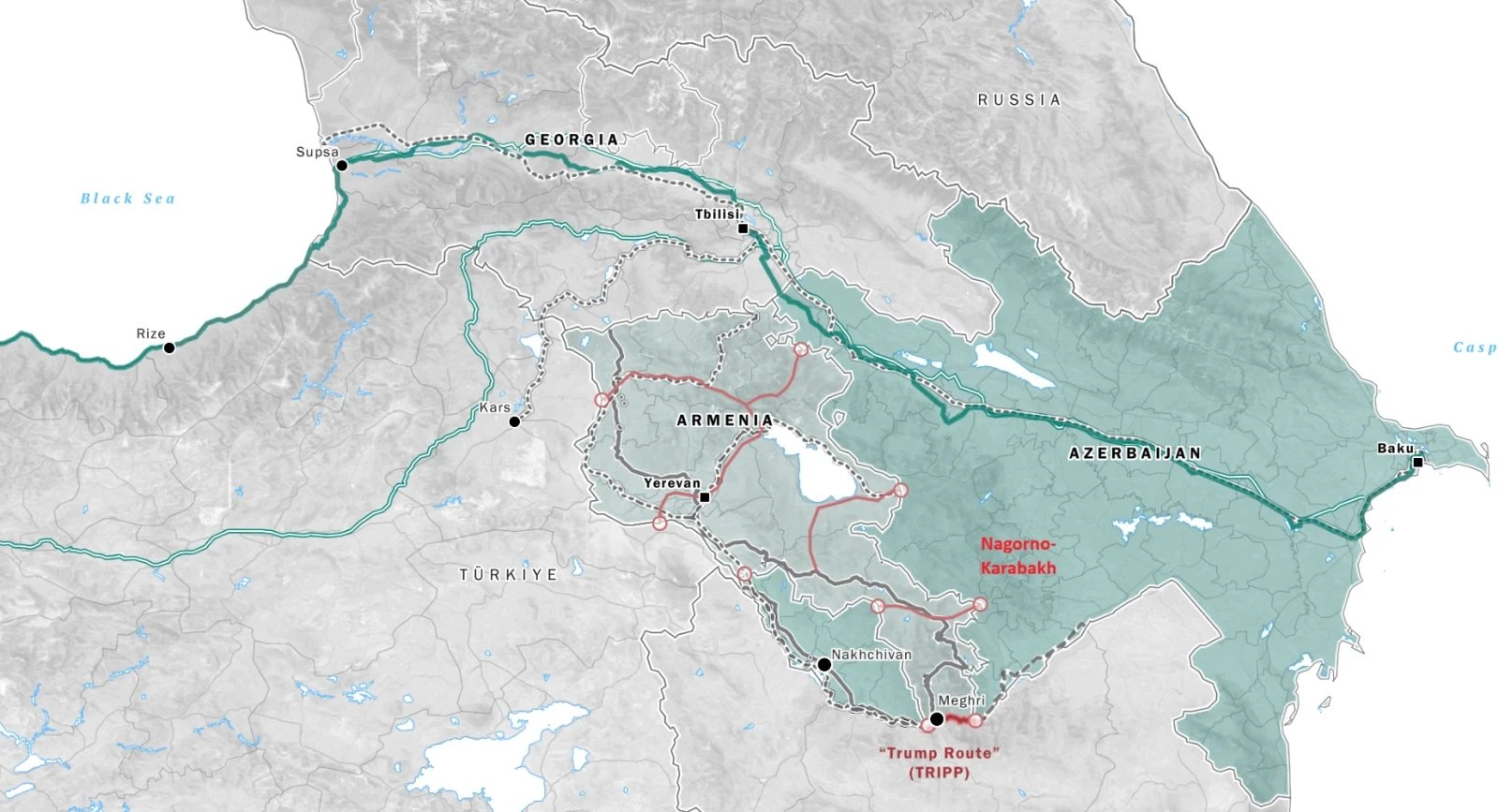
- The TRIPP corridor will cross approximately 42 kilometers of Armenian territory to connect Azerbaijan's mainland to its Nakhchivan exclave.
- The United States and Armenia signed a framework agreement on TRIPP in early 2026, giving the US a controlling interest in the corridor.
- Bayramov's comments followed a September 8 meeting in Baku involving US Chargé d'Affaires to Armenia David Allen and US Chargé to Azerbaijan Amy Carlon.
- Iran reportedly told Armenian Prime Minister Nikol Pashinyan that American personnel in the TRIPP corridor would be considered a 'legitimate target'.
Construction Delay
Azerbaijani Foreign Minister Jeyhun Bayramov acknowledged that work on the TRIPP corridor will not begin until 2027, pushing back the original end-of-2026 start date. The delay was confirmed in comments published by the Russian news agency Interfax. Bayramov said that according to information received, the US-Armenian negotiating process is proceeding successfully. He added that Azerbaijan is continuing work to upgrade the Nakhchivan section of TRIPP.
Corridor Route and Agreements
TRIPP will carve a trade corridor through approximately 42 kilometers of Armenian territory to connect Azerbaijan's mainland to its Nakhchivan exclave, then integrate into Turkey's rail and road system. The route is envisioned as a key link in the emerging Middle Corridor trade network. The United States and Armenia signed a framework agreement covering TRIPP's development in early 2026, but vital operational details remain to be determined. Under that agreement, the United States will enjoy a controlling interest in the corridor.
Diplomatic Context and Iranian Concerns
Bayramov's comments followed a September 8 meeting in Baku involving senior US and Azerbaijani diplomats, including US Chargé d'Affaires to Armenia David Allen and US Chargé to Azerbaijan Amy Carlon. TRIPP and the Armenian-Azerbaijani peace process were the focus of the discussions, Azerbaijan's state news agency Azertag reported. Earlier in September, reports circulated in Armenia that Iran had issued a threat that could complicate TRIPP negotiations, centering on who provides security and operational oversight for the trade route. Preliminary plans envisaged American contractors filling those roles to finesse a dilemma under which Armenia insists on retaining sovereignty over the route while Azerbaijan demands extraterritorial right of passage for its citizens and vehicles. Iran, which is locked in a conflict with the United States, reportedly told Prime Minister Nikol Pashinyan that it will not tolerate an American presence in the TRIPP corridor, which is envisioned as traversing territory near the Iranian border. If American personnel appear in the corridor, they would become a 'legitimate target' in Iranian eyes, the News.am website reported.
1 source
Time · lag behind first