
Singapore pilot plant uses fruit peel to recover 90% of battery metals
This digest was compiled by AI from multiple sources — links to the originals are below.
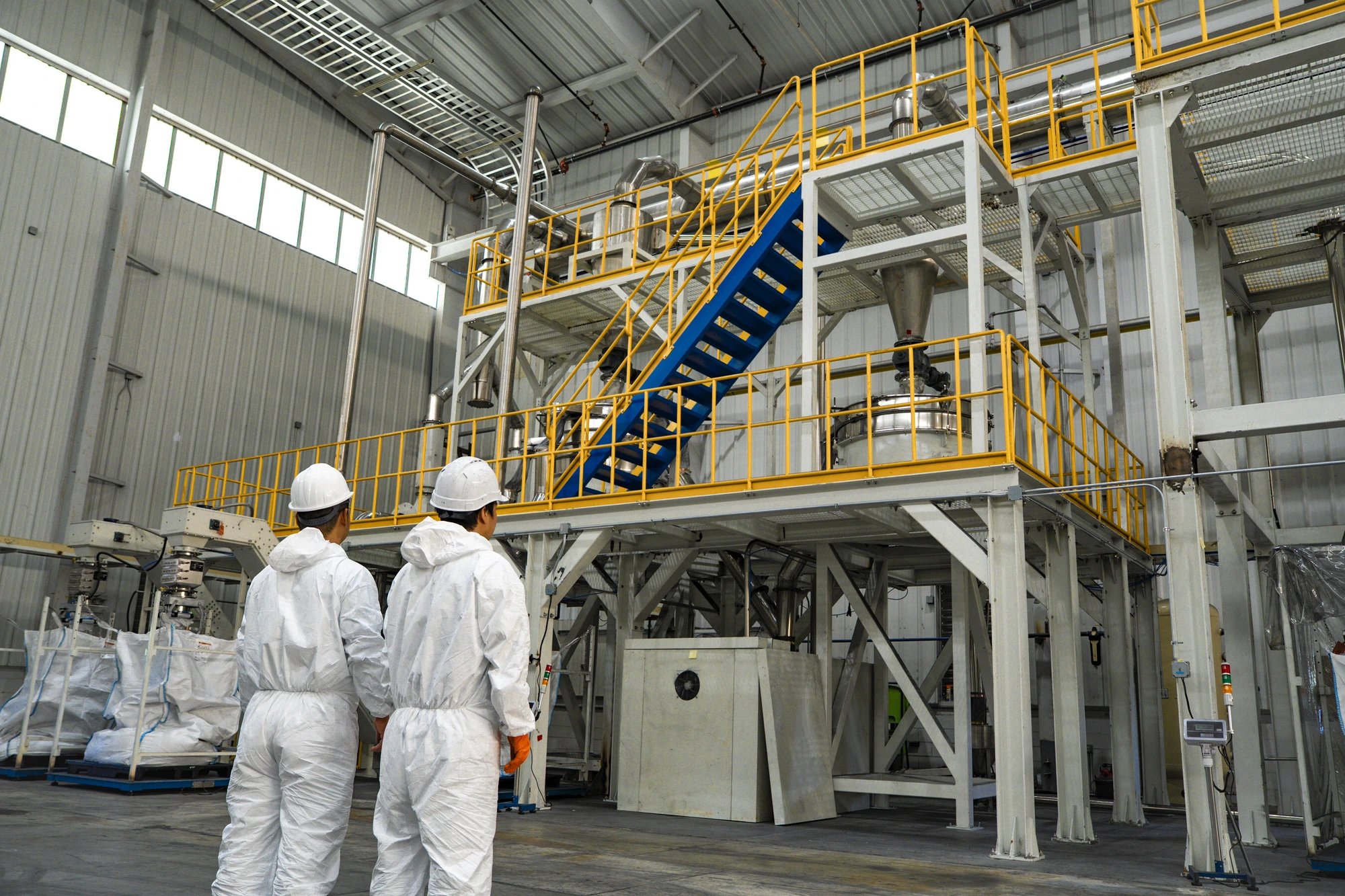
A pilot plant in Singapore is using solvents derived from orange, lemon and pineapple peel to recover about 90% of cobalt, lithium, nickel and manganese from spent lithium-ion batteries. The plant, built by Nanyang Technological University and battery recycler Se-cure Waste Management, has operated since late 2022 and processes up to 2,000 litres per batch. The process avoids hydrogen peroxide's explosion risk and hazardous runoff.
Key Facts
- The peel-derived solvent recovers roughly 90% of cobalt, lithium, nickel and manganese from spent lithium-ion batteries.
- The pilot plant at Neythal Road in Singapore has operated since the final quarter of 2022 and handles up to 2,000 litres per batch.
- Se-cure Waste Management processes about 18 tonnes of spent batteries daily.
- A 2020 paper in Environmental Science & Technology reported 80–99% metal leaching using orange peel powder and citric acid.
- The stated plan in 2023 was commercialisation by 2024.
The Recycling Process
Spent cells are shredded into black mass, and plastics, copper and aluminium are removed before acid dissolution. Cobalt and nickel resist dissolving, so recyclers normally add hydrogen peroxide as a reducing agent. Orange peel contains cellulose, sugars and antioxidants that donate electrons similarly to peroxide without explosion risk or hazardous runoff. A team led by Zhuoran Wu at Nanyang Technological University milled orange peel into powder and mixed it with citric acid, leaching 80–99% of nickel, manganese, cobalt and lithium. The team regenerated cobalt into coin cells that charged and discharged in a range comparable to commercial batteries.
Pilot Plant Scale
NTU partnered with Se-cure Waste Management to build the pilot plant at Neythal Road off Pioneer Road North. The plant has run since the final quarter of 2022 and was built modular to target other metals later. Se-cure handles about 18 tonnes of spent batteries a day, as reported by The Straits Times. Argus Media noted the peel route performs comparably to the peroxide route while skipping most secondary pollution. Dalton Tay called the approach an immediate and scalable solution for tackling food waste and electronic waste at once.
1 source
Time · lag behind first