
Ancient proteins identify Denisovan remains in southwest China's Bianfu Cave
This digest was compiled by AI from multiple sources — links to the originals are below.
Researchers identified Denisovan remains from Bianfu Cave in southwest China using ancient protein analysis. The findings include two teeth and three bone fragments from layers 7 and 9. This discovery fills a geographic gap in Denisovan fossil records between northern China and Southeast Asia.
Key Facts
- Bianfu Cave in Yunnan Province, southwest China, yielded two hominin teeth and three bone fragments identified as Denisovan through ancient protein analysis.
- The remains were recovered from layers 7 and 9 of Trench 2 at Bianfu Cave.
- Prior to this discovery, molecularly confirmed Denisovan fossils outside Denisova Cave were limited to Baishiya Karst Cave, Penghu, and Harbin.
- The new finds extend the known Denisovan range into southwestern China, a region previously lacking such evidence.
Bianfu Cave Discovery
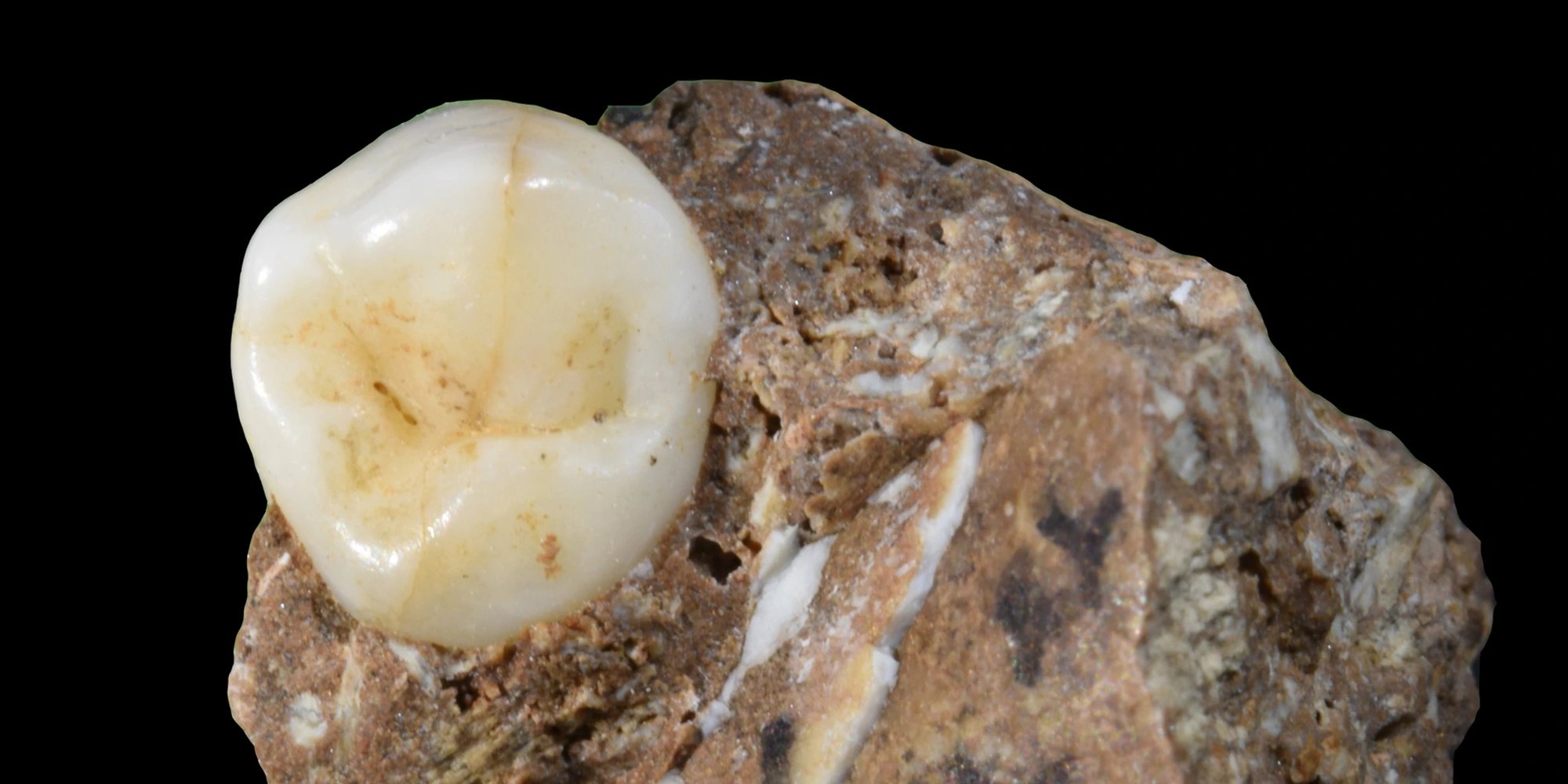
Bianfu Cave is located in Yunnan Province, southwestern China. Excavations at Trench 2 uncovered two hominin teeth and three bone fragments in layers 7 and 9. Ancient protein analysis identified the remains as Denisovan. The identified specimens include a lower fourth premolar, a lower second molar, a radius, and two parietal fragments.
Geographic Significance
Previously, molecularly confirmed Denisovan fossils outside Denisova Cave were found only at Baishiya Karst Cave, Penghu, and Harbin. These sites are located in northern and southeastern China, leaving a gap in southwestern China. The Bianfu Cave finds fill this geographic gap. Genomic evidence indicates substantial Denisovan ancestry in present-day Southeast Asian and Oceanian populations.
1 source
Time · lag behind first