
Nepal glacier collapse kills 1,300, causes $5 billion in damage
This digest was compiled by AI from multiple sources — links to the originals are below.
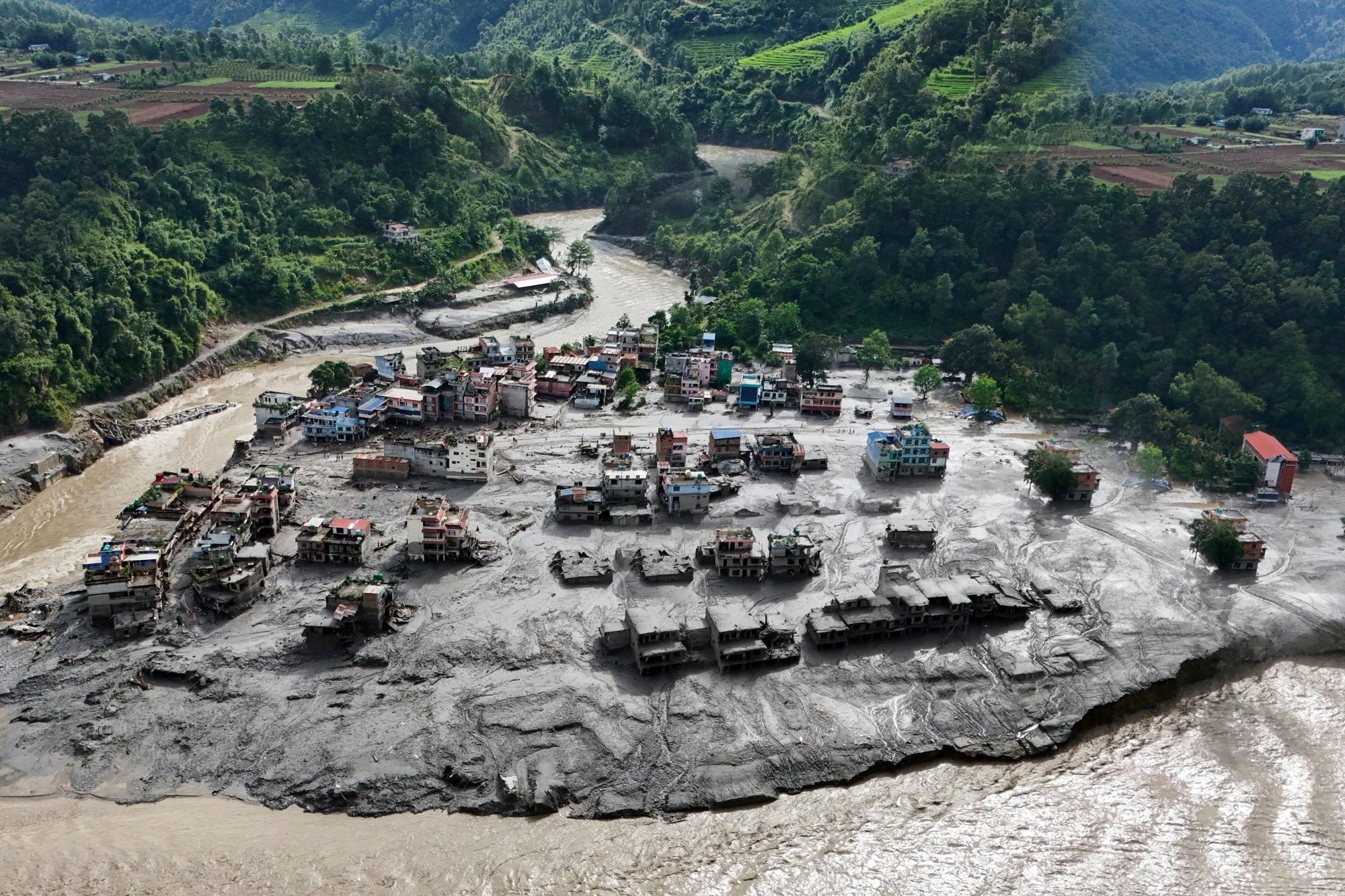
A glacier collapse near Langtang Lirung on August 26 triggered flash floods and mudslides along Nepal's Trishuli and Bhotekoshi rivers, killing more than 1,300 people and leaving over 4,000 missing. The disaster destroyed roads, bridges, hydropower plants, and the Gyirong Port border complex, cutting Nepal's primary trade route with China. Losses are estimated at more than $5 billion, nearly one-third of Nepal's annual budget.
Key Facts
- More than 1,300 people are confirmed dead and over 4,000 are missing after the August 26 floods.
- Losses are estimated at more than $5 billion, nearly one-third of Nepal's annual budget.
- The Gyirong Port border complex, Nepal's primary trade gateway with China, was completely destroyed.
- About 42 kilometers of road and 41 bridges were damaged, with repairs alone estimated at 15 billion rupees ($99.4 million).
- More than 300 vehicles waiting at the border were swept away when the flood hit.
Human Toll
The August 26 glacier collapse near Langtang Lirung triggered flash floods and mudslides along the Trishuli and Bhotekoshi river systems. More than 1,300 people are confirmed dead in Nepal, while over 4,000 people are missing. Survivors lost relatives, farmland, livestock, food stocks, shops, vehicles, savings, identity documents, and their means of income. Entire local economies in the peripheral areas of the flood-hit districts have been disrupted, affecting tourism and agri-businesses.
Economic Impact
Losses are estimated at more than $5 billion, which is almost one-third of Nepal's annual budget. The destruction of the Trishuli-Bhotekoshi corridor has national economic consequences because it connects mountain communities to Kathmandu, national markets, tourism destinations, hydropower investments, and cross-border trade with China. The complete destruction of the Gyirong Port border complex is especially serious, as it was Nepal's primary trade and tourism gateway with China. Nepal now has no fully functional border crossing point with China, which is costly for an economy that relies on imports of raw materials and other goods from China. About 42 kilometers of road and 41 bridges were damaged, with road and bridge repairs alone estimated to cost 15 billion rupees ($99.4 million).
Infrastructure Damage
Settlements, roads, bridges, hydropower plants, trade facilities, farmland, and human lives across Rasuwa, Nuwakot, Dhading, and downstream districts were swept away or buried beneath mud and boulders. When the flood hit, more than 300 vehicles waiting at the border were swept away. The event damaged not only what was developed there but also what was being built, including infrastructure, hydropower projects, and private businesses, primarily small and medium enterprises.
1 source
Time · lag behind first