
Nepal-China trade route collapse exposes lasting economic damage from glacier flood
This digest was compiled by AI from multiple sources — links to the originals are below.
The August 26 glacier collapse and flood in Nepal killed 987 people and destroyed the Rasuwagadhi border crossing, cutting the China-Nepal trade route. The disaster follows a 2025 flood that halted trade for six months and cut Rasuwagadhi trade by 95 percent, from $302 million to $15 million. The repeated destruction of the crossing reveals an opportunity cost not captured in official damage estimates.
Key Facts
- The confirmed death toll from the August 26 flood stood at 987 in Nepal and 16 in Tibet as of September 2, with roughly 4,500 people missing.
- The Nepal government's preliminary damage estimate is 200 billion rupees ($1.3 billion).
- UNICEF reported 17,000 children affected, 18 schools destroyed, and 20 more damaged.
- In the six months after the July 2025 flood, trade through Rasuwagadhi fell 95 percent, from $302 million to $15 million, according to a Stimson Center analysis of Nepal customs accounts.
- The August 2025 flood destroyed the Miteri Bridge, a dry port under construction at Timure, and killed nine people.
The August 26 Disaster
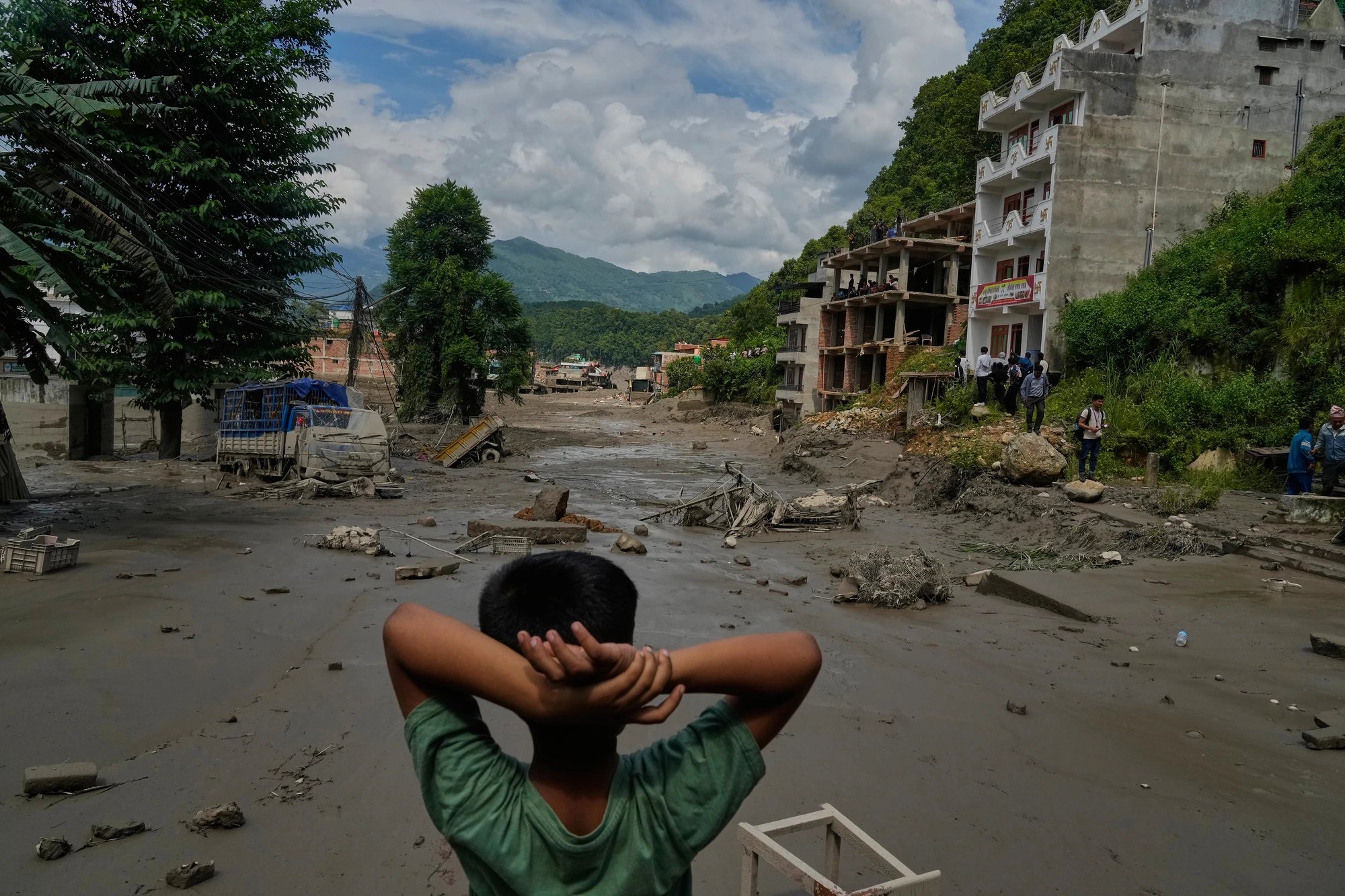
At around 8:40 a.m. on August 26, a section of glacier collapsed on the north side of the Langtang range near Nepal's border with Tibet, three minutes after a magnitude 4.4 earthquake on the Chinese side. The impact registered as a magnitude 5.2 seismic event, which the U.S. Geological Survey initially logged as a separate earthquake before concluding it was the landslide itself. The debris blocked the Lhende Khola roughly 20 kilometers upstream from the Rasuwagadhi border crossing, and when the blockage broke, water levels in the Trishuli River surged by as much as nine meters in 30 minutes. The confirmed death toll stood at 987 in Nepal and 16 in Tibet as of September 2, with roughly 4,500 people missing on both sides of the border. Among the missing are hydropower workers, customs and immigration staff, security personnel, trekking guides, and some 700 foreign nationals, including pilgrims bound for Mount Kailash.
Trade Route Destruction
The August 26 flood destroyed the Rasuwagadhi border crossing, including customs buildings on both sides, 19 road bridges, and 40 kilometers of road. Before the July 2025 flood, roughly a hundred container trucks crossed at Rasuwagadhi each day, but trade stopped entirely after the flood and did not resume until January 1, 2026. In the six months following the 2025 flood, trade through Rasuwagadhi fell 95 percent, from $302 million to $15 million, according to a Stimson Center analysis of Nepal's customs accounts. A fraction of that trade was redirected to Kora La, a crossing at roughly 4,650 meters in Upper Mustang that clears two or three cargo vehicles on a good day. Every dollar that arrived at Kora La came alongside roughly $3.30 lost at Rasuwa, while the rest of Nepal's trade went south to India.
Economic Opportunity Cost
The author, a Nepal-born economist who studies natural disaster economics, states that both death and damage figures are going to keep going up. The official damage estimate of 200 billion rupees ($1.3 billion) does not include the opportunity cost of the broken trade connection. The 2025 flood destroyed the Miteri Bridge and a dry port under construction at Timure, killing nine people and halting trade for almost six months. The bridge was eventually rebuilt and the crossing reopened, but the trade route is now destroyed again along with the customs buildings and road infrastructure.
1 source
Time · lag behind first