
Nepal flood disaster kills over 1,300, leaves 5,500 missing
This digest was compiled by AI from multiple sources — links to the originals are below.
A massive ice and rock avalanche in Nepal's high mountains on August 26 triggered a cascading flood that killed more than 1,300 people and left over 5,500 missing. Search and rescue operations continue as the government declared September 7 a national day of mourning. The disaster affected about 84,000 people across 17 municipalities in 6 districts, with preliminary economic losses estimated at 387.5 billion Nepalese rupees.
Key Facts
- The death toll from the Nepal flood disaster has exceeded 1,300 people, with more than 5,500 listed as missing.
- The disaster affected about 84,000 people across 17 municipalities in 6 districts, according to the UN Development Programme.
- Preliminary economic losses are estimated at 387.5 billion Nepalese rupees, about $2.56 billion, according to Nepal's National Disaster Risk Reduction and Management Authority.
- At least 7,500 houses were destroyed, and about 20,000 more require restoration or complete reconstruction.
- Satellite data and geological analysis confirmed the disaster was caused by a spontaneous ice and rock collapse, not an earthquake.
Cascading Disaster
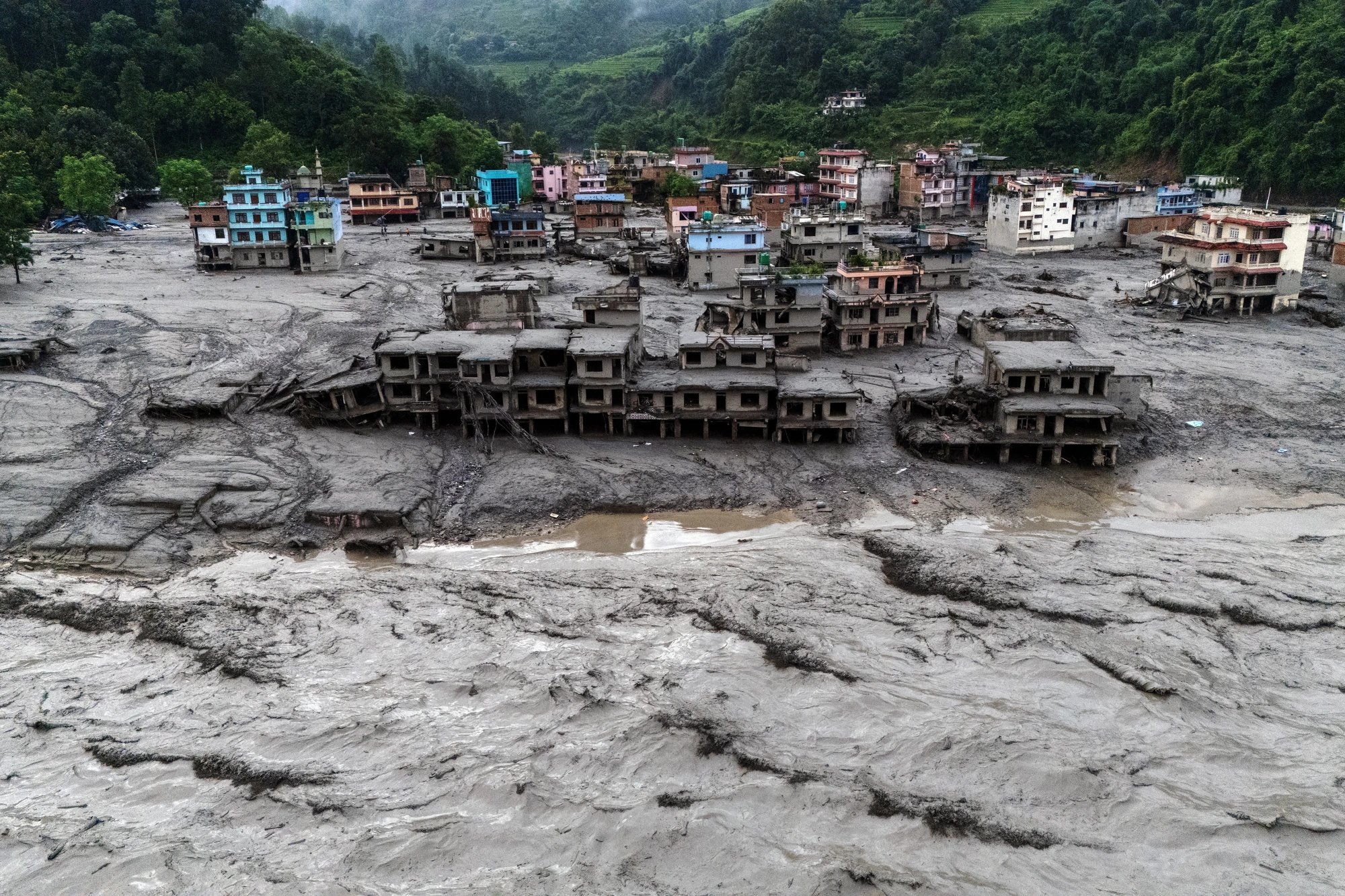
On August 26, a giant mass of ice and rock collapsed in the highlands of Nepal near the border with China. The resulting flow of water, stones, and mud rushed down mountain valleys, sweeping away everything in its path. The flood rapidly escalated into a cascading disaster, where one natural phenomenon triggers another. Initially, an earthquake was considered the primary cause, but later satellite data and geological analysis disproved that version. The spontaneous collapse sent a rapid flow down the Lhende River and further through the Bhote-Kosi and Trishuli river systems.
Human and Economic Toll
The death toll has exceeded 1,300 people, with more than 5,500 listed as missing. Search and rescue operations are ongoing, and September 7 was declared a national day of mourning in Nepal. According to the UN Development Programme, the disaster affected about 84,000 people in 17 municipalities across 6 districts. Nepal's National Disaster Risk Reduction and Management Authority reported preliminary losses of 387.5 billion Nepalese rupees, approximately $2.56 billion. At least 7,500 houses were destroyed, and about 20,000 more require restoration or complete reconstruction.
Climate Vulnerability
Nepal has faced floods and landslides for decades, and the current tragedy likely could have been predicted. Scientists are cautious about attributing this specific collapse solely to global warming. Climate change is altering the mountain environment: glaciers are retreating, permafrost volumes are shrinking, and snow and precipitation patterns are changing. Where ice and frozen ground once stabilized mountain slopes, new zones of instability are gradually emerging. Associated Press, citing specialists, notes that the Himalayas are becoming increasingly vulnerable to a combination of glacial, geological, and hydrological hazards. Nepal emits less than 0.1% of global greenhouse gases but disproportionately feels the consequences of warming.
1 source
Time · lag behind first