
New Zealand cave fossils reveal ancient parrot and giant flightless rail
This digest was compiled by AI from multiple sources — links to the originals are below.
Scientists have identified two new bird species from 21 bone fragments found in Moa Eggshell Cave near Waitomo, New Zealand. The fossils, dated between 1.55 million and 535,000 years old, include an early kākāpō relative and a giant flightless rail. The discovery marks the first New Zealand fossil record of a pigeon related to Australian bronzewings.
Key Facts
- The fossils were found between two volcanic ash layers dated to 1.55 million and 1 million years ago, with a stalagmite above them dated to 535,000 years.
- Twelve bird taxa were recovered, including two new species: Strigops insulaborealis and Porphyrio claytongreenei.
- Strigops insulaborealis had weaker legs than modern kākāpō, suggesting it may have retained some flight capacity.
- Porphyrio claytongreenei is named after landowner Warren Clayton-Greene, who fenced the site and helped with the dig.
- A pigeon related to Australian bronzewings was recovered, the first such fossil from New Zealand.
The Fossil Site
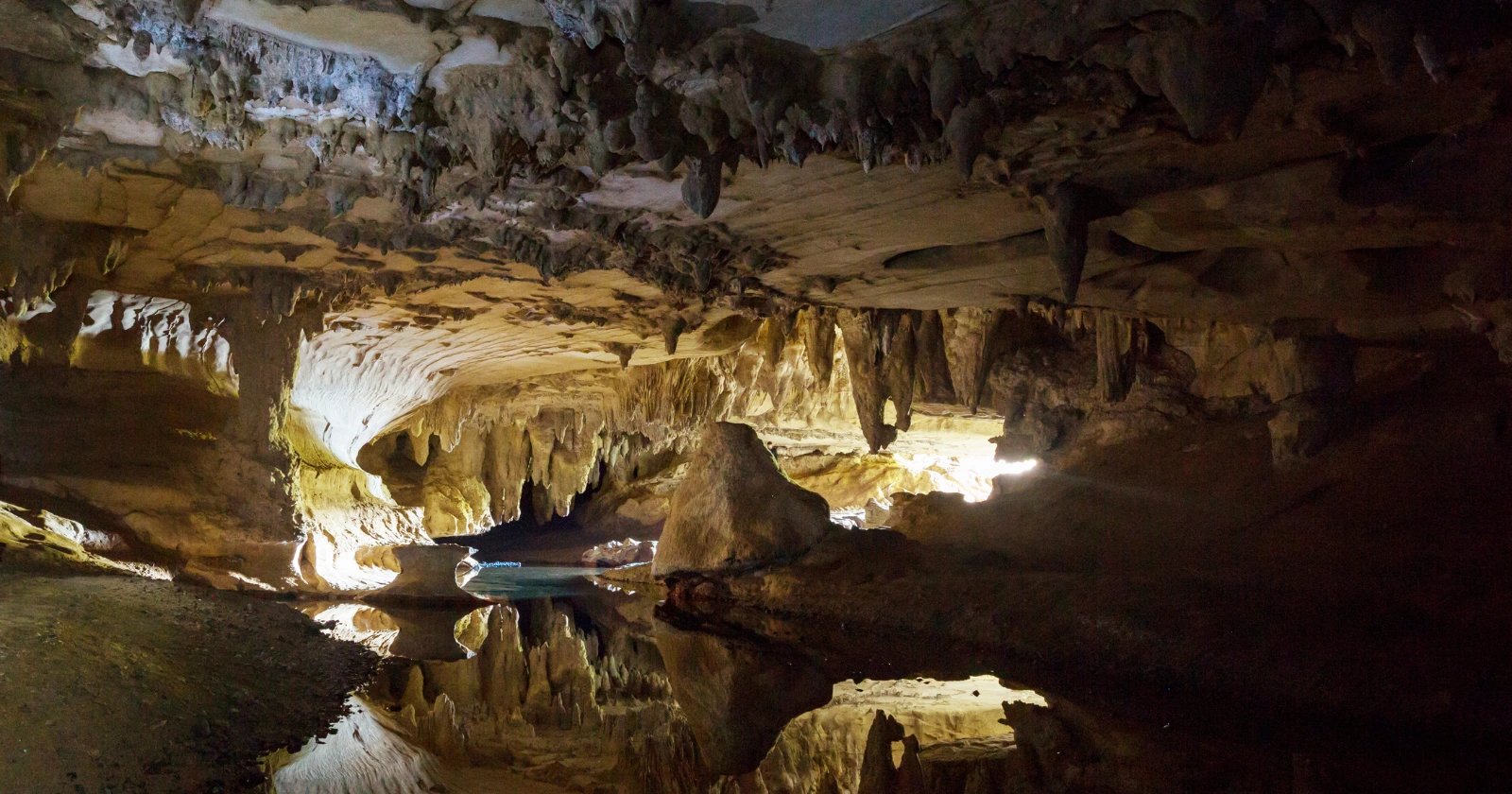
Moa Eggshell Cave sits near Waitomo on New Zealand’s North Island, roughly 280 metres above the stream that sliced the old cave in two and exposed its buried sediment. The cave is named for moa eggshell scattered across its floor, but the deeper sediment held a bird community with no modern equivalent. Eroded remnants of the Ngaroma ignimbrite, about 1.55 million years old, cling to the roof and walls, while above the fossils lies ash from the Kidnappers eruption, roughly one million years old. A stalagmite growing on top of the sediment, dated to 535,000 years, closes the timeline from the other end. The same ash on the walls makes this the oldest cave yet recognised on the North Island.
New Species
Twelve bird taxa came out of the deposit, two of them new to science. Strigops insulaborealis is an early relative of the kākāpō, the heavy nocturnal parrot that survives today only on predator-free islands and sanctuaries. Its foot bones show weaker legs than modern kākāpō, hinting it spent less time climbing and may still have kept some capacity for flight. Porphyrio claytongreenei is a large flightless rail named after Warren Clayton-Greene, the landowner who fenced the site to keep goats out and helped haul gear up to the dig. The authors suggest it may have been ancestral to both the living takahē and the extinct moho, with the two lines splitting once Cook Strait separated the islands.
Broader Implications
A third bird was a pigeon related to the Australian bronzewings, the first of its kind ever recovered from New Zealand’s fossil record. The deposit’s hard brackets at both ends make it a rare case for dating fossil assemblages. The team, led by Trevor Worthy of Flinders University with Paul Scofield of Canterbury Museum, published the findings in Alcheringa: An Australasian Journal of Palaeontology. Worthy’s team is cautious about when the parrot lineage lost flight, noting that a handful of bones from one cave can only suggest the timing.
1 source
Time · lag behind first