
Mexico City's Via Verde turns 1,000 highway columns into vertical gardens
This digest was compiled by AI from multiple sources — links to the originals are below.
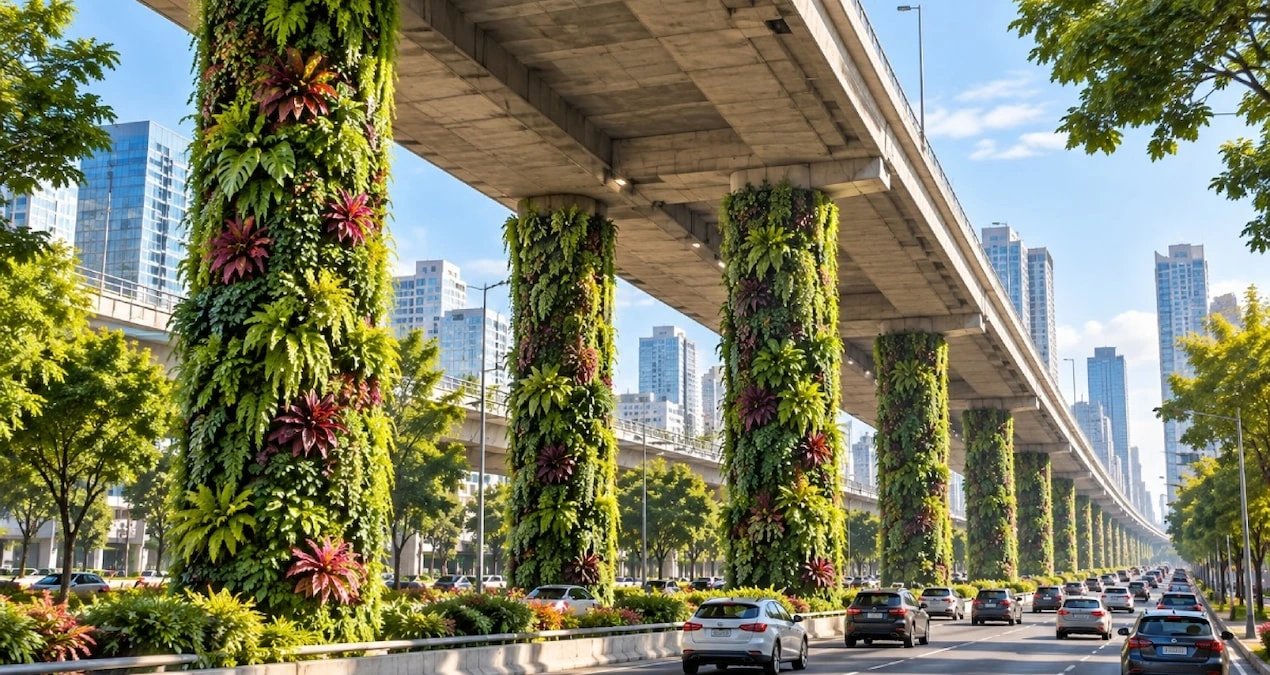
Mexico City's Via Verde project has covered more than 1,000 concrete highway columns with plants, creating a green corridor of over 65,000 square meters along a 27-kilometer stretch of the Anillo Periférico. The initiative, led by architect Fernando Ortiz Monasterio, uses treated and rainwater for irrigation and aims to reduce dust and pollutants in heavily built-up areas.
Key Facts
- More than 1,000 concrete columns supporting the upper deck of Mexico City's Anillo Periférico have been covered with plants.
- The green surface exceeds 65,000 square meters along a corridor of approximately 27 kilometers.
- The project was initiated about 10 years ago under the leadership of Mexican architect Fernando Ortiz Monasterio.
- Irrigation uses treated water and rainwater instead of large amounts of drinking water.
Project Origins
Via Verde was launched about 10 years ago under the leadership of Mexican architect Fernando Ortiz Monasterio. The project aimed to repurpose existing highway infrastructure for a completely different use. Special support systems were installed around the concrete columns, turning their surfaces into vertical gardens where plants could grow.
Plant Selection and Irrigation
Plants were chosen for the harsh roadside conditions, including limited sunlight, vehicle emissions, pests, and low maintenance needs. The project planned to use treated water and rainwater for irrigation to avoid consuming large amounts of drinking water. The vertical gardens are intended to help trap dust and certain pollutants, green concrete surfaces, and increase vegetation in densely built-up areas. Such applications are not seen as a solution that alone can eliminate traffic-related air pollution.
1 source
Time · lag behind first