
Mexico City sinks up to 42 cm a year as groundwater extraction drains ancient lakebed
This digest was compiled by AI from multiple sources — links to the originals are below.
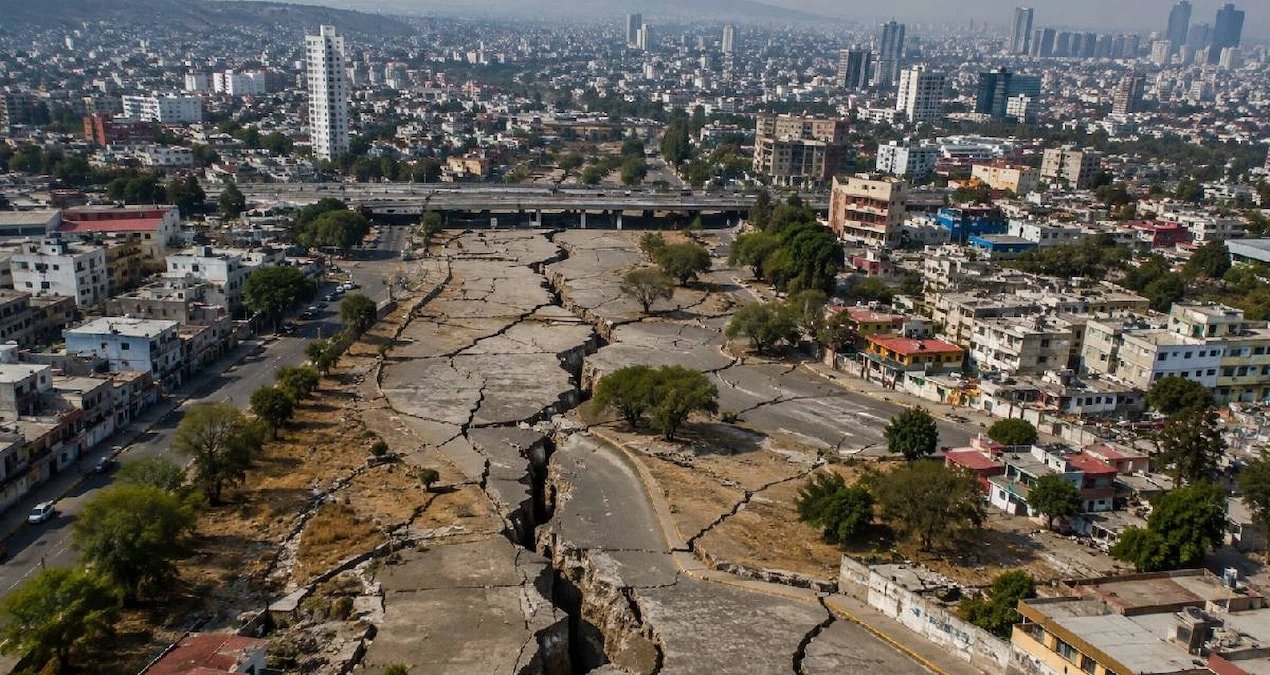
Mexico City is sinking at rates up to 42 centimeters per year as groundwater extraction compacts the ancient lakebed beneath the capital. Streets and buildings are cracking under the uneven subsidence, and satellite radar shows the ground continues to drop more than 2 centimeters a month.
Key Facts
- Mexico City is sinking at rates up to 42 centimeters per year, according to data from the National Autonomous University of Mexico and NASA.
- The NISAR satellite radar measured subsidence exceeding 2 centimeters per month in parts of the city.
- The Angel of Independence monument required 14 additional steps to be built at its base because the surrounding ground sank over the years.
- Scientists say the compaction of the soil is largely irreversible and could continue for decades under current water consumption and geological conditions.
Cause of Subsidence
The city was built on an ancient lakebed, and uncontrolled groundwater extraction is the main cause of the sinking, confirmed by data from the National Autonomous University of Mexico and NASA. As water is removed from the soil, the underlying sediment layers compress, causing the ground to permanently lower. The rate of sinking varies across the city: some neighborhoods drop a few centimeters per year, while certain areas exceed 42 centimeters annually.
Infrastructure Damage
Unequal sinking rates put enormous stress on buildings, roads, and water lines across Mexico City. Surface fractures are progressively destroying urban infrastructure, from metro lines to residential buildings. The ground around the Angel of Independence monument sank so much that 14 additional steps were added to its base.
Satellite Measurements and Future
Radar measurements from the NISAR satellite show the land is still subsiding at more than 2 centimeters per month. Scientists emphasize that the compaction of the soil is largely irreversible. If current water consumption and geological conditions continue, the process is expected to last for decades. The compacted soil layers have lost their natural water storage capacity, deepening the city's water crisis.
1 source
Time · lag behind first