
Chinese scientists develop PhosCage material extracting 50.4 mg uranium per gram from seawater
This digest was compiled by AI from multiple sources — links to the originals are below.
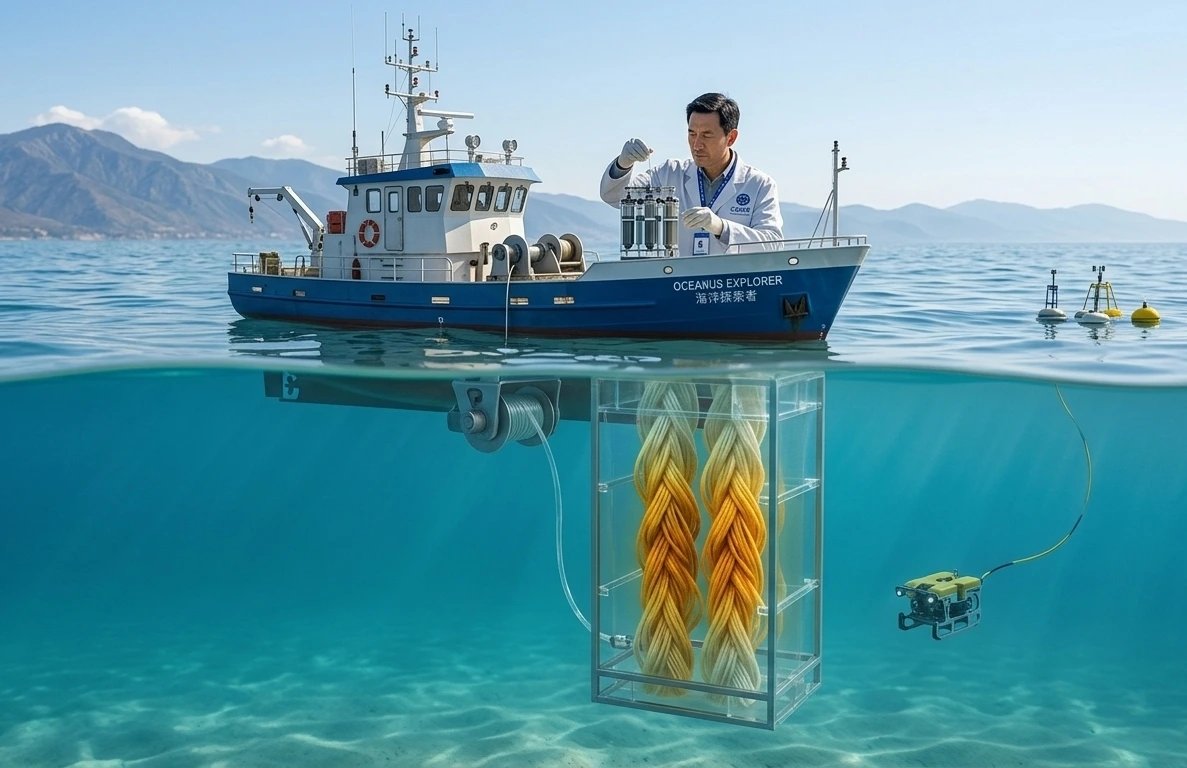
Chinese Academy of Sciences researchers in Qingdao developed PhosCage, a sponge-like material that extracted 50.4 mg of uranium per gram from natural seawater. The result exceeds the U.S. Department of Energy's 6 mg per gram target by more than eight times. The team later adapted the material into millimeter-scale beads that captured 22.55 mg per gram and withstood seven reuse cycles.
Key Facts
- PhosCage extracted 50.4 mg of uranium per gram from natural seawater, exceeding the U.S. Department of Energy's 6 mg per gram target by more than eight times.
- The material was adapted into millimeter-scale beads that captured 22.55 mg of uranium per gram and withstood seven reuse cycles.
- China produced about 1,600 tonnes of uranium in 2024 while its reactors required roughly 13,000 tonnes, according to the World Nuclear Association.
- Oceans contain an estimated 4.5 billion tonnes of uranium, compared with about 7.9 million tonnes in identified land reserves.
- The research was published in the Journal of Hazardous Materials and Separation and Purification Technology.
PhosCage Material
PhosCage is a sponge-like molecular structure with phosphate groups that act as chemical traps for uranium. In experiments, the material extracted up to 50.4 mg of uranium per gram of adsorbent from natural seawater. The result exceeds the U.S. Department of Energy's benchmark of 6 mg per gram by more than eight times. Researchers later converted the material into millimeter-scale beads for potential ocean use. In bead form, PhosCage captured 22.55 mg of uranium per gram and remained effective through seven reuse cycles.
China's Uranium Demand
China is expanding nuclear power but remains dependent on uranium imports. In 2024, Chinese mines produced about 1,600 tonnes of uranium while the country's reactors required roughly 13,000 tonnes, according to the World Nuclear Association. Oceans hold an estimated 4.5 billion tonnes of uranium, far exceeding the approximately 7.9 million tonnes in identified land reserves. Seawater contains only about 3.3 mg of uranium per tonne, and competing elements such as vanadium complicate extraction.
U.S. Program Comparison
U.S. researchers at Oak Ridge and Pacific Northwest national laboratories worked on similar technologies for years. By 2016, their materials reached about 6 mg of uranium per gram of adsorbent. The U.S. method proved too expensive compared with conventional mining, and the program was largely wound down after 2018. The Chinese team's work was published in the Journal of Hazardous Materials and Separation and Purification Technology. Researchers said PhosCage selectively captures uranium even in the presence of other metals, including vanadium.
1 source
Time · lag behind first