
Venus may have stayed temperate and habitable for most of its history, then lost its water
This digest was compiled by AI from multiple sources — links to the originals are below.
A new study suggests Venus may have remained temperate and potentially habitable for most of its history before losing its water. The research links carbonatite lava flows to the planet's thick carbon dioxide atmosphere. The findings connect two long-standing puzzles about Venus's volcanic channels and atmospheric composition.
Key Facts
- Baltis Vallis, the longest known channel in the Solar System, runs for roughly 6,800 kilometres across Venus.
- Venus's surface temperature is close to 465°C, and its atmospheric pressure is about 92 times Earth's sea-level pressure.
- A 2025 study in Science Advances argues that the lava that formed Venus's channels may have been carbonatite, a rare carbonate-rich melt.
- NASA's Magellan spacecraft mapped at least 85 per cent of Venus's surface using cloud-penetrating radar after arriving in 1990.
Carbonatite Lava Hypothesis
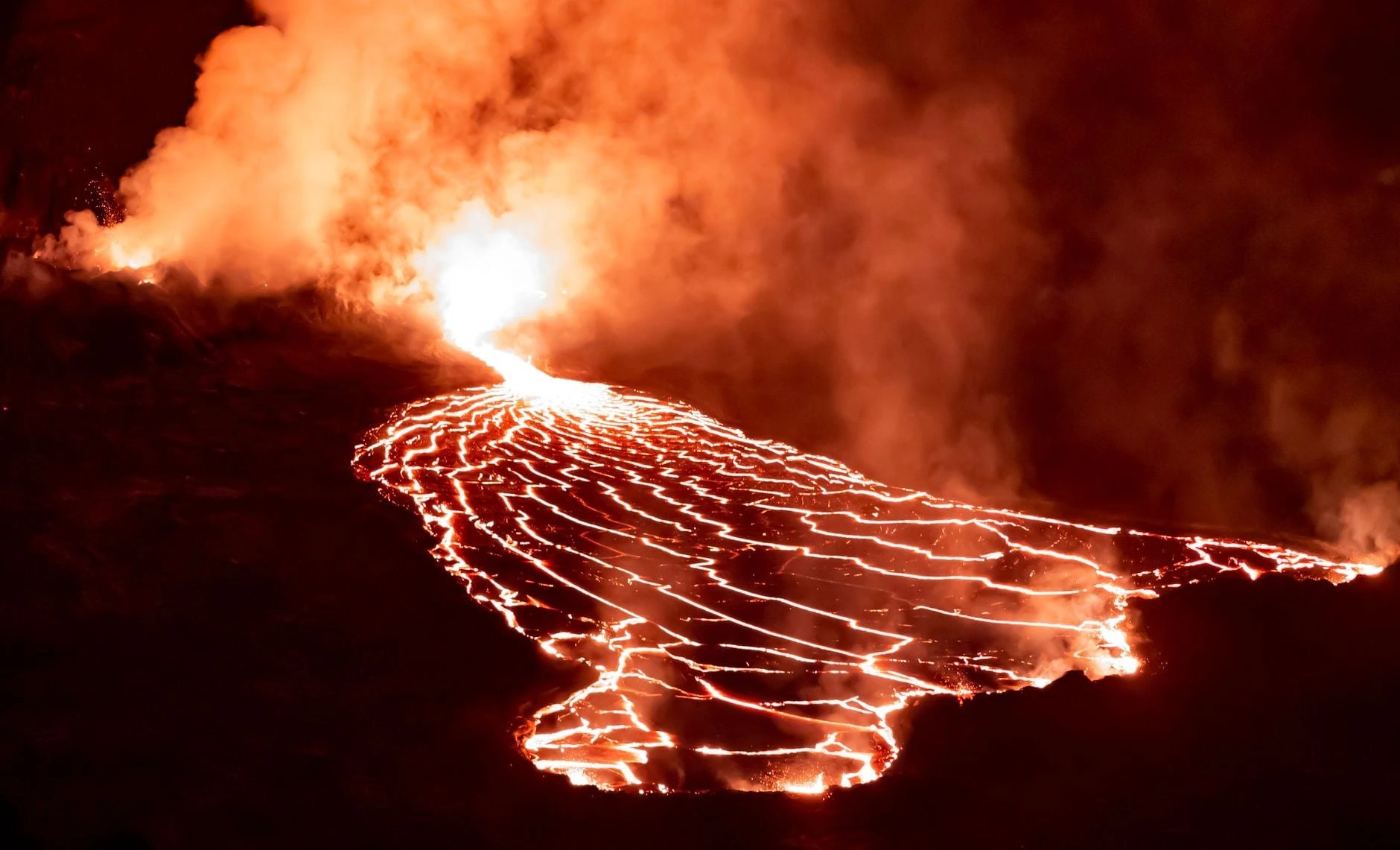
The channels on Venus, known as canali, are generally understood to have carried lava rather than water. A 2025 study in Science Advances proposes that the lava may have been carbonatite, a rare carbonate-rich melt with unusually low viscosity and a melting temperature only modestly above the Venusian surface. Carbonatite eruptions could have released an enormous quantity of carbon dioxide, potentially helping to build the atmosphere that keeps Venus hot today. The proposal connects two puzzles: ordinary basalt struggles to travel far enough to carve the longest canali, and basaltic volcanism cannot supply the carbon dioxide in the modern atmosphere without requiring a magma volume larger than the crust itself.
Magellan Observations and Evidence
NASA's Magellan spacecraft arrived at Venus in 1990 and used cloud-penetrating radar to map almost the entire surface. At least 85 per cent of the planet is covered by volcanic flows, according to NASA's mission summary. The canali display cutoff meanders, delta-shaped deposits, branching reaches, and streamlined islands, resembling river systems. Baltis Vallis was announced by JPL in 1991 as a channel longer than the Nile, with later mapping showing branches that can push the measurable system beyond 6,800 kilometres.
Limits of the Hypothesis
The carbonatite proposal remains a hypothesis because Magellan observed the channels but not the liquid that formed them. No spacecraft has sampled a canale, and no lander has identified a carbonatite rock on Venus. The atmospheric calculation depends on uncertain lava volumes, eruption rates, channel depths, and the fraction of carbon that escaped as gas. Any oceans proposed for early Venus would have vanished long before the young volcanic plains visible today formed, making liquid water impossible under modern surface conditions.
1 source
Time · lag behind first